
The Annual Bantu Cultural Fair is a Cultural Tourism Signature event in Uganda, the largest cultural exibition on the Africa continent.
Theme: “Appreciating Africa’s Cultural Diversity; Celebrating our Cultural Heritage and Reaffirming our Commitment to Coexistence and Peace”
“My Culture, My Nature – Keep Africa Green and Keep It Black.” This isn’t just a slogan; it’s a powerful call for nature conservation and cultural preservation that lies at the heart of the Bantu Annual Cultural Fair.
Imagine a scene from Chinua Achebe’s classic novel, Things Fall Apart: “A man who calls his kinsmen to a feast does not do so to save them from starving, they all have food in their own homes. When we gather together in the moonlit village ground it is not because of the moon; every man can see it in his own compound. We come together because it is good for kinsmen to do so.”
This timeless wisdom perfectly captures the spirit of the Bantu Cultural Fair. It’s a gathering, a feast for the senses, and a celebration of a shared heritage. Kitara Foundation for Sustainable Tourism is dedicated to preserving these “good cultures of great African societies,” and the Bantu Cultural Fair is the largest cultural exhibition on the African continent dedicated to this cause.
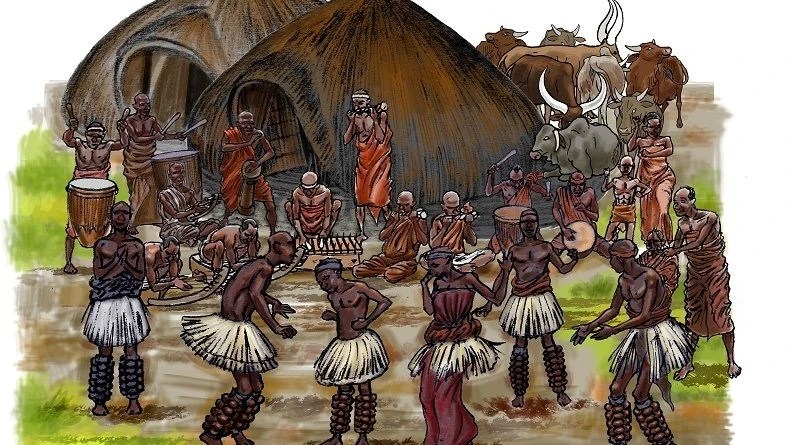
Long before books or screens, African communities gathered under the moonlight, around a fire, or beneath an ancient tree. A storyteller’s voice would paint vivid pictures, weaving tales that brought people together. They didn’t come to a feast to fill their stomachs, or to see the moon they could see from their own homes, but simply because, as Chinua Achebe wrote, “it is good for kinsmen to do so.”
At the Kitara Foundation for Sustainable Tourism, we are dedicated to preserving this powerful tradition of cultural connection. While many cultural events exist, none have focused specifically on the unique and diverse heritage of the Bantu people. The Bantu Cultural Fair is our answer.
This annual event is a celebration of who we are, a tribute to our history, and a chance to explore the richness of Bantu culture across the continent, with a special focus on Uganda. We’re creating a platform where different Bantu groups can celebrate their own traditions while learning about and appreciating others.
We believe that culture is a cornerstone of a nation’s development. It shapes our values, hopes, and worldview. By inviting students from primary schools to universities to participate in cultural quizzes and writing competitions, we are ensuring that the next generation not only learns about their heritage but is also inspired to carry it forward.
Uganda, with its rich history and central location, is the ideal starting point for this pan-African festival. It’s time to gather, celebrate, and showcase the beauty of our shared heritage.
The Heart of Our Heritage
The fair’s theme is “Appreciating Africa’s Cultural Diversity; Celebrating our Cultural Heritage and Reaffirming our Commitment to Coexistence and Peace.” This event is a unique platform designed to recognize and appreciate the historical and cultural significance of the Bantu people—a diverse group of 300-600 ethnic groups stretching from Central Africa to Southern Africa. They are united by their languages, which all stem from the Proto-Bantu root “-ntu,” meaning “people” or “humans.”
With a population of over 13.5 million Luba in the Democratic Republic of Congo, 10 million Zulu in South Africa, and over 8 million Sukuma in Tanzania, the Bantu people are a major force in Africa. In Uganda alone, Bantu-speaking tribes make up more than half of the population, including the Baganda, Banyoro, Batooro, Banyankole, and many others who settled here between A.D. 1000 and A.D. 1300. This rich tapestry of cultures makes Uganda the ideal host for this continental festival.
A Week of Cultural Immersion
Held annually in December between the Christmas and New Year’s festivals, the Bantu Cultural Fair is a vibrant, week-long celebration that brings together over 500,000 people from across Africa and beyond. It’s a space where ancient traditions meet modern aspirations.
Our festival program is designed to be both entertaining and educational, with a daily focus on key themes:
- Day 1: Culture and Peace: We stress the power of cultural unity to build peace, bringing people together across political lines.
- Day 2: Culture and Education: Our “Schools Day” features cultural quizzes and writing competitions for students from primary to university level, inspiring the next generation to learn about their heritage.
- Day 3: Culture and Wealth Creation: A day dedicated to celebrating the economic value of culture and encouraging a strong work ethic.
- Day 4: Culture, Family, Food, and Society: We honor the African family and explore how cultural values can combat hunger and promote economic development.
- Day 5: Culture, Environment, and Community Development: We explore how African cultural norms can be mobilized to create a strong environmental ethic for sustainable development.
- Day 6: Cultural Tourism: Participants visit historic sites in the host region of Tooro, which boasts one of the richest cultures on the globe.
- Day 7: Culture and Religion: A day to explore how faith and culture can work together for societal development rather than being seen as opposing forces.
Cultural Competitions and Showcases
The Bantu Cultural Fair is a platform for the most talented stewards of African heritage. Through a series of competitive events, we seek to discover and honor those who keep our traditions vibrant and authentic. After a comprehensive mobilization drive, cultural groups and tribes will register their representatives to compete in the following categories:
1. Traditional Dance
In this category, troupes perform a 5–8 minute traditional dance. Adjudicators will evaluate performances based on originality, the clarity of the message, and the authenticity of costumes, props, and instruments. High marks will be awarded for vocal endowments, organized presentations, and for reviving and presenting forgotten traditional dances with skill and passion.
2. Folk Song
Solo or group songs, lasting 4–6 minutes, are accepted. While a cappella solos are welcome, those accompanied by traditional instruments like the omukuri, enanga, or endingiri will receive more points. Group songs must be dramatic and include instrumental accompaniment. Judges will assess the vocal and instrumental quality, the clarity and purpose of the message, and the use of the stage, costumes, and props. Songs can be about various social activities, but no song lacking a clear message will advance.
3. Rhetoric
This competition highlights the art of traditional poetry (ebyevugo/ibyivugo or emigunju/imivugo). Contestants can recite poems on themes such as love (imitooma in Rufumbira), victory, supplication, or other significant topics.
4. Puzzles
Participants will engage in a head-to-head competition of riddles (ebishakuzo/ibisakuzo) and structured puzzles (amahurizo in Rufumbira). The competition brings together trusted candidates who can pose and solve the most challenging puzzles. Competitors who introduce original and unfamiliar puzzles will earn higher scores, as will those whose puzzles are particularly difficult to solve.
5. Modeling
This category is a showcase of traditional dress and beauty. Participants will display traditional attire, hairstyles, and authentic beauty enhancements such as markings on the neck, arms, and legs. Models will be presented in a way that clearly represents their social status: child, adolescent, single, married, or elder.
6. Exhibition
Competitors will exhibit collections of traditional artifacts. These can include items used in warfare, worship, marriage, agriculture, or household utensils. Judges will score based on the originality of the collection, the clarity of the explanation about each item’s purpose, the artistry of the display, and the narrator’s communication skills.
7. Writing
Open to students from institutions of higher learning, this competition focuses on original compositions. Participants can write on a variety of topics, including culture and art, societal norms, child upbringing, and other cultural aspects. Special consideration will be given to participants who can provide the longest and most verifiable genealogy, as this reflects a deep connection to their cultural history.
Special awards are given to those who can trace their genealogy back the furthest, a testament to our commitment to honoring our roots.
Why Uganda?
Uganda is the perfect host for this event. As the “Pearl of Africa,” it is a hub of cultural diversity, home to 17 Bantu tribes as well as many others from neighboring countries like the Democratic Republic of Congo, Kenya, and Tanzania. Its long history of cultural movements, from the Batembuzi and Bachwezi dynasties to the current regional kingdoms like Buganda, Tooro, and Bunyoro, provides a unique backdrop.
By holding the Bantu Cultural Fair here, we are not only celebrating our shared heritage but also establishing a regional cultural museum in Fort Portal Tourism City, creating an economic and cultural landmark for all of Africa.
Join us in December as we celebrate Love, Peace, & Unity at the Bantu Cultural Fair—a one-of-a-kind event that promotes cultural exchange and diversity among nations.
About Bantu as the Settlers of Kitara Region read here; https://kitararcc.com/the-people-of-kitara/
About Bantu Cultures in Kitara Region read https://kitararcc.com/2023/03/09/kitara-cultural-sites/
About the ancient Cultural home of the Indigenous settlers – the great Rulers, great fighters and Wealth Creators of Africa at Bigo bya Mugenyi (Fort of the Stranger) and one of the biggest archeological and cultural sites in Africa https://kitararcc.com/bigo-bya-mugenyi/
About the happenings at Bigo Bya Mugyenyi that resulted into Clans and ended into kingdoms of Nkole (Bahinda Dynasty), Karagwe, Rwanda and others. https://kitararcc.com/origins-of-clans-in-ankole/
About Bacwezi empire and their role in Africa’s development r; and how the Bachwezi Dynasty ended to the Babito Dynasty. https://kitararcc.com/2021/11/23/the-indigenous-bacwezi-rulers-fighters-and-wealth-creators/
About the true origin of ancient Bacwezi and their connection to the current Cattle Keepers (Bahima/Bahuma), their relationship with their counterpart Agriculturalist Bairu- Traces in the Bible https://kitararcc.com/2022/01/26/bacwezi-as-the-indigenous-settlers-great-worriors-and-wealth-creators/
About the succession of Bacwezi from Batembuzi and who both of them are, read here, https://kitararcc.com/batembuzi-bacwezi/
About the the only Archaeoastronomy site in East and Central Africa, a great pillar of history and a collection of historical and cultural bonding. https://kitararcc.com/2024/09/03/biharwe-cultural-village/
To communicate to us about this festival or to Register for Participation complete the form bellow;


 COMMUNITY BASED TOURISM DEVELOPMENT AT KITARA FOUNDATION FOR SUSTAINABLE TOURISM: Transforming Communities through Travel Partnerships. Email: kitararcc@gmail.com;