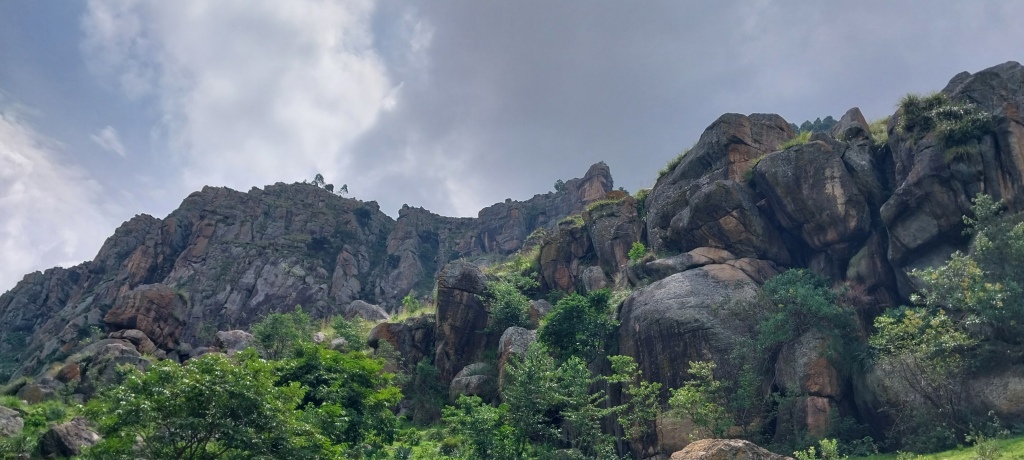
Kitara region has a diverse of cultures, there are 10 sets of main cultures with a host of emigrant cultures from other parts of the country to the region. There are also emigrants from other countries such as Rwanda, Tanzania and Congo. Read about the people of Kitara here https://kitararcc.com/the-people-of-kitara/
Kitara Region covers most of the Western Uganda named the Pearl of Africa; has the best cultural Destinations in the country. The various nature trips get even better when a cultural trail is included. Tourists get to visit cultural centers in the country, meet people of different cultures, experience their way of life, learn about their culture and even taste their cuisine.
The Batwa Culture: The Bwindi cultural trail has helped diversify the experience of visiting Bwindi and tourists now have more to see and explore in addition to tracking Mountain Gorillas. Tourists get to sleep in tents, enjoy bonfire barbeque and eat crayfish from the lake. Read about the Batwa here https://kitararcc.com/pygmoids-tribes-in-kitara/
Bakiga Culture:
A visit to Kabale Arts Centre is a great way to learn about the “Bakiga” tribe of Uganda. This small museum has historical and traditional highlights of how the Bakiga resisted the colonialists among many other things regarding the way of life of the Bakiga. A visit to Lake Bunyonyi has a lot of cultural experience and African traditions of the Bakiga Community. Read about the Bakiga here https://kitararcc.com/the-bakiga/
Banyankole Culture: Igongo Cultural Center near Mbarara town is another great stop for a cultural-fulfilling experience when visiting Uganda. There is a well researched museum depicting the history of Ankole and the general way of life of the Banyankole. The cultural center is surrounded by several other cultural sites Such as Biharwe hill, Ankole cultural palace, Ankole Long Horned Cows, Nsongezi site for the early man, and many others. Read about Banyankole culture here https://kitararcc.com/the-banyankole/
Bahima (Cattle keepers) Culture:
Visiting Nshenyi Village about two hours from Mbarara town gives you the opportunity to mingle with the locals and get a firsthand experience of their traditional way of life as you explore the rural side of this Pearl of Africa. Similar sites are in Busongora and Rwebisengo. Read about Bahima and cattle keeping here https://kitararcc.com/2022/01/25/the-long-horned-kitara-cows-lhkc/
Batooro Culture
Visiting the Karuzika palace gives you 360-degree panoramic views of the Fort Portal town. The circular structure was built in 1963, but fell into ruin after the abolition of the royal kingdoms by Idi Amin. It was restored in 2001 after Colonel Gadaffi met the king and donated the money for repairs. Read about Tooro Cultures here https://kitararcc.com/the-batooro/
The Banyoro Culture
The Banyoro live in Kitara to the east of Albert they inhabit the present districts of Hoima, Masindi, Buliisa, Kagadi, Kakumiro and Kibale. They speak a Bantu language and their origins, like other Bantu can be traced to the Congo region. The Banyoro lived in scattered settlements in the populated parts of their country and their homesteads were rarely more than shouting distance from one another. Politically, they were organized under a King (Omukama). Read about Banyoro culture here https://kitararcc.com/the-banyoro/
The Banyarwanda/Bafumbira Culture
The Banyarwanda or Bafumbira are found in the old districts of Ankole and Kigezi bordering Rwanda. They have, however, spread into many parts of Uganda. Ethically, they are the same as the Banyarwanda of Rwanda. Those who inhabit Kisoro District in the extreme Southwest of Uganda are called Bafumbira. This is the only district that is inhabited almost exclusively by Banyarwanda. To their west, is Zaire and to their south in Rwanda. Their land is mountainous and cool. Bufumbira was part of Rwanda until the boundary adjustments of 1910.The actual inhabitants of Bufumbira, in descending order of numerical superiority, are the Bahuutu, the Batutsi and the Batwa. Essentially, they are Banyarwanda and they speak Kinyarwanda. Read about Bafumbira here https://kitararcc.com/the-banyarwanda-bafumbira/
Bakonzo and Bamba Culture
The Bakonjo and Bamba are Bantu and they are said to have a common origin with the other Bantu groups. The Bakonjo are found in the District of Kasese. They are the most numerous of the Rwenzori people, being more than the Bamba or the Bambuti. Physically they are generally short and stout. Legend has it that the Bakonjo once lived on Mount Elgon in eastern Uganda and that during the Kintu migration, the Bakonjo came with Kintu and other peoples to Buganda. However, rather than settle in Buganda, the Bakonjo decided to continue and settle in the western highlands of Mount Rwenzori which has a climate similar to that of Mount Elgon where they had originally lived. This is said to have been around A.D 1300. Read about Bakonzo and Bamba here https://kitararcc.com/the-bakonzo-bamba/
Basongora Culture
Who are the Songora People in Africa? The Songora or Shongora (pl. Basongora, sing. Musongora) also known as Hima/Huma/Hema) are a traditionally a pastoralist people located in Western Uganda and Eastern Democratic Republic of the Congo. They have distinctive customs and speak ‘Rusongora’ an African language that is originates from Proto-Kordofanian and is similar to Runyankole and Rutoro. The Basongora population has reported as numbering 11,000 in Uganda, but this is most certainly an underestimate. Read about Basongora here https://kitararcc.com/the-basongora/
Batagwenda and Banyaruguru Culture
It is derived from Buganda’s history and finds out that this was after two Baganda kings had fought against each other and one died in the field. According to the way the Bunyaruguru tell the story, it was the year 1797 and Kabaka (King) Junju Sendegeya, the 27th Kabaka of Buganda was reigning, with his capital at Magonga. His younger brother, Prince Semakookiro Wasajja Nabbunga, rose up in arms against him. In the battle, Ssemakookiro’s men (one of the fighting groups) then proceeded to Bamunaanika to report that they had killed Junju. Ssemakookiro was angered. He had instructed them to capture his brother, not to murder him! He was so upset that he ordered those who participated in the battle together with their descendants and extended families, to leave Buganda or he would make them face the same fate as they had subjected to his brother. The outcasts fled west to present day Kitagwenda in Kamwenge District, in the Kingdom of Toro. Those who still had the strength to climb the hills and mountains of Northern Ankole went on into present-day Rubirizi District, in what is commonly known as Bunyaruguru. Other sources give versions which slightly differ in details, but the flight of the Banyaruguru and the Batagwenda is a historical fact, that occurred slightly over 200 years ago. Read about Batagwenda and Banyaruguru here https://kitararcc.com/batagwenda-banyaruguru/
Tooro Palace
The Tooro Palace, also known as Karuzika palace is perched at Karuzika Hill overlooking Fort Portal town along the Fort Portal – Kasese Road. The unique palace building was renovated in 2001 with funding from the fallen president of Libya, Col. Muammar Gadhafi and is one of those scenic buildings in this town where one can have 360” degrees panoramic view of the entire town of Fortportal.
The palace is home to the current king of Tooro, Omukama Oyo Nyimba Kabamba Iguru Rukidi IV who has been the supreme cultural leader of Toro Kingdom since 1995. There are several other old palaces in the region which hosted the previous kings of the Tooro Kingdom.
A visit to Tooro palace leads you to many other culutral sites and other nature destinations such as the historical crater lakes said to have been dug by the demi gods of the BACWEZI empire during the historical times.
Crater Lakes:
While also unconfirmed geographical story tells that the crater lakes were formed rather recently, a mere 8,000-10,000 years ago, caused by violent volcanic activity, exploding ash and rock far and wide, history has it that these are wells dug by one of the Bacwezi rulers (Omucwezi Ndahura) in his old age when he had lost power to his son Wamala the last Muchezi ruler on earth.
30Km south of Fort Portal between the main Fort Portal – Kasese road and Kibale Forest is a collection of Crater lakes. The Crater Lakes Visit in Fort Portal is quite adventurous and liked by many tourists. The crater lakes were formed as a result of vulcanicity, with violent eruption causing the top of a volcano to be blown off, leaving a crater.
The lakes are so many and vary size and character, and have well-developed facilities. It’s amazing that crater lakes are bilharzia-free and hence safe for swimming.
The popular crater lakes include: Lake Nyabikere, literary translated as lake of Frogs. It is possible to walk from Lake Nyabikere to Lake Nkuruba via Lake Nyinabulitwa to Lake Nyamirima. Another popular Lake is Nyinambuga. This image is found on Uganda’s 20,000 currency note. This blue-green lake offers stunning views of nature. Most other lakes such as Lake Nyamugasani, Lake Ntambi, Lake Mubiro, Lake Lyantonde, Lake Nyanswiga are inaccessible. Meanwhile, Lake Kasenda has fertile soils around it which favorites the growth of Arabia coffee which has led to the growth of Agro-tourism.
Rwajimba Hot Springs
Rwagimba hot springs located in Munyangabu district are famous to the people of Tooro kingdom because its believed that their Kings (Omukama) used to frequent the springs for relaxation and healing. The king’s subjects would lift him up on their shoulders and take him to the springs and the springs were only used by the king and some of the kingdom chiefs with permission. More about Rwajimba hot springs https://kitararcc.com/2023/06/23/the-mystical-challenge-to-rwagimba-rwajimba-hot-springs-in-uganda/
Amabere Caves
The Nyakasura caves, also commonly known as the “Amabere Ga Nyinamwiru” is located 7 kilometers from Fortportal town. These limestone rocks, known as stalagmites and stalactites are a great scenic feature in this region with an astonishing fairy-tale story behind its existence. A visit to these caves exposes you to the roaring Amabere Ga Nyina Mwiru waterfalls and the three dazzling explosion crater lakes which can be viewed right outside the caves.
The Batoro natives of this area have a strong myth attached to these caves with an interesting story told from long ago about them and what caused their formation. The caves were named after King Bukuku’s daughter called Nyinamwiru and hence the name ‘Amabere Ga Nyinamwiru’ would be ‘Breasts of Nyinamwiru’. King Bukuku was one of the ancient Kings of the Batembuzi Dynasty that ruled that time and was believed to be a demi-god by the subjects and would often times disappear and re-appear. Princess Nyinamwiru was a beautiful young lady who had a strong personality. She refused to marry the man her father – the King had chosen for her as was the custom.
This greatly infuriated the King and his subjects who could not understand how anyone could disobey the King in such a manner. The King then ordered that her breasts be cut off because of her disobedience, this was to ensure that she would never get married to whoever she would choose and never be able to breast feed her children. It is therefore locally believed that the scenic rocks on this site are her breasts oozing milk since that day.
Karambi Royal Tombs
Located in Fort Portal; An excursion to the Karambi Royal Tombs is worthwhile. Several of the former Kings of Tooro Kingdom are buried here. The caretaker will let you in for a look at the tombs, which house drums, spears and other personal effects of several of the Toro kings. The cemetery outside is the resting place for various other royal family members.
Kitara has got such a vibrant and rich culture that tourists from around the world visit the country every year for the memorable experience. Cultural Tourism in Kitara is at it’s peak throughout the year and tourists can visit any time of the year.
Kitagata Curative Hot Springs
Located in Mitooma in Ankole region, Springs with clear water but curative, the Omugabe (royal) springs are on the easterly sides.9 when water is heated in the earths bowels and emerges from the earth crust it forms a hot spring) Kitagata attracts over 100 peoples on a daily basis. Has zones for women and children (Nazario Bihanga is the care taker)two sections one is Ekyomugabe, (royal) the other is Mulago as a general ward.
Musaijja Mukuru Hill
An ancient citadel and military observation post. History of war times, stronghold of Banyoro against Baganda, later it was taken by Thurston/50 soldiers in 1894.
Musaijamukuru hill is found in Musaijamukuru village, Buhimba Sub County, about 15 kilometers away from Hoima town on the Buhimba-Kakumiro-Mubende road. The hill may not be any far different from other hills but is of great cultural and historical importance to Bunyoro Kitara Kingdom.
It’s at Musaijamukuru hill that Bunyoro’s great King Kabalega would stop ti get a vantage point to see his enemies during his wars of resistance. Kabalega’s warriors are believed to have rolled stone boulders from the top of the hill to hit and kill the advancing British forces.
Musaijamukuru hill is believed to be a source of blessings or curses depending on the way one treats it. To this effect, the hill has got a caretaker referred to as Mukama w’orusozi (owner of the hill) Mukama w’orusozi’ is a title assumed on a hereditary basis. He is the person charged with appeasing ancestors believed to be on the hill by performing rituals periodically.
Nsongezi Archaeological site
Cave and rock shelter of early man, containing late stone age microliths and dimple based pottery. This is located in Isingiro district in Ankole. Excavations and investigations at this site have led to a reappraisal of Stone Age people’s capabilities and culture and it seems they were much more sophisticated than previously believed. The excavation of the Nsongezi Rock shelter in Uganda has changed the view of the late Stone Age in particular. Examples of flint objects and also pottery found here show that the inhabitants had a great many skills and that they developed proto-industries
Kanshohore Island
Located in Isingiro district; Small island in Kagera river used by rulers of Ankole Ntare and Rwanga, as refuge sites, contains abundant dimple based wares
Kanungu Inferno
At Katate, Kibwetere, Father Kataribabo, and Mwerinde leaders of the cult, conspired and set fire on their followers, also believed to have perished in the fire.
Katwe salt gardens
Located in Queen Elizabeth National Park; Volcanic crater lake associated with traditional, salt production. The salt mine started in the 14th century it was one of the most important item that attracted a number of people in Africa. Salt mine was regarded as one of the most expensive mineral and was exchanged for other items like cloths, guns these things were given to the rulers of that time.
Queen Mother Memorial
Monument at Kikorongo Located within the Queen Elizabeth national park.
Kabusongora Hill
(Bukonzo west), Associated with the origin of the Basongora clan among the Bakonzo. A cattle keeping clan. Common to the hill is the collection of grasshoppers (emishenene) which is also the totem for the clan.
Kagando Graves
Located in Kasese is a monument that commemorates the grave of 3 Bakonzo heroes who fought against British colonial rule (through Toro) between 1919 and 1921.
Bulembia
Located in Kasese, In Ihandiro is a grave for Isaya Mukirane founder and late king of the Rwenzururu Kingdom and palace for the Rwenzururu movement . Also a pilgrimage site every year for the Rwenzururu.
Isunga Cold springs
Located near Fort Portal on Kamwenge road is a village called Isunga. At Isunga, in a pond containing cold water with sulphur, gives out bubbles at three different places, treatment of different ailments.
Nyabushozi
Located in Kiruhura in Ankole is the Birth place of wamara last ruler of the 14th-century Bacwezi empire. The locals hold a history of cultural significance concerning the existence and disappearance of Bacwezi rulers.
Kigezi Memorial site
Located in Kisoro; First administrative centre for Kigezi district, where the agreement of demarcation between Uganda and Rwanda was made during colonial times.
Ibale lya Kitinisa
Located in Kyenjojo Buhembo village, home to one of the ancestral rulers of the Bachwezi.
Nyabihuru Caves
Near Muzizi river opposite Nakabimba.
Katosa Martyrs shrine
Among the 22 martyrs’ killed in 1886was a born at Katoosa St Adolf Tibeyalirwa Abwooli. A pilgrimage is held every 27 January every year in memory of the victim on At Adolf day. Katoosa Parish.
Mwenge ancestral Palace
Located in Mwenge is Old palace for the Bunyoro Kitara Kings. Here was a political school where chiefs and other kingdom officials had to go through for training.
Rwabudongo
Was a training ground for senior army officers for Bunyoro Kingdom. Named after the great army commander of the Abarusuura Ireeta Rwabudongo Omuhambya who led the army t dethrone Kabaka Mwanga and replace him with Kalema
Bweyorere Capital site
Ankole capital site ,occupied by rulers of Ankole, Kasasara mid 17th century and Kasasara 18th century. Located in Kikagati Trading centre, 26 kilometers from Mbarara using Mbarara-Kitagati route and located nearly three quarter kilometers, off Mbarara-Kikagati route, when heading to Rwanda, Kabale road
Nkokonjeru Tombs
Located in Mbarara; At Kamukuzi is a tomb house and Burial place for the Abagabe of Nkore.
Magaba Palace Kamukuzi
Located in Mbarara; At Kamukuzi, is found the Royal Palace of Nkore.
Bucunku Stanly
A cone shaped mass of round concrete was built in Masha Isingiro district as witness to the Blood brotherhood coventant between Buchunku (Ankole King emissary) and Henry Marton Stanley (a Briton correspondent for New York Herald and Daily telegram. when he was on a mission to find a British missionary Dr Livingstone who had gone missing.
Queen Muhumuza’s seat of Mpororo
Muhumuza led a rebellion against the British colonialists in Mpororo, at the site is her footprint and Omweeso board in the rock. About a hundred years ago in Uganda, Queen Muhumuza stood against patriarchal, colonial and chauvinist forces. She was a spiritual leader, a military leader and a fighter for social justice. She was a wife of Rwandan King Kigeli IV. When, in 1895, her husband died and her son was denied the throne, she rebelled against the Rwandan establishment and colonial powers. She moved to Uganda, was finally captured by the British and imprisoned in Mengo where she died in 1945. She never got an opportunity to return to her cradle land.
Muhumuza, also spelled Muhumusa, is said to have possessed spiritual powers hailing from the legendary Queen Nyabingi. Most of her followers never saw her face since the cult required her to hide in a basket. Described by colonial governments as “an extraordinary character”, Muhumuza took up the fight against the three colonial powers in the region – the German, the British and Belgians from neighboring Congo. She is also remembered for resisting the establishment and the norms that limited women’s rights in society. She inspired a whole anti-colonial struggle in Rwanda and Uganda. Today, her followers see her as a role model and a true representation of inclusion and resistance to norms that undermine sections of society. Her spirit lives on through the Rastafarian movement, where Muhumuza is referred to as Nyabinghi.
In Semliki National park two natural hot springs female boils up to 106 degrees and the male boils at 90 degrees.) cultural significance attached. The male and female hot springs known as Nyasimbi and Bitente, respectively. For the indigenous Bamba people, these hot springs hold great cultural significance, as they have been used in rituals to communicate with their gods and ask for blessings and protection.
According to Bamaga folklore, local women spotted an unknown man with a spear and a dog in the forest. The men of the village brought the man home and he then married one of the women. But one day he failed to return from hunting. All that was found his spear, next to what is now known as the ‘male’ hot spring. When his wife discovered he had disappeared, she rushed to the site. She also disappeared, next to what subsequently became known as the ‘female’ hot spring. The Bamaga believe their male and female ancestors dwell beneath each of the hot springs. They perform traditional rituals at the site every year to appease and honour them.
Katasiiha Fort
Located in Hoima in Bunyoro; The mouth of this cave was used for many generations for defence purposes and a fort was built at its mouth.
Kibiro Caves and Kibiro Harbor
Located in Hoima; Royal wives were hidden in these caves during the times of war. Kibiro harbor is an Ancient port used by Banyoro to cross Lake Albert.
Bigo Bya Mugenyi The Bigo Bya Mugenyi is a prehistorical place in Mawogola county in Sembabule near Ankole area, it’s side that the Chwezi also known as the Bachwezi were the first people to settle in the Bigo Bya Mugenyi, western and central parts of Uganda this group of people are also believed to have been the first people to settle in Uganda during the 11th to 12th century.
Galt Memorial Site
Located in Ibanda town; the 5-meter high monument was forcefully built by the locals at the site of Harry George Galt’s killing by Rutaraka who hurled a spear towards Galt’s chest on the 19th May 1905. A trial and conviction were held for the Omugabe and his senior chiefs who were accused of gross negligence and were not spared. The Bahinda princes (Igumira and Rwakakaiga) were banished.
Baker’s Fort Masindi
Also known as Fort Baker. It was completed in 1872. The stone structure around the fort symbolizes Sir Samuel Baker’s exceptional effort against ending slavery in this area.
Nuwa Mbaguta Memorial
Monument in the memory of the Late Nuwa Mbaguta the Prime Minister (Enganzi) of Ankole. Within Mbarara town, there is the peace memorial site the parade square just in front of the old police headquarters and the Ntare Stanley memorial site around Mbarara central government prison.
Nkokonjeru Tombs
Located in Mbarara, burial place for the last two Abagabe (kings of Ankole) that is Edward Solomon Kahaya II and Sir Charles Godfrey Rutahaba Gasyonga II. External to the main tombs are about 9 graves of other royals
Amabare g’omugabe
Located in Kazo in Ankole, at Rwekikoma , Legendaly Cwezi story rocks where the Cwezi rulers used to seat with their subject on the rocks for conversation.
Kyafoora Hot Springs
Near lake Nyabuhoko, in Rwashamire Rukungiri are the cultural curative hot springs.
Kisizi Waterfalls
Located on River, Rushoma, Kyabamba and Lake Bunyonyi. Traditionally, the Bakiga premarital pregnant girls were dumped at these sites. And the Girls whose legs and arms were weak would be rolled over the 15 meters high waterfalls or thrown into the deep Crater Lake. The practice has however stopped as the church of Uganda set up the Kisiizi hospital in 1958.


 COMMUNITY BASED TOURISM DEVELOPMENT AT KITARA FOUNDATION FOR SUSTAINABLE TOURISM: Transforming Communities through Travel Partnerships. Email: kitararcc@gmail.com;