The African culture is diverse just as the African people are diverse in their various geographical locations within the continent and even outside the continent. And, if you ask me, I think it is this diversity of culture and other social structures that truly bring out the beauty of what it means to be African. However, as much as there is diversity among Africans, there is also something unique about being an African that makes you see another African and instantly be able to relate with them as brothers and sisters. And I am not speaking of color alone (we have Africans who are not dark-skinned) but something deep in our makeup. This “something” in our makeup is that uniqueness within us that makes us honor and also want to sustain life. We just want to keep the environment alive, well, and healthy. It is that deep knowing on the inside that tells you it’s not right to pee in the river that you drink from, it is not right to cut down the tree you eat from, it is not good to burn the bush that gives you oxygen to breath.
We must heal our environment in order to have a healing environment. We must restore the green vegetation cover, we must plant trees. We need to plant our age each year.

What aspect of African culture can be mobilized to develop an environmental ethic for sustainable development in Africa? An ethic for environmental sustenance that will appeal to the conscience of Africans must develop from within the indigeneous culture of the people. Familiar values make better sense and have more impact than strange ones. It is true that the current world environmental crisis is creating a platform for interaction among the constituent societies of the world, leading to joint action. The global nature of the environmental crisis causes a recognition of the need to use the moral resources of the local community for the formulation of a positive moral attitude for the sustenance of the whole society.
Our desire to extract certain norms to support the effort to forge an environmental ethic in the continent, from the indigenous cultures of Africa has a salient assumption – the belief that every culture has a folk ethic or philosophy which professional philosophers use. As Wiredu puts it, professional philosophy is usually an unconscious presentation of communal views (Wiredu, 1991: 6). This observation is true. Every culture has within it certain philosophical axioms, ethical norms and other value systems created for the survival of the society. By the very definition of culture ‘as the sum total of the original solutions that a group of human beings invent to adapt to their natural and social environment’ (Verherlst, 1987: 25), one can deduce that every culture invents its own mechanisms or moral norms for coping with the environment and maintaining the welfare and health of the society. The African society is no exception. What then are those moral values?
There are two significant beliefs common to all African cultures, and which unite all the various societies within Africa whatever their differences; these are the belief in communalism and supernaturalism. These two beliefs are also important because they reveal the nature of the relationship between human beings and their environment in Africa and are potential sources in the development of a new environmental ethic.
It is the notion of common interests, goals and values that differentiates a community from a mere association of individual persons. Members of a community share goals and values. They have intellectual and ideological, as well as emotional attachments to these goals and values as long as they cherish them, they are ever ready to defend them
Supernaturalism in African culture refers to the belief that all of nature is imbued with supernatural power. The connotation of this regards all occupants of the universe, however small, or trivial, as possessing certain powers that cannot be explained in physical terms.
The influence of the ancestors is as vivid in the imagination as that of the living elders of the clan and actually authoritative morally, since the ancestors are, as a rule, supposed to judge the conduct of the living and reward or punish them from a position of moral unimpeachability to which no mortal can lay claim
Wiredu, 1991: 25.
In Africa the two beliefs, communalism and supernaturalism, play a significant role in the use and preservation of land. It is common knowledge that land in traditional African society does not belong to an individual but to the community. In general, therefore, the individual does not have much opportunity to misuse the land because the land tenure arrangements usually involve communal cooperation to ensure regeneration of fertility. This position has been stated clearly.
The important thing which united all African societies with regard to ownership of land was that land was considered a communal property belonging to both the living and the dead. Those ancestors who had lived on the land belonged to the same social unit which owned and controlled the land and each individual who used the land felt a communal obligation for its care and administration before passing it to the next generation
Omari, 1990: 168.
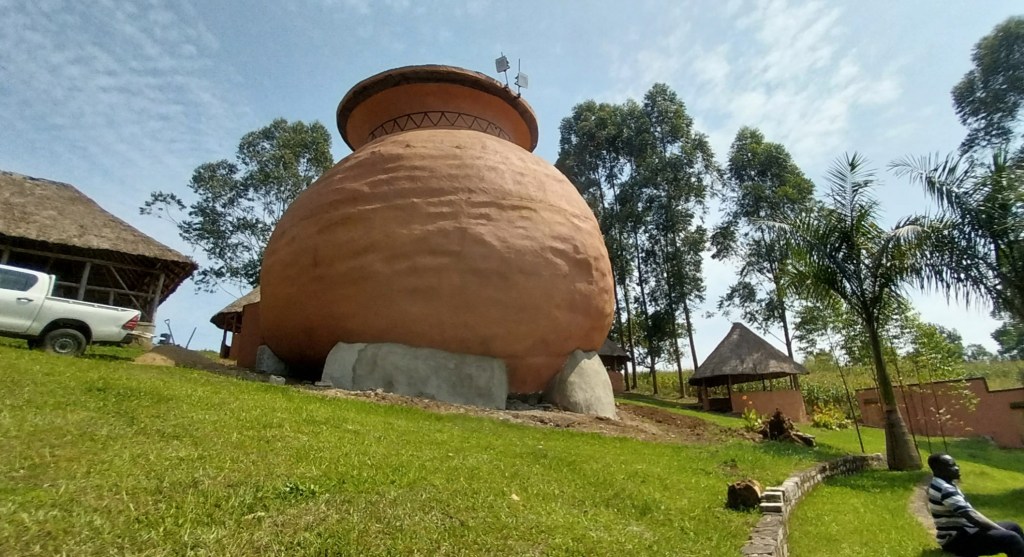
Since the land and all things on it do not belong to any individual, it is imperative for it to be used with moral responsibility. These beliefs surrounding the issue of land, make the individual aware that he owes an obligation, not only to the land but also to the community, to treat the land with care. Furthermore, the individual himself is aware of the potency of the land as a spiritual entity able to protect its own rights through supernatural means. If the individual abuses the land he will incur not only the wrath of the community, but also the outrage of supernatural world. The spiritual forces surrounding the land tend to protect it from misuse and abuse in traditional African society; every user owes the community the duty to maintain and sustain the fertility of the land. In this respect, Omo-Fadaka (1990: 177) reported that Africans who are forest dwellers ‘feel themselves to be part of the living forest; each part of which has its own spirit’ (Omo-Fadaka, 1990: 177).

Many Africans confirm that in the past men who cultivated the land knew that it was their duty not to plant certain crops repeatedly on a particular piece of land, because such practices would result in a loss of fertility. They also believed that anyone who abused the land could be struck down by smallpox, an abominable disease. Similarly, in the same community, it was forbidden for farmers to plant crops in the afternoon when the sun was high. The punishment for ignoring this custom was smallpox. The reason given for this taboo was that they believed that planting in the afternoon was an unfavourable act to the spirit of the land, and practice of this custom could cause the land to lose its fertility.
In traditional society, where people live and survive on the basis of a good relationship with nature and especially where the parts of trees are used for medicinal purposes, it is not surprising that arbitrary destruction of plants is not condoned. Amongst the Yoruba, for instance, every member of the society, especially the adults, know that plants are not supposed to be- used without consultation. Taboos and myths ensure the protection of trees, herbs, rivers, and other non-living things. These taboos and myths also have social functions (Omari 1990: 169)

The belief in ancestors is an aspect of African culture relevant to the goal of sustainable environment. The belief forms the basis of the argument that every generation has the moral duty to preserve the resources of nature for the succeeding generation. The debate in the West about there being any such duty to posterity is not tenable within traditional African culture since the African community is one not only of the living but of the dead and those yet to be bom. There is no controversy in traditional Africa that the living generation, inasmuch as they are protected by their ancestors, have a duty to conserve the communal resources for their successors.

Of all the duties owed by the ancestors none is more imperious than that of husbanding the resources of the land so as to leave it in good shape for posterity. In this moral scheme the rights of the unborn play such a cardinal role that any traditional African would be nonplussed by the debate in Western philosophy as to the existence of such rights. In the upshot there is a two-sided concept of stewardship in the management of the environment involving obligations to both ancestors and descendants which motivates environmental carefulness.
Kitara Foundation for Regional Tourism is spearheading campaign on Environmental Conservation in the Great Kitara Region . In these activities we also host volunteers from Abroad who are passionate about environment and culture conservation.
Are you passionate about ecotourism or climate change? Want to join Environmental Conservation Volunteer projects or get involved with conservation volunteer opportunities in Uganda? Then join the ”Plant Your Age” Campaign or the ”Keep it Green Keep Black” Campaign or the ”Heal the Environment for a Healing Environment” Campaign at Kitara Foundation for Regional Tourism.
Keep it Green and Keep Black
Keep it green and keep black is a voluntary campaign aimed at preserving and healing the environment for the good healing of humans in return. According to the World Health Organization (WHO), non-communicable diseases kill about 41 million people annually. This accounts for 71% of all deaths globally. Among these are lifestyle diseases that can largely be prevented through proper nutrition and fitness. Natural landscape, fresh vegetables and fruits are all key drivers of healthy bodies and minds. Trees play a key role in all these drivers. They provide fruits and underpin natural landscapes. Through agroforestry, they also protect the soil that nurtures vegetables and other crops.
Therefore, every time you grow a tree, you are investing not just in planetary health, but also human health. During the Keep It Green and Keep Black campaign, we encourage volunteers and every one of us to invest in your health by planting trees. Let’s grow trees and harvest health! As black Africans our health, our black skin can only remain stronger and protective to our lives when it is kept under natural balanced weather. Once we invest in healing the environment we will have a healing environment for our lives. We heal the environment by keeping it green, in return the environment heals us by keeping us black.
Plant Your Age Campaign;
Our concept of tree planting is named ‘’Plant your age’’ Campaign; The Plant Your Age campaign seeks to enhance and unify tree growing across the region. There are already numerous tree planting campaigns championed by different players and entities, but they are often time-bound and splintered, which makes it hard to track progress, survival and flourish of planted trees. Plant Your Age doesn’t seek to replace or outshine any of these tree planting ventures. Rather, it seeks to enhance and unify tree growing at individual, corporate and national levels.
Our enhancement is based on the concept of planting and growing trees that correspond to your age each year, whether that age is biological, product or anniversary related, for instance, during the anniversary of a given corporate’s founding, all staff members can plant trees corresponding to the corporate age in question or number of products they handle. When trees are planted, they are in essence ‘born’ and must be nurtured to full maturity. This is a critical component of the ‘Plant your Age’ campaign.
‘Plant your Age’ campaign provides an opportunity for national and county governments, corporates and individuals to inject innovation into tree growing by ensuring long-term flourish of these trees. It grants a platform for governments to expand the forest cover of gazzetted national forests by investing national resources into consistent tree planting exercises within these forests. In the same vein, ‘Plant your Age’ campaign unlocks multiple opportunities for Corporate Social Investment that will expand not just forests and woodlands, but also trees and better relationships. In addition, this campaign extends a hand of partnership to individuals who are part of a bigger movement that lends long-term significance to their individual tree growing efforts.

How old are you? Now imagine every year you have lived represents a chance to restore hope, inspire a new generation, replenish health and make the world a better place for all. When you plant a tree, you give life to the living and make it worthwhile for you, your family and future generations.
“The Plant your Age Initiative advocates for citizens and visitors to endeavor to plant trees equivalent to their ages and ensure that they grow, where applicable grow to your age.” This serves as an awareness creation opportunity for the populace to prepare to plant and grow trees equivalent to their relevant ages during every rainy season.
Would you be excited to join these environmental conservation volunteer project, would you love to contribute to healing the environment for a healing environment in the world, would you want to plant your age and leave your signature in Uganda, then join the Kitara Foundation Environmental Conservation Volunteers Program. Contact us with an email at contacts@kitararcc.com or Phone/Whatsaap +256392156562


 COMMUNITY BASED TOURISM DEVELOPMENT AT KITARA FOUNDATION FOR SUSTAINABLE TOURISM: Transforming Communities through Travel Partnerships. Email: kitararcc@gmail.com;