“Empowering Sustainable Tourism in Uganda: Introducing Kitara School of Tourism
Description: “Develop local tourism skills with Kitara School of Tourism. Focus on sustainable development, eco-tourism, and responsible travel practices in Uganda.”
At Kitara Foundation, we believe that tourism should benefit both people and the planet. That’s why we’ve established Kitara School of Tourism, a pioneering program dedicated to developing local skills, promoting sustainable tourism development, and fostering responsible travel practices in Uganda.
Our comprehensive training focuses on:
– Developing local tourism management skills with focus on product development, standardization and marketing
– Impart Sustainable tourism development principles
– Impart Expert tour guiding techniques
Join us in shaping Uganda’s tourism future, emphasizing:
– Eco-tourism: conserving environments and preserving cultures
– Green tourism: minimizing ecological footprints
– Community-based tourism: empowering local communities
– Regenerative tourism: revitalizing destinations
Invest in Uganda’s tourism potential. Invest in people. Invest in the planet.”
Our Training Resources:
Copyright & Disclaimer
Copyright Reserved: All publishing rights for this book belong exclusively to Kitara Foundation for Regional Tourism, P.Box 390234, Fort Portal, Uganda.
Copyright Information: This publication is copyrighted. While we have made every effort to trace and acknowledge all copyright holders, some oversights may have occurred. We sincerely apologize for any unintentional infringement and would appreciate any information to correct such instances promptly.
Copyright Notice: All content in this publication is copyrighted. We have diligently tried to credit all copyright holders, but if we have missed anyone, please inform us so we can rectify it.
Disclaimer: While we have meticulously reviewed this publication for accuracy and currency at the time of printing, readers are advised to verify any information, especially legal content, before use. This book is intended as general support and guidance and is not a substitute for existing professional or policy resources, nor does it replace the work of national or international tourism development partners. For applications beyond the general guidance provided here, we recommend seeking advice from qualified tourism development professionals. Neither the author, contributors, nor the publisher are liable for any errors or omissions in this publication.
Follow these links to access our course Modules;
- A carrier in Tourism: https://kitararcc.com/a-currier-in-tourism/
- Sustainable Development Through Tourism: https://kitararcc.com/sustainable-development-through-tourism/
- Tourism Business Development and Management: https://kitararcc.com/tourism-business-management/
- Principles of Tour Guiding: https://kitararcc.com/principles-of-tour-guiding/
At Kitara Foundation for Regional Tourism we emphasize tourism sector’s importance to the economic development of the country; especially for those communities that would otherwise be left behind in the national development yet they hold some of the potential tourism resources.
Our Aim is to Contribute to the National Strategic Goal of a sustainable tourism sector that helps to create jobs, increase foreign income, improve livelihoods and preserve natural and cultural resources in the Region.
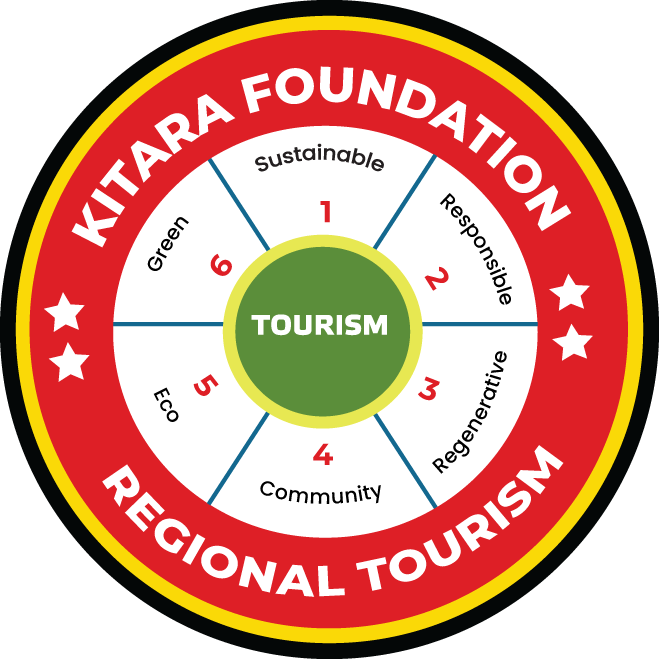
Our emphasis is on Sustainable tourism, Responsible Tourism, Regenerative Tourism, Community Based tourism, Green Tourism, and Ecotourism in Uganda.
Sustainable tourism
The most widely accepted definition of sustainable tourism is: “tourism that takes full account of its current and future economic, social and environmental impacts, addressing the needs of visitors, the industry, the environment, and host communities” Source: World Tourism Organization (UNWTO)
Responsible tourism
Aims to make better places for people to live in and for people to visit. ‘Responsible tourism’ focuses on the need to take responsibility for the impacts of tourism activity.
Ecotourism
Responsible travel to natural areas that conserves the environment, sustains the well-being of the local people, and involves interpretation and education.
Green tourism
Generally, refers to tourism activities operating in an environmentally-friendly manner.
Community-based tourism
Tourism experiences hosted and managed and/or owned by local communities which generate direct economic benefits. May also include social enterprises and other not for profit models designed to deliver benefits at a local level.
Regenerative tourism
Regenerative tourism places tourism as an integral part of a ‘living, networked system’. The aim is not only to ‘do less harm’ but to rejuvenate and nourish by building “economies and communities that thrive, and that allow the planet to thrive too.”
Our overall emphasis is on the tourism sector’s huge potentiality of steering the economic development to bridge the gap between the people who come from small communities and big cities / towns. How can we help rural communities to grow into large Tourism destinations in this region or Country?
Just like many rural communities, tourism in Uganda means opportunity. It provides jobs and economic empowerment, including for women and youth. Tourism gives Uganda rural communities the ability to protect and promote their natural surroundings, as well as their culture and heritage. In doing so, it allows domestic visitors and foreign tourists to enjoy unique experiences in Uganda.
Uganda is strategically located in the heart of major tourism destinations; the country beholds of the most complete and all-inclusive climate with balanced weather throughout the year favoring stable farming and human settlement all year round.
Uganda will over the years be a unique metropolitan area with a blossoming hotel and hospitality industry holding hundreds of thousands of tourists at any single time from across the world boosting lots of other local businesses including majorly the transport and agriculture/food sectors.
Uganda has a rich history of culture which is unfortunately fading out and may soon be forgotten. History and culture still play a great deal in shaping the future of Africa. Kitara Foundation is encouraging especially youths to invest in preserving the cultural heritage and history of their area and can make profitable gains. There is great potential for partnering with government and other bodies in this area in establishment of museums and monuments in the entire region.
Despite the Tourism sector’s rapid development in recent years, Uganda as a country has not yet been able to make the most of its potential as an attractive, diverse travel destination. Potential for growth is particularly to be found in product development, value addition and marketing, infrastructure, practical training and continuing professional development and regional cooperation.
Most parts of Uganda with major tourism destinations are rural communities, where the community members struggle to meet their basic needs and strive to put their children in school. Main jobs in these places include agriculture, hand craft making, brick making, selling fruits and vegetables, small-scale animal rearing and other manual labor jobs.
Tourism in Uganda means opportunity. It will provide jobs and economic empowerment, including for women and youth. Tourism can give the region’s rural communities the ability to protect and promote their natural surroundings, as well as their culture and heritage. In doing so, it will allow domestic visitors and foreign tourists to enjoy unique experiences in the region.
Tourism will be potentially a huge investment in the country ranging from Training institutes for tourism and hospitality to real establishment of world class tourism attractions.
Our emphasis is on the tourism sector’s huge potentiality of steering the economic development to bridge the gap between the people who come from small communities and big cities / towns in this region. How can we help rural communities to grow into large Tourism destinations in this region?
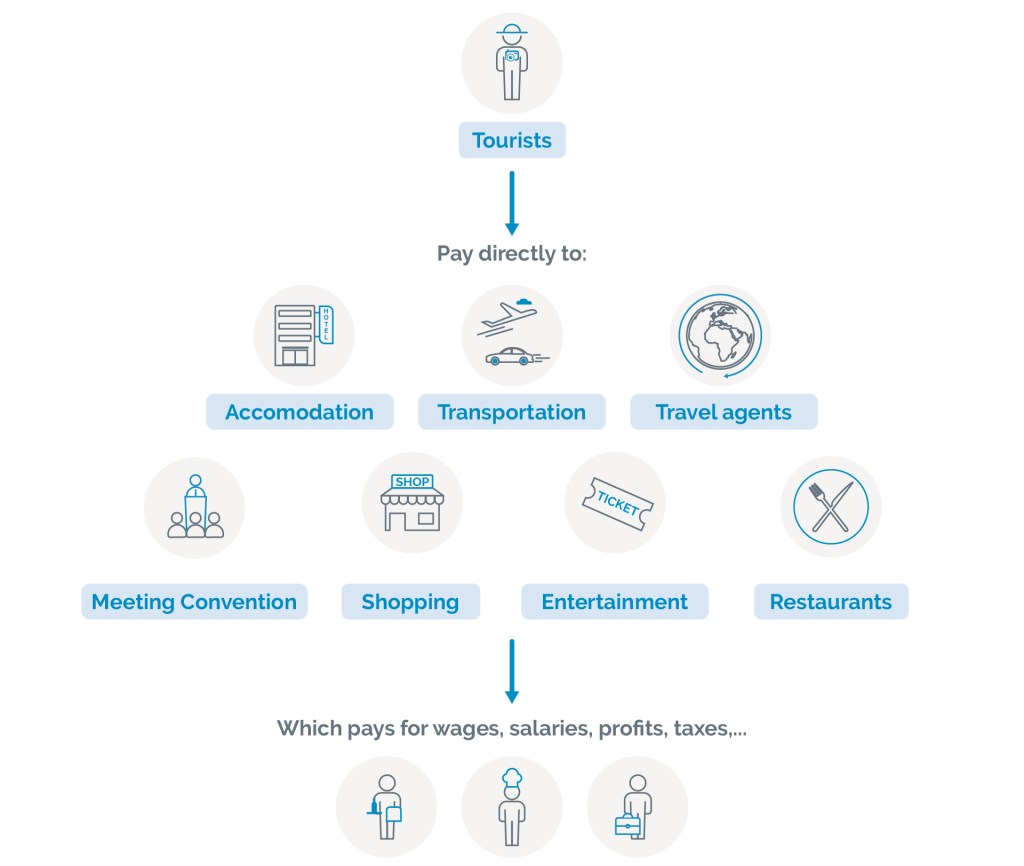
Kitara Foundation envisions tourism in the Country as a developmental tool for building not only the tourism industry, but the entire country’s communities, by opening up communities as attractions with definable modus operand with achievable goals. The process will be guided by industry standards of health, safety and regard for the environment.
At the time of developing these resources, Kitara Foundation Had Identified the following gaps in the country’s tourism and hospitality sector that inspired the development of the resources;
- Low Community involvement and participation in tourism development, hence need for sensitization about tourism and conservation of biodiversity in the country
- Existence of idle, undeveloped and undiscovered tourism resources in the country; this calls for mapping of tourism potential sites and activities (profiling)
- There is limited linkages among tourism stakeholders and actors at all levels; hence need for Coordination with all the tourism stakeholders and partners in the country
- Limited planning and budgeting for tourism and hospitality development at local levels, hence need for strengthening tourism and hospitality private sector platforms for advocacy
- There is limited capacity for tourism product development and value addition in the country; hence need to advocate for more tourism skills building and capacity building in the country
- There is limited capacity for tourism resource mobilization in the country; hence need for Resource mobilization capacity building for all tourism actors at local levels
- There is limited publicity and marketing of most rural tourism sites in the country; hence need for Building Public relations, marketing and advertising capacity of the country’s actors in tourism industry
- There is poor infrastructure in many parts of the country limiting access to most tourism centers; hence need for Improvement of tourism infrastructure such as access roads and trails
- Generally, there is underdevelopment of tourism products in the country; hence need for Tourism Product development, diversification and specialization.
- Tourism in Uganda is surrounded with numerous social health issues such as increasing poverty and disease in Tourism communities
Our hope is that development of these resources plus training and outreach activities will foster a change in the country’s tourism industry. Our focus is at developing skills and empowering local citizens to be more aware of the value of their community assets – their culture, heritage, cuisine and lifestyle. Communities will be mobilized to convert these resources into income generating projects while offering a more diverse and worthwhile experience to visitors. Every community is a potential tourism destination and every citizen is a potential tourism business partner to be trained in small business management, environmental awareness, product development and marketing, with quality customer care at the center of planning and implementation. This type of ‘people-centered’ tourism will promote a sense of ‘ownership’ which augurs well for the industry’s sustainability.
Sustainable Tourism
Sustainable tourism is defined by the UN Environment Program and UN Tourism Organization as “tourism that takes full account of its current and future economic, social and environmental impacts, addressing the needs of visitors, the industry, the environment and host communities.” Additionally, sustainable tourism “refers to the environmental, economic, and socio-cultural aspects of tourism development, and a suitable balance must be established between these three dimensions to guarantee its long-term sustainability” (UNEP & UNWTO, 2005: 11-12. Making Tourism More Sustainable – A Guide for Policy Makers).
Kitara Foundation for Regional Tourism published resource book for all participants in Tourism sector development. In fact, it is a three-in-one resource book. The first part of it is about “Sustainable Development through Tourism” which targets to benefit all actors in tourism but specifically tourism planners, policy makers, tourism entrepreneurs, tourism operators, managers and guides equally. The second part is the “Tourism Business Management” which targets especially tourism business owners, managers and all prospective tourism entrepreneurs. The third part of the book is the “The Principles of Tour Guiding – A guide to Guide Tour Guides” targeting especially Tour Guides, Tour operators and students of Tourism guiding as critical pillars in the tourism industry.
Kitara Foundation developed these resources as part of the continuous training for upskilling all actors in the tourism industry not only within Ugandan context of tourism management but with globally competitive and required skills. Continuous training is key in a number of ways;
- Enhanced Knowledge: Ongoing training ensures that tourism actors stay informed about the latest developments in wildlife, conservation, and local cultures. This knowledge enrichment contributes to tourism development in the country and providing accurate and up-to-date information to tourists.
- Improved Customer Experience: Well-trained actors in tourism can offer a more engaging and informative experience to tourists who visit the country. They can share fascinating insights, answer questions confidently, and adapt to the diverse interests of the travelers.
- Cultural Sensitivity: Training helps all tourism actors understand and respect the diverse cultures within Uganda. This cultural sensitivity is essential for creating a positive and respectful interaction between tourism actors and tourists from different backgrounds.
- Safety Measures: Continuous training includes updates on safety protocols and first aid requirements. Tourism actors equipped with this knowledge can respond effectively to emergencies, ensuring the well-being of tourists during their travels.
- Professionalism: Ongoing training promotes professionalism among tourism sector actors. This includes developing standard products, quality infrastructure, developing strong communication skills, maintaining a high standard of customer service, and adhering to ethical and industry best practices.
- Adaptability: The tourism industry evolves, and all actors need to adapt to changing trends and traveler preferences. Continuous training helps all actors stay flexible and adjust their approach to meet the evolving needs of tourists.
- Environmental Conservation: Training programs for all actors in tourism need focus on the importance of environmental conservation and sustainable tourism practices. Actors who are well educated on these matters can convey the significance of preserving natural resources to tourists, promoting responsible travel.
- Career Advancement: Continuous training provides opportunities for career development. Tourism actors who actively engage in learning and professional development are more likely to advance in their careers and take on leadership roles needed for the tourism sector.
- Networking Opportunities: Training opportunities often facilitate networking among actors and industry professionals. Building a strong network can lead to collaborations, shared insights, and increased opportunities for industry growth.
- Global Competitiveness: In a globalized tourism market, well-trained tourism actors contribute to the country’s competitiveness as a tourist destination. A destination with knowledgeable and skilled actors is more likely to attract and retain tourists, positively impacting the country’s tourism industry.
Our overall goal is to develop a competitive tourism workforce in Uganda that can ably establish, develop and sustain the tourism industry of the country. Our hope is to reach tourism actors at all levels in the country with these resources and skills and the outcome will be a competitive and sustainable tourism sector in Uganda. Therefore, the purpose of these resources is to provide insights regarding all areas of tourism industry development. This resource is not in any way meant to replace any of the existing professional and policy resources or to replace work of any of the National or international Tourism Development organizations. Guidance from professionals in Tourism Development is recommended for use outside the scope of this resource which is intended for general support and guidance, but not a specific course of action.
Find our various Training courses and their modules at the links bellow;

 COMMUNITY BASED TOURISM DEVELOPMENT AT KITARA FOUNDATION FOR SUSTAINABLE TOURISM: Transforming Communities through Travel Partnerships. Email: kitararcc@gmail.com;