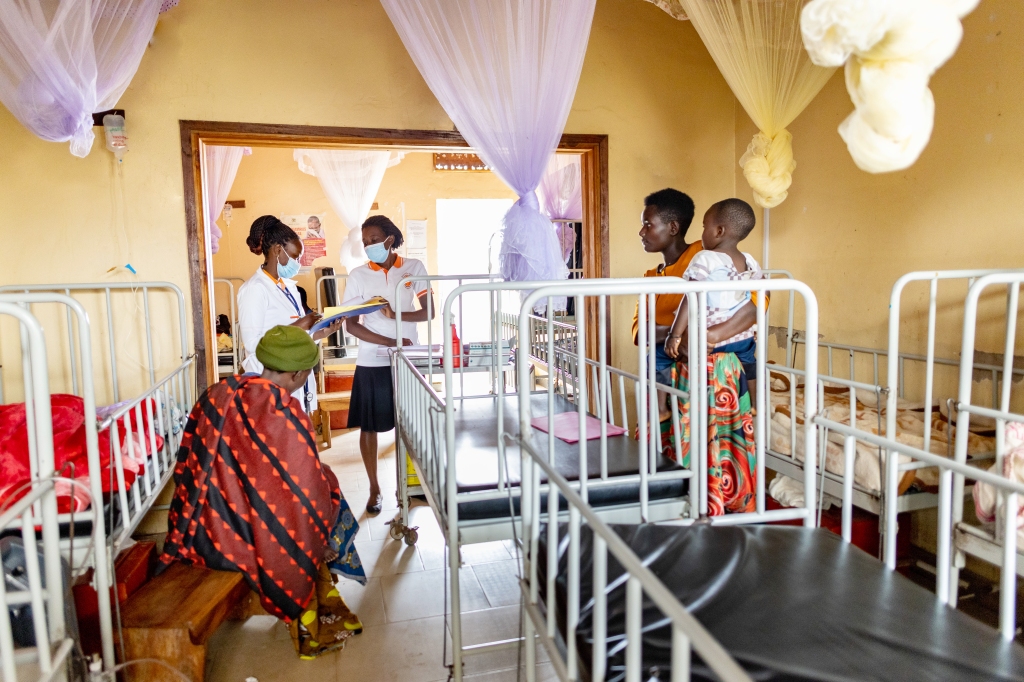
While there are many hospitals in different countries in Africa hosting volunteer medical professionals, Uganda has been a good destination for volunteer medical workers as well as other professionals. We will share with you some hospitals in Uganda and later we shall show you more hospitals in other African countries.
While the country has made inroads into poverty and health, life expectancy at birth is still extremely low, currently around 48 years. Uganda has a very high population growth rate, which remains one of the highest in the world, and also has the highest dependency ratio in the world with children constituting more than half of the population (CIA World Factbook).
As in most parts of the country, the health system in western Ugandan (both private, government and NFP services) faces a great number of complex challenges. These challenges in the system sit in the greater context of large scale corruption across all services and a lack of accountability and skills in the human resource base. The well documented challenges to health services in the country include:
- Shortage of basic equipment and medication
- Lack of health promotion/health education/preventative focus
- Lack of working referral and communication systems
- Lack of skills and training in human resources for health (lab, pharmacy, clinical/diagnosis)
- Lack of compassionate care for patients
- Over prescribing (poly-pharmacy) as a result of profit motive and lack of skill
- Lack of accountability for health workers (do not come to work/refuse to help patients, etc.)
- Lack of motivation for staff (often due to low salary, no supervision, little support, working far above their qualifications, limited medication and equipment, etc.)
- The intensity of profit motive in a developing context, which leads to: inaccurate positive lab tests, poly-pharmacy, choice not to refer when needed)
- Lack of good systems in managing health services
- Lack of specialised care for vulnerable groups such as children with disabilities, elderly, PWHA and Mental care services
(World Bank, USAID, project reports/observations over many years)
These problems within the health services have tragic consequence on the rural poor communities of Uganda. This is true for the Rwenzori region where Maranatha Health operates, as much as many other parts of Uganda. Many health clinics are in need of support, up-skilling, systems development and one-on-one training to ensure there is a cultural shift in work ethic, compassionate and preventative focused care and quality service delivery.
The combination of a lack of effective preventative health initiatives in the rural population, as well as the poor state of health services, results in the residents of the region falling sick often and facing dire consequences. The HIV/AIDs rate in Fort Portal/Kabarole district currently sits at 16% against the national rate of 12% (Uganda Aids Commission 2020) and Kabarole district at 23%-30%., the under 5 mortality rate is 123/1000 children, and maternal mortality sits at 336/100,000. The leading causes of morbidity in Kabarole include: malaria, acute respiratory infections (pneumonia), HIV/AIDs related illness, helminth infections and STIs. (Fort Portal City Statistics). The population growth rate and fertility rate of 3% and 5.4% respectively are high. The low contraception use has resulted into very high unintended pregnancies (44%) with nearly 2 out of 5 of last pregnancies wanted later or not wanted at all. Teenage pregnancies have stagnated at 25% over the last decade.
The Ministry of Health has developed and implemented over the past years Village Health Teams (VHTs) who are pairs of volunteers from each village who share health messages on prevention, and also treat basic conditions. They fit into the local health system under the local PHC facility. However, these teams are often non-existent in many villages, and in most communities we have found them to be ineffectual. They have minimal training and maximum responsibilities and so end up being unsupported, unregulated and in many cases ineffective. This leads to a situation where many communities have very few places to learn basic health prevention messages, and nowhere to turn when making decisions around their health or to manage their children’s sicknesses. (MH observations)
Poverty and sickness create a vicious cycle. When people are unwell, they cannot earn an income, they require money to pay for treatment, they are less likely to be able to afford education for their children, etc. Paradoxically, while sickness makes people poorer, poverty also leads to sickness, with a lack of health literacy, lack of access to clean water, lack of good nutrition, exposure to HIV/AIDs and other factors all leading to poorer health outcomes.
Meeting the nutrition requirements of children aged 6 months to 5 years has become another major Health challenge in the region where a large number of pre-school children are malnourished.
Malnutrition in under-fives is clinically severe especially in acute form as it accounts for the greatest contribution in the high infant mortality rates (IMR) in Uganda (deaths per 1000 live births) and under-five mortality shooting up to 134 deaths per 1000 live births. Causes of malnutrition include poor feeding practices, inadequate breast-feeding, early and late weaning, inadequate nutritional knowledge, poor hygiene, diseases and cultural practices.
One out of every three young children in Uganda are short for their age, according to the 2011 Uganda Demographic and Health Survey (UDHS) and the incidence of poor nutritional status is highest in the relatively better off sub region of Rwenzori, western Uganda.
In Kabarole and Fort Portal City, most families (70%) feed mainly on high calorific diet expressed in root tubers and cereals, with just 30% of families including vegetables and proteins in the diet. This presents an unbalanced diet, especially for children between 6 months and 5 years of age and put them at a risk of malnutrition, yet under-fives in this region make up the biggest proportion (55%) of their householders.
Malnutrition impairs immune function and malnourished children are prone to frequent infections that are more severe and longer lasting than those in well-nourished children and may lead to spiral of ever-worsening nutritional status. The current levels of malnutrition hinder Uganda’s human, social and economic development. Although the country has made tremendous progress in economic growth and poverty reduction over the past 20 years, its progress in reducing malnutrition remains very slow.
Different policy guidelines on Infant and Young Child Feeding (IYCF) have been structured to strengthen nutrition in under-fives. Efforts have been directed to promotion, protection and support of optimal IYCF spear headed by the Ministry of Health in collaboration with its stake holders. Much progress has been achieved especially in promotion of exclusive breast feeding through policy making, health education and campaigns. Despite these impressive efforts, IYCF practices are not yet optimal.
While the country has made inroads into poverty and health, life expectancy at birth is still extremely low, currently around 48 years. Uganda has a very high population growth rate, which remains one of the highest in the world, and also has the highest dependency ratio in the world with children constituting more than half of the population (CIA World Factbook).
As in most parts of the country, the health system in western Ugandan (both private, government and NFP services) faces a great number of complex challenges. These challenges in the system sit in the greater context of large scale corruption across all services and a lack of accountability and skills in the human resource base.
These problems within the health services have tragic consequence on the rural poor communities of Uganda. This is true for the Rwenzori region where Maranatha Health operates, as much as many other parts of Uganda. Many health clinics are in need of support, up-skilling, systems development and one-on-one training to ensure there is a cultural shift in work ethic, compassionate and preventative focussed care and quality service delivery.
While there are 3 larger hospitals in Fort Portal-Kabarole (one government, two mission) these serve as referral units for much of the Rwenzori region and thus are overburdened and understaffed. In total, there are about 687 government hospital beds in Kabarole. The combination of a lack of effective preventative health initiatives in the rural population, as well as the poor state of health services, results in the residents of the region falling sick often and facing dire consequences.
While it is widely acknowledged that healthcare outcomes in the region are low, the government efforts are not sufficient to address all challenges that exist. In addition, inequities in healthcare provision are often insufficiently prioritized in policy and interventions. These problems have diminished sustainably over the past ten years despite interventions by state and non-state actors. The persistent problems in healthcare pose a threat to sustainable development in the region.
In describing the context, we have shown that the ‘healthcare crisis’ in especially rural communities has still to be re-solved and that community access to healthcare is very unevenly distributed. Within the country, and be-tween cities and rural communities to some extent, there are large differences in access to healthcare services that are attributable to factors other than individual ability. Socio-economic gaps in rural communities tend to grow as people’s lives continue to be affected by ill-health. Improving healthcare services may be expected to reinforce socio-economic inequality, which is already high in the region.
Maranatha Hospital:
Maranatha Health is caring for local population in greater Kabarole and neighboring Districts. Maranatha clinic receives patients from across 9 districts, treating over 12000 patients each month. Maranatha Health has a robust community health program training and engaging village health advisors in the communities to provide public health education and monitor the health improvements in homes and including nutrition improvement and livelihoods.
Maranatha Health has a vision to see Healthy & empowered communities accessing high quality health care, and our goal is to see communities in the western region of Uganda accessing high quality compassionate health care for their children, and empowered to make good choices around their health so that their households can thrive. The development activities undertaken in this project loosely fit into 3 key pillars of Maranatha Health with associated goals:
A. Health care provision: To compliment government health services, demonstrating a model of excellence in high quality, holistic, compassionate health care. As outlined above, when the poor cannot access health care, their financial security is in further jeopardy, and they are more likely to fall sick. There are currently significant gaps in the health care system in Uganda, and many Ugandan health facilities operate at a low standard. MH seeks to fill these gaps and demonstrate to both the health sector, clinical workers, and the community what high quality excellent care can and should look like in a Ugandan context. Without a clear model to aspire to, Ugandan communities continue to settle for poor quality care and do not have the health literacy to demand something better.
Health services we are offering include provision of general outpatient services, specialized pediatric inpatient services, high quality lab testing and diagnostics, a fully stocked pharmacy, blood transfusion services, specific programs for malnutrition treatment, an ART Clinic for testing, counselling and treatment of HIV, pediatric surgery camps every 6 weeks, annual ENT surgery and comprehensive ultrasound scan services.
We plan to add to this already comprehensive list, with services that are considered necessary in our region, such as maternity services and care for children living with disabilities, and provided with a focus on enabling the most disadvantaged to access services. This may include strategic ways to improve/broaden access by working with schools, churches and other institutions, and reaching people in the communities and at PHC facilities to ensure the poorest can get the care they need. These activities will be developed over time with experimentation to see what best compliments and works within the current health system, and what allows communities best access to these services.
We will also focus in the coming years on patient utilization and access, looking at new ways to engage with the community and raise awareness about our services through churches, radio, schools and ‘free days’ for testing of certain high risk diseases, to give people a chance to engage with our services. While people come from far and wide to access the clinic, there are many in the community who don’t come because of a perception that a quality clinic like MH would be unaffordable.
With the implementation of our new hospital in the future, we hope by introducing a range of services aimed specifically at the growing middle class around Fort Portal we will be able to show a model of health care that is more financially sustainable than what is currently available in Uganda. We plan to offer high end obstetric health care to wealthier Ugandans to enable us to offer heavily subsidized or free care to those who need it most.
B. Health promotion and prevention: Working with patients and communities to empower them to make good decisions around their health so households can thrive. The core of this work includes expanding the AB (Abahabuzi B’ebyobwomezi)-Community Health Advisors program into more villages, approximately 20 villages/year. In the process, we hope to;
- Test our assumptions around why the program is so effective, and learn about the mechanisms that create this change
- Continue to gather comprehensive pre and post data to add to our evidence of impact
- Experiment and improve the program so that it can be scaled or taken up by other organisations
- Ideally share our knowledge through some initial research
Complimenting this work will be the focus on holistic health in the hospital setting, including a priority on ensuring patients feel cared for and listened to at the clinic. This involves activities such as:
- The MH counsellor meeting with every patient that comes in, ensuring patients understand what is happening to them, are supported if they need to talk with an aim to address any underlying social issues that have contributed to the admission
- Health talks with nurses and counsellor on the ward
- Counselling for all HIV patients
- Counselling for malnutrition patients
- Counselling for vulnerable groups such as children with and parents of children with disabilities
- Counselling for patients with social challenges including those from traditional healing
- Follow up home-visits with patients needing extra/complex social support
C. Health sector capacity building: To increase capacity in the Ugandan health sector through strategic and effective training. We continue to offer staff scholarships in various training programs and in various capacities, with a focus on the future of MH and our plans, which include surgical and associated skills training (such as anaesthesia), midwifery and obstetric care, among other areas.
Longer term, we plan to develop some continuing education and Professional Development for clinical workers of various cadres to invest in the wider health sector. This will be developed over time and with extensive research and testing and prototyping, at the new facility.
Maranatha Health (MH) is a centre that has very few parallels in Uganda. It is a small not-for-profit hospital of only 30 beds, yet the 4th biggest health care provider in the district after Fort Portal Regional Referral Hospital, Virika (private catholic hospital) and Kabarole (Private Anglican hospital). The services are not free (except for the most vulnerable poor), but are extremely affordable and accessible to the poor. MH always treats, then talks about payment later. Some patients, after extensive discussions regarding their finances, are able to receive services for free. MH is not attached to any church denomination or other larger group, like many other NFP hospitals, so that fully inclusive services can be offered.
Maranatha is not trying to do everything or be every-thing. MH recognizes the government health system which is offering acceptable care in many areas, and especially in primary health care such as ANC and immunization. The idea is to fill the gaps, and in doing so, provide a model of high-quality compassionate and holistic health care, which is affordable and accessible.
Maranatha Health (MH) is a registered non-profit Organisation implementing Community Health Empowerment Program with a small hospital in Fort Portal town of Kabarole in the Rwenzori Region of Western Uganda, currently with 30 beds and operating within rented facilities. The Maranatha Health Children’s Clinic has been in existence for eight years and is currently renting facilities along the Fort Portal-Kasese Highway, that were designed for hotel purpose, out-dated with poor plumbing systems. Due to a good reputation and the provision of high quality affordable care the clinic has outgrown its capacity.
Since inception Maranatha Health has made a considerable contribution to this objective, although with many challenges along the way. The health system in Uganda faces many health challenges. This region of Rwenzori and Kabarole itself has many health care centres and hospitals, many of which do not offer the kind of care needed for Ugandans to live healthy lives. Public Health facilities lack essential services, are undersupplied with essential drugs, less equipment and understaffed. Above all, there is no hospital with specialised services for children in the region.
In establishing the hospital in Fort Portal/Kabarole, the project focused on areas that are currently ‘lacking’ in the health system – children now have access to high quality care, a high dependence ward with reliable oxygen and blood transfusion services, much higher quality HIV care, a constant and reliable blood supply at MH through a strategic partnership, basic mental health care and access to an on-site counsellor, chronic illness care (such as for diabetes, sickle cell, etc), quality malnutrition diagnosis and treatment which is supported by home visits, paediatrics surgical services, health education and other important services. We also aim to give priority to care for children living with disabilities in our desired hospital.
Surgical services offered by a Ugandan Paediatric surgeon are gaining traction and have already saved many lives. Although some of this type of surgery is done currently in Fort Portal (at the regional referral hospital), it is with highly inexperienced surgeons and often can only be done through connections. The only other options are travel to expensive private facilities outside the district especiary to the capital city Kampala.
Furthermore, by investing in and providing continuous on-site training to our staff, the project has developed a team with a much more comprehensive knowledge base and high quality clinical skills. This is exceptional in this particular environment. MH has become known for quality care, compassion and trustworthiness, above all else.
Preventative services by MH are equally successful and contributing to improving the health system in communities. The village health advisory program has, with much trialling and experimentation, essentially created a ‘village health system’ where there wasn’t one. The community health development team have worked closely with the elected community health educators to train and teach the community, to identify and solve barriers to care, to discuss access and advocate to government for services, and to support and encourage small scale primary health services existing in the area. The successful graduations of the village health advisors are testament to this, with government officials commenting on the effectiveness and success of the program, the uptake by the community, the huge impact on lives and behaviour, and the longer-term ‘system’ changes that have taken place and can be used as a model for future work.
In this work, the project is making reasonable progress to translate successes and learning at both a health service centre and community level to other external health services and government programs. The public health sector in the region is starting to admire these Community Health models and are trying to integrate lessons into their own systems. This however, is on slow scale and further impact could be made if effective ways of training, empowering, and shifting the culture of the larger health system and its workers were discovered. This remain a focus over the coming years, utilising some key learnings from past attempts at capacity building.
Key outputs achieved by Maranatha Health include:
- Establishment of a high quality paediatric hospital established with appropriate systems, resources, staff, training and equipment
- About 1200 patients per year on average treated, many patients often make return visits
- 59 patients provided with ongoing treatment through a comprehensive ART program (HIV treatment)
- 16 groups of 15-20 village health advisors trained with 11 sessions in 16 communities
- Over 3200 households trained with health information and supported to establish health infrastructure in the homes
- Over 200 patients operated on in the MH theatre
- Malnutrition protocols and diagnostic criteria developed
- Regular Health Education conducted on the ward
- General and one-on-one counselling services are offered by a qualified counsellor
- Holistic Care services including Home visits
- Free Health Care services offered to the most vulnerable
- Recruited and trained key cadres of staff for both clinic and community programs with the first Ugandan doctor working full time
To volunteer in Africa contact Kitara Foundation for Regional Tourism at https://kitararcc.com/contact/

 COMMUNITY BASED TOURISM DEVELOPMENT AT KITARA FOUNDATION FOR SUSTAINABLE TOURISM: Transforming Communities through Travel Partnerships. Email: kitararcc@gmail.com;