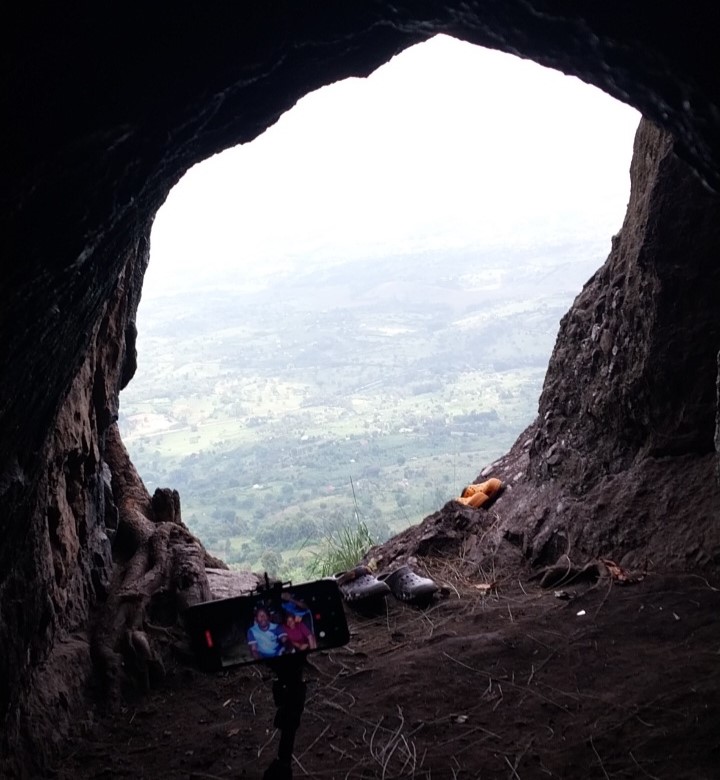
With the Trekkers Club of Ibanda.
Unlike our fathers who were raised in Africa during the 1960s, when the community never asked you to chose between your Christian or Islamic faith and your collective African identity. Today that is not the case due to more exclusive-minded types of Christianity and Islam that see patronizing indigenous African beliefs and practices as violating the integrity of their Christian or Muslim principles, but I believe that we can maintain our religious integrity and also embrace an African worldview.
For starters, the word “religion” is problematic for many Africans, because it suggests that religion is separate from the other aspects of one’s culture, society, or environment. But for many Africans, religion can never be separated from all these. It is a way of life, and it can never be separated from the public sphere. Religion informs everything in traditional African society, including political art, marriage, health, diet, dress, economics, and death.

At Nyakahondogoro Holy Prophetic House of Prayer, located up Mabanga Hill in Ibanda District of Western Uganda believers experience a balance between modern Christianity and African Indigenous tradition as people from all religious backgrounds, Christians and Muslims alike come here for a cultural interaction with the creator. Mabanga hill could be the holy mountain and this could be the house of prayer of all nations mentioned in the bible in the book of Isaiah 56:7 “Even them I will bring to My holy mountain, and make them joyful in My house of prayer. Their burnt offerings and their sacrifices will be accepted on My altar; for My house shall be called a house of prayer for all nations.”
Believers (Abatabaazi in traditional Runyankole) come into privacy with the creator a term known as Okwehereera in Runyankole. People get into contact with their spiritual realms where their gods can reveal their misfortunes and foretell the fortunes. Believers get to know if there are any spiritual wars in your life, and come to know whether there are any misunderstandings with your ancestors and how to correct them, you can get revelations about what your future is and what you are expected to do in your life. This is African astrology; It is always a great deal here, strengthening your relationship with the creator while bonding with your traditional spiritual beliefs.
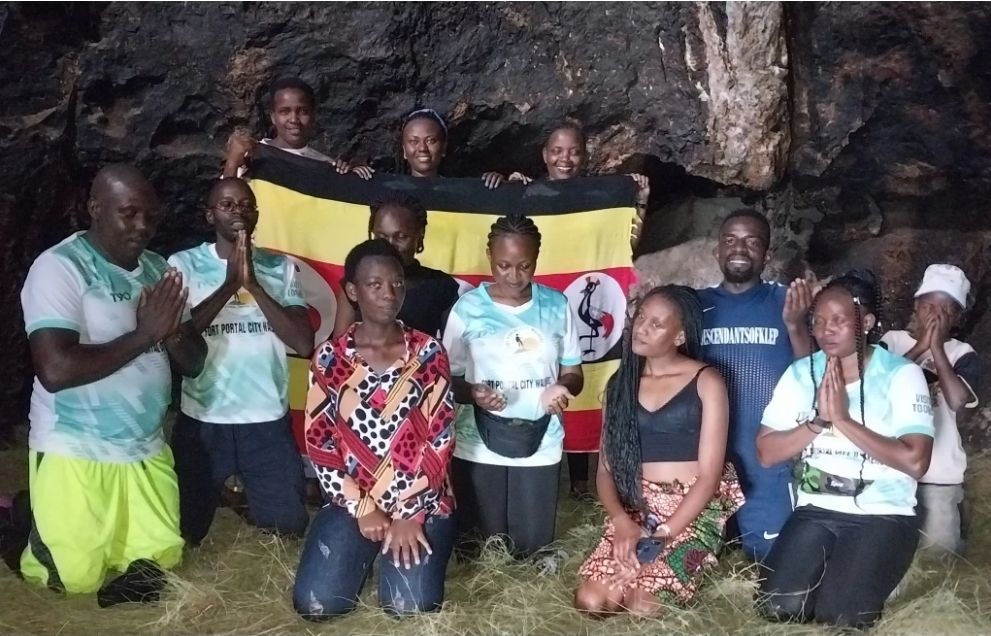
In the end, believers here can make room for a plurality of religious points of view without one religious point of view excluding or compromising the other. An old African adage says: “The sky is large enough for birds to fly around without one having to bump into the other.”
This is an example of a None Denominational Prayer Palace. People from all denominations are welcomed to this prayer palace. No one is asked about their religious affiliations, and people who come here are free to continue attending their main religions.
There are several testimonies and success stories that have been recorded from this place, stories of restored lives, mended marriages, averted sickness, found purpose for life and re-connection with the ancestral history. At this place you will always find happy, hopeful and eager people praising god and focused on better future lives.
It is believed that people here come into the mystical world of The Bachwezi, the demigods who ruled the largest traditional kingdom in Africa.
The caves are the longest and largest in the region. A hike takes you back in time and the caves, which can accommodate more than one hundered (100) people are a spectacle. Legends say that the Bachwezi “disappeared”. The caves are the most popular remaining evidence that the Bachwezi ever existed. Where they came from and where they went is all a mystery. But Natives of Ankole who visit this place for spiritual purposes will assure you that Bacwezi still exist and are interacting with people as messengers of God. In Ankole the Bacwezi are referred to as “Bakama Bénsi” literally meaning the owners of the earth. They are also refrerred to as “Ba Maraika” meaning God’s angels.
Background to None Denominational Prayer Palaces in Africa
With introduction of Christianity in Africa, there appeared a common perception in missionary circles that Africa had no prior religion, that there was no knowledge of God in Africa and hence, Africa was a ‘dark’ continent. This view and the actions flowing from it were regarded by Africans as using ‘the gospel to declare the superiority of Western value systems and using this claim to justify European conquest and exploitation of Africa. Missionaries were not only perceived as turning Africans away from their culture, but were also understood to be undermining African culture by being arrogant, in the sense that they compared African culture to their so-called superior culture. Consequently, missionaries were regarded as part, or agents, of the colonizing of Africa.
The indigenous religious and Cultural personalities made a counter-movement which was all about the resistance against domination; Western Christianity failed to meet the African aspirations. It created a serious vacuum in the lives of Africans. Western Christianity had taken from Africans a religion which was functional and useful in their lives.
This perspective saw Christianity and culture as two opposing forces of influence. The church stood on one side of the line, and culture on the other. The defenders of the Western Christianity up to today know that there is a great battle being waged (Ephesians 6), a battle that plays out both invisibly in the heavenly realm, and visibly in the cultural realm.”
This mindset tends toward legalism and tries to restrict Christians’ interactions with society and culture. Here is recognition that the Christian life involves war against culture, and wrongly tries to wage that war by escaping from the social world. In face of Christianity, people who believe in and exalt their cultures are regarded as sinners.
This mindset still falls short of understanding of the African life; it’s too easy to see ourselves fighting against people instead of sin. African social and cultural contexts are largely taken to be of unbelievers.
At None denominational Religious Centers such as Nyakahondogoro people believe that Cultural shifts that happen independently of religion aren’t always bad, God has enabled all people, Christian or not, to make good and valuable contributions in the cultural realm. It is believed that the Christians resisting these cultural shifts are in the wrong. Not all culture isn’t always right, and the church can’t mirror every move culture makes. It is also believed that without God, culture raises up idols in his place celebrities, politicians, sex, wealth and power.
Here people rightly recognize that god ordered the world in such a way that humans would make culture, and we rightly recognize that culture exhibits real aspects of truth, goodness, and beauty.
It is believed that God created a structure that allows culture to exist, shift, and progress. As humans, we formulate and shape that culture within God’s structure. There is need to recognize that every cultural context is structurally good, but sometimes directionally corrupt. For this reason, we must live firmly in the midst of our cultural contexts (structurally), all the way while seeking to steer our cultural realities toward Christ rather than toward idols (directionally).
We are inspired by the key roles culture and religion play in the well being of people and the role it plays in the development of nations all together. “Culture and religion are strong pillars in people’s lives. Culture and religion influence our values, hopes and world view.”
There is need to build a vibrant religious and culture sector that is spiritual, professional, creative and viable and contributes to the spiritual, social and economic development of people.
There is a strong belief that the house of God (Church) wasn’t meant to be denominational in nature, and hence, here at such none denominational prayer places receive all people irrespective of religious affiliations. Galatians 3:28: ‘‘There is neither Jew nor Gentile, neither slave nor free, nor is there male nor female for you are all one in Christ Jesus’’. We should say there is neither Catholic nor Anglican, neither Pentecostal nor Seventh Day, neither Orthodox nor Lutheran for we are all one in the site of god. In John 17:11: ‘‘I will remain in the world no longer, but they are still in the world, and I am coming to you Father. Holy Father, protect them by the power of your name, the name you gave me, so that they may be one as we are one’’. African spirituality simply acknowledges that beliefs and practices touch on and inform every facet of human life, and therefore African religion cannot be separated from the everyday or mundane.
African cultural heritage has a clear significance in terms of cultural identity, and the religious heritage in its various manifestations. In such none denominational prayer places there are both religious and cultural aspects of life which are carried out interchangeably.
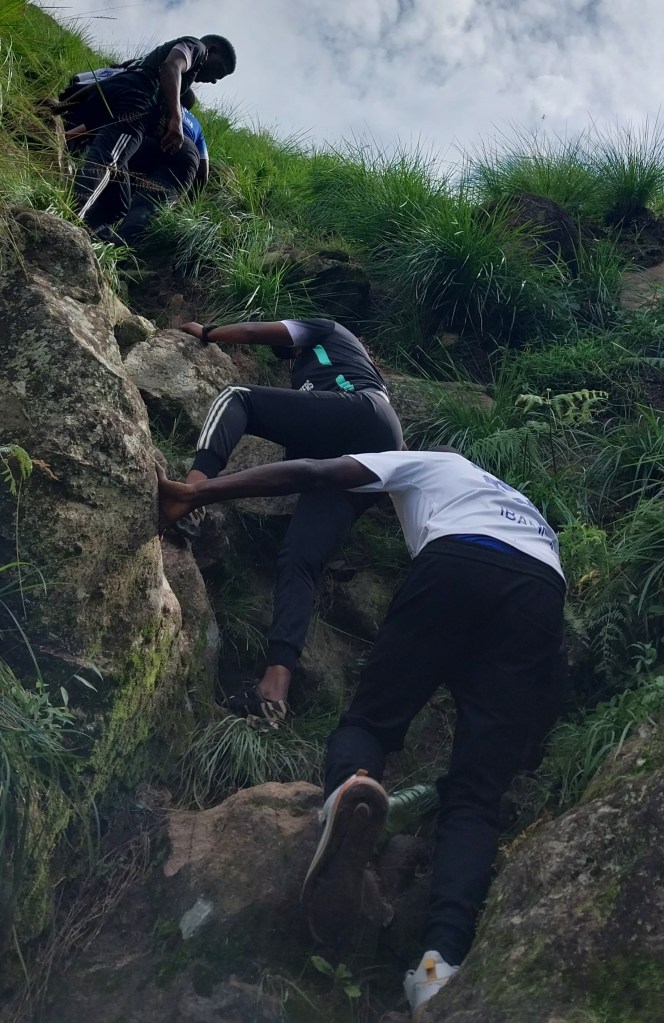
The Hike to Nyakahondogoro; Reaching to Nyakahondogoro Holy Prophetic House of Prayer of all Nations located several kilometers in a cave up Mabanga hill is a Mega Hike Challenge for both adventure and spiritual travelers who visit this area.
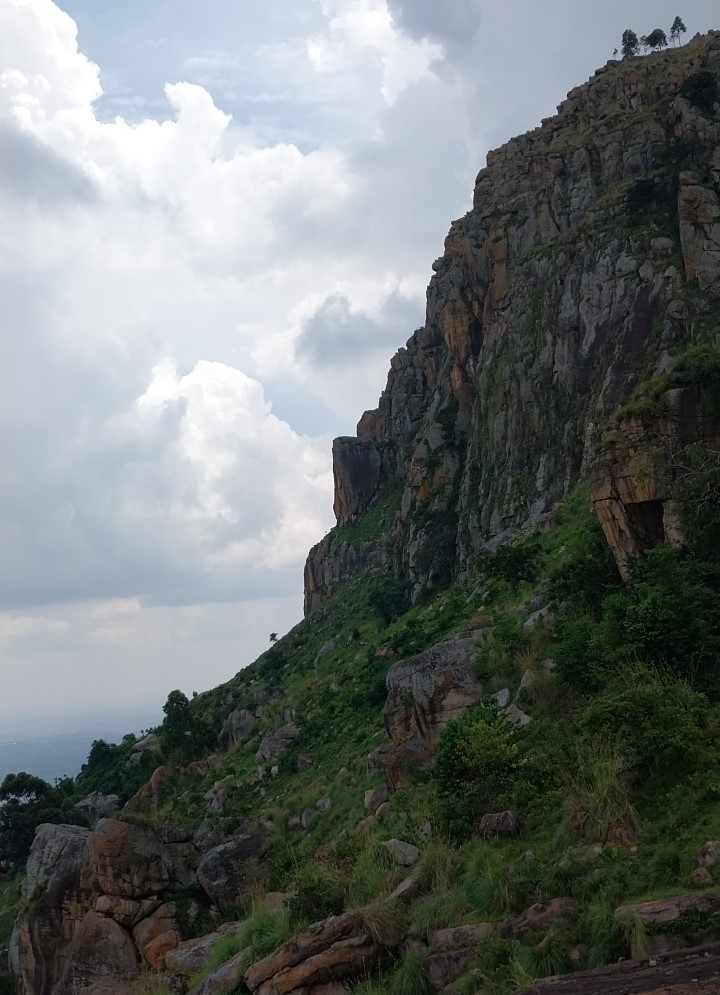
The caves are located on top of Mabanga Hill in Ibanda district of Western Uganda famously known as Kitara Region. The main prayer Palace what you may call the Chapel can accommodate about 100 people, it’s well airated with three ventilators above and the main entrance is never closed. The other two prayer rooms each a few metres from the main Chapel can accommodate about 20 participants.
The hike up Mabanga Hill starts at Nyamirima village a few kilometers from Ibanda town on the highway to Mbarara and takes you through hills, gardens and homesteads right up to Nyakahondogoro with a brief but steep ascent to the top of Mabanga hill. From here, you are able to take in 360-degree views of the surrounding landscape before descending back to the main road. The caves are a spectacle for their sheer size.
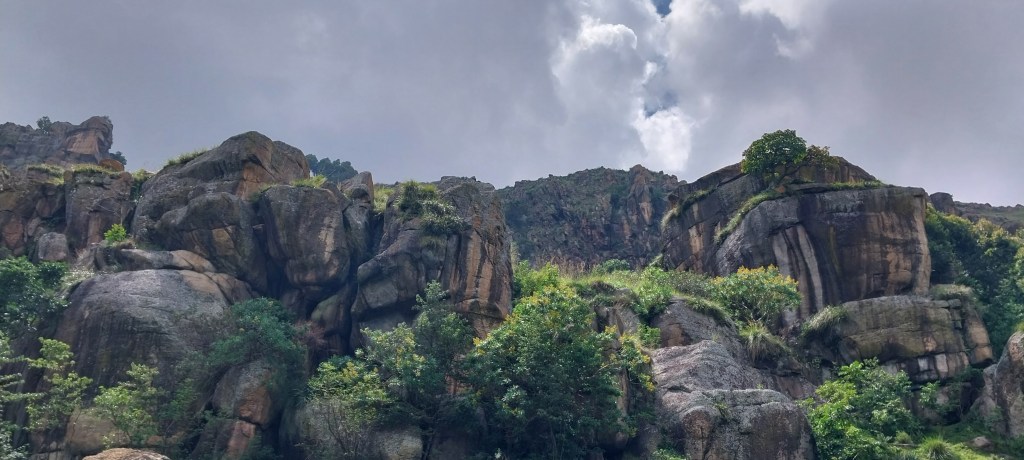
Located in Ibanda District of Ankole Region, Nyakahondogoro caves are a potential huge attraction site for both local and mainstream tourism industry. Most importantly for the locals, they are a holy site for believers, and allegedly home to the Bachwezi demigods; Travellers visit this place for both adventure and religious tourism

Tracing the spirits of the lost Bachwezi tribe; To the local populations of Ankole, this cave is a holy site for believers, some of whom are led by a woman called Nyamunyonyi. They come to make sacrifices to and to seek for blessings from their gods. The locals believe this site to be the home of the Bachwezi, the founders of the ancient Empire of Kitara, the indigenous wealth creaters and rulers of the acient Kitara empire. It’s incredibly difficult to talk to a local for longer than 5 minutes without hearing a word or two about these demigods who it is believed live among them to this day. They are said to announce their presence through night sightings of fires that cover the numerous hills surrounding Ibanda.
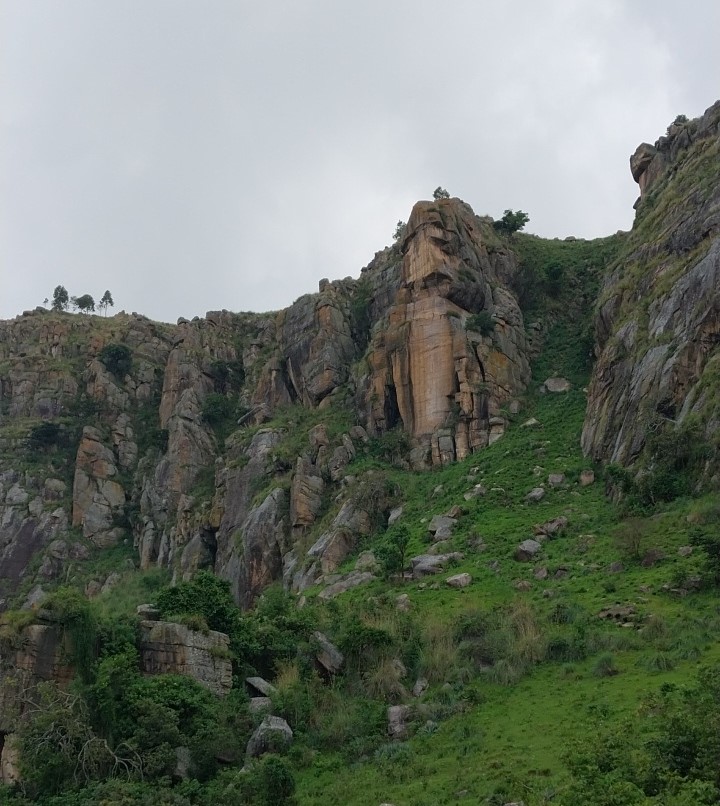
On our visit we hiked the hill to the top, we entered different rooms of the caves, we participated in prayers inside of the caves, we had good views of the world from the top of the hill. We saw a stone that contains a cross-shaped bulb which can only be seen at specific points on the trail. According to the locals, no one has ever reached at this stone as it is located at a difficult place to reach. They told us that the bulb enlarges at night and produces light in the enitire place.

As a visitor to this hill, you may win yourself a beating by relaying anthropological studies that show that the Bachwezi have never disappeared in thin air and are indeed still resident among us mere mortals but not as demigods but as black people who, like the Bantu, migrated south from Egypt following the liquidation of the Egyptian kingdom and subsequent amalgamation into the Persian empire around 525 BC when Cambyses, the King of Persia took it upon himself to kill the black natives. Whatever the truth may be is entirely dependent on how much one wants to believe in the existence of people flying on brooms and hills burning with no actual fire insight.
The holy place doesn’t allow immoral people to access it, if you are drunk, or you possess a stollen property, you have had sex out of marriage the previous night, you can’t reach to the Chapel or else you will be inviting for serious beating by the unseen forces. One of our local guides refused to reach at the Chapel because he was smelling alcohol. He could only show us the place from a distance, only a young guide about 10 years old took us inside the caves. The young boy taught us how to pray inside the cave, how to give offerings and narrated to us how with their mother were able to build a new permanent house after sessions of prayers at the Holly prophetic Palace.
Nyakahondogoro caves is one of the biggest caves in Africa that is still less visited and unknown to many Travellers. According to the locals, they believe it is the source of super healing powers and that all the Bachwezi in the world came from this cave and later split to other parts of world.
Stories say that inside the caves sometimes you will be able to see a young girl who grew up in the same cave, and it’s where she stays. It’s said she is one of the Bachwezi daughters and that she possesses natural super healing powers and people always gather around her to pray and get healed every Wednesday and Friday Night. That she has powers to see whoever is coming towards and inside the cave even when she’s not near the entrance to the cave because the cave is too big as it covers both Ibanda district and Buhweju District.

It’s also said she can interact with you in all languages minus English because Bachwezi denied her to speak it. When you visit the cave in her access, she will take you through all rooms inside the cave while explaining why the cave has a lot of rooms among them including the dining room where the Bachwezi used to gather and eat dinner, a meeting room where all Bachwezi in the world still gather to share natural powers, the healing room, the blessing room, etc. The most accessible areas are the meeting room also considered as the chapel and the other two prayer rooms. Many of the rooms are pretty well-hidden in the landscape. One of the best ways to stumble across those hidden cave rooms is to head out on a scenic hike. Some are so well-hidden, however, that you’ll need to pay close attention to where you are traveling.
In the dining room you will be able to find Millet baskets, meat sauce in well-designed bowels and it’s believed that if you try to eat one of those meals inside the cave, you will remain there or you die immediately or you will never speak again.
If you need to visit this house of prayer, contact us at Kitara Foundation, we will lead you there. Call us on +256752888149 or send us an email at contacts@kitararcc.com
Took your visit to Nyakahondogoro fill the form bellow;


 COMMUNITY BASED TOURISM DEVELOPMENT AT KITARA FOUNDATION FOR SUSTAINABLE TOURISM: Transforming Communities through Travel Partnerships. Email: kitararcc@gmail.com;