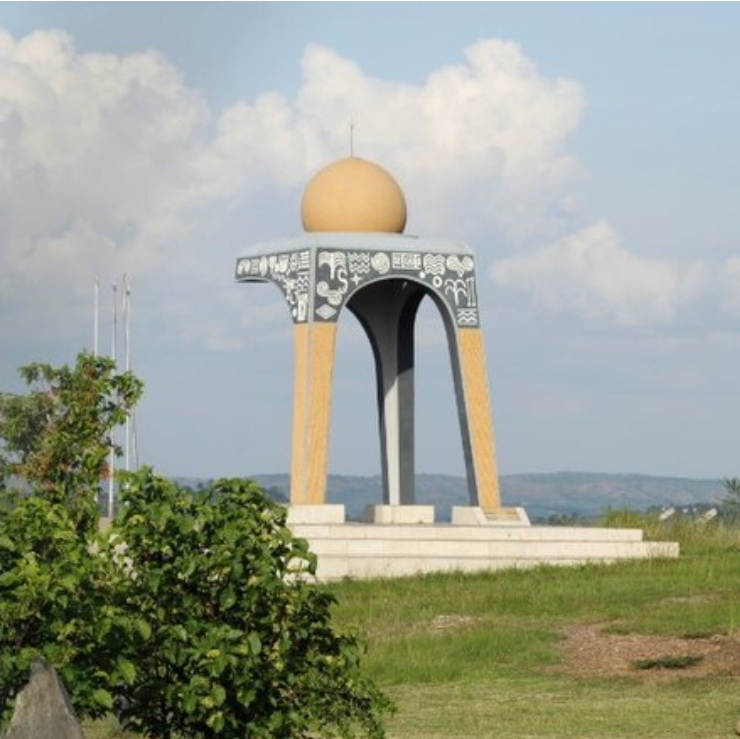
WELCOME TO BIHARWE CULTURAL HILL, THE ECLIPSE MONUMENT WITH THREE PILLARS OF HISTORY:
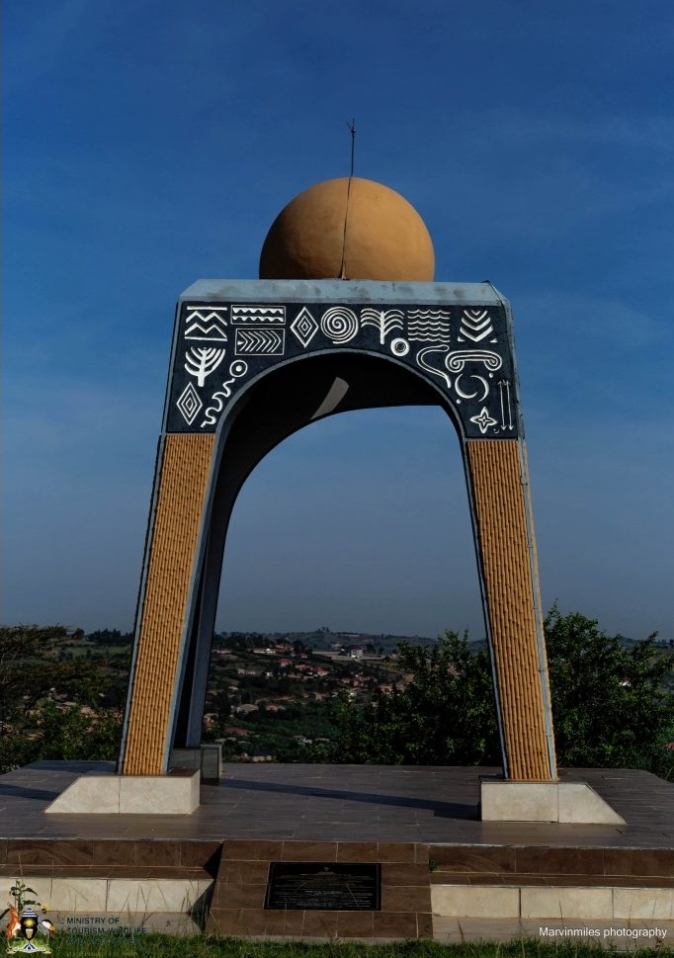
The hike to Biharwe Hill brings a fresh history of what happened between three distinctive cultural institutions of Bunyoro Kitara Kingdom, Nkole Kingdom and Buganda Kingdom in the year 1520AD (over one million years ago). Therefore, this hike is considered a cultural hike of a historical bonding.
The History Of Biharwe Eclipse
The history of Biharwe Eclipse monument dates way back to 1520AD and is the only Archaeoastronomy site in East and Central Africa, and is therefore a pillar of history and a collection of historical bonding.
The occurrence of the Eclipse affected three kingdoms, namely Bunyoro Kitara, Buganda and Nkole kingdoms.
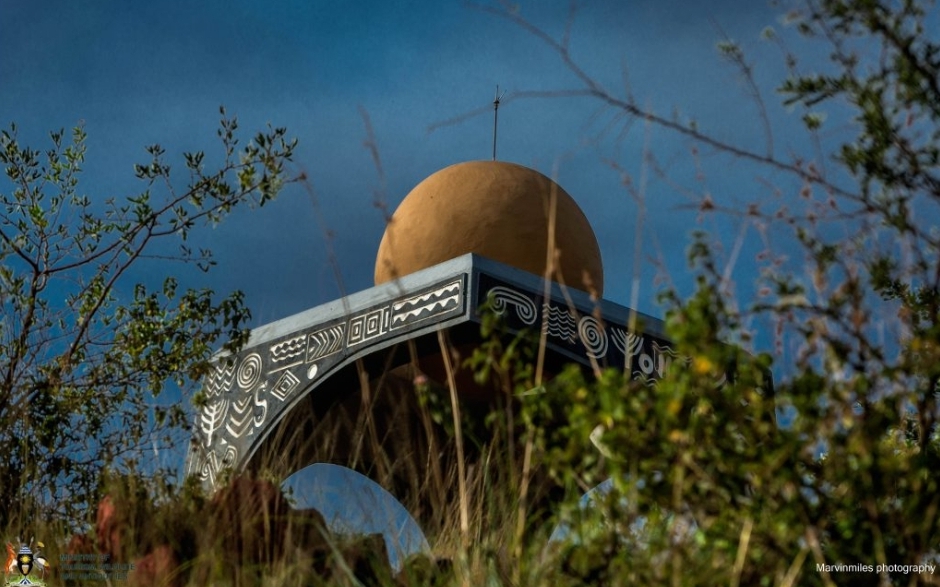
The Eclipse structure stands at about 30m high with a large orange Orb suspended in perfectly circular space on the top. It stands on three pillars representing three kingdoms that were involved in and affected by the Eclipse.
The hike to the monument has three routes also representing the three kingdoms that were involved in the battle at the time the Eclipse happened. The three routes are painted Blue, Red a d Yellow. The blue route represents Nkole Kingdom, Red represents Bunyoro Kitara Kingdom while Yellow represents Buganda Kingdom. Each route is named after the King of the kingdom that was at the time.
How Bunyoro Kitara Kingdom got involved
The King of Babito Dynasty of Bunyoro Kitara Kingdom, King Olimi I Rwitamahanga (destroyer of nations) at the time of the eclipse was returning from his usual expeditions in Rwanda, Karagwe, Mpororo and Nkole kingdoms. The king and his troops had killed hundreds of people and looted thousands of cattle. Had also captured women and children who he had turned into slaves and concubines at home.
When he reached the hill village of Biharwe in present day Mbarara City, all of a sudden the face of the sky darkened in the middle of the day. In his head, the king knew that the gods of the people he had offended were conspiring to finish him. And so in repentance or fear or both, the king and his party fled making sure to leave everything behind.
How Nkole Kingdom got involved
The king of Ankole, King Ntale I Nyabugarobwera saw the event differently. Prior to the Eclipse, his Kingdom had been going through difficult times caused by loots, death of almost all cattle due to diseases followed by poverty and starvation.
During the hard times, the society in Nkole had started using wild berries for bride price due to lack of cattle. This treacherous era is still remembered among Banyankole as Obujuganyoonza -meaning the days when wild berries were accepted for bride price.
So, when king Olimi I fled leaving all the cattle and everything else behind, it was seen as an act of benevolence from the gods. These cows would come to be known as Endugamwiguru – meaning cows that came from heaven.
For the Kingdom of Nkole, the Eclipse had started the beginning of a period of untold prosperity for the king and his people.
How Buganda Kingdom got involved
Just like the Nkole people, those in Buganda Kingdom also saw the Eclipse, and not long after the dark day they heard of the misfortunes of King Olimi I. They thought the great king of Bunyoro Kitara had been deserted by his gods. The king of Buganda- King Nakibinge thought that the king of Bunyoro had been weakened for it was believed that in normal circumstances the King of Nkole would never have defeated King Olimi I. Having been humiliated in battles by King Olimi I on many occasions King Nakibinge thought that this was his cue to take revenge. However, the battle did not go well, he would get the shock of his life when he found out that the Biharwe Eclipse had nothing to do with King Olimi being deserted by his gods.
The Buganda army was defeated and the king killed in the battle.
Written by Mwine Mbiire the Planned Tourist

 COMMUNITY BASED TOURISM DEVELOPMENT AT KITARA FOUNDATION FOR SUSTAINABLE TOURISM: Transforming Communities through Travel Partnerships. Email: kitararcc@gmail.com;