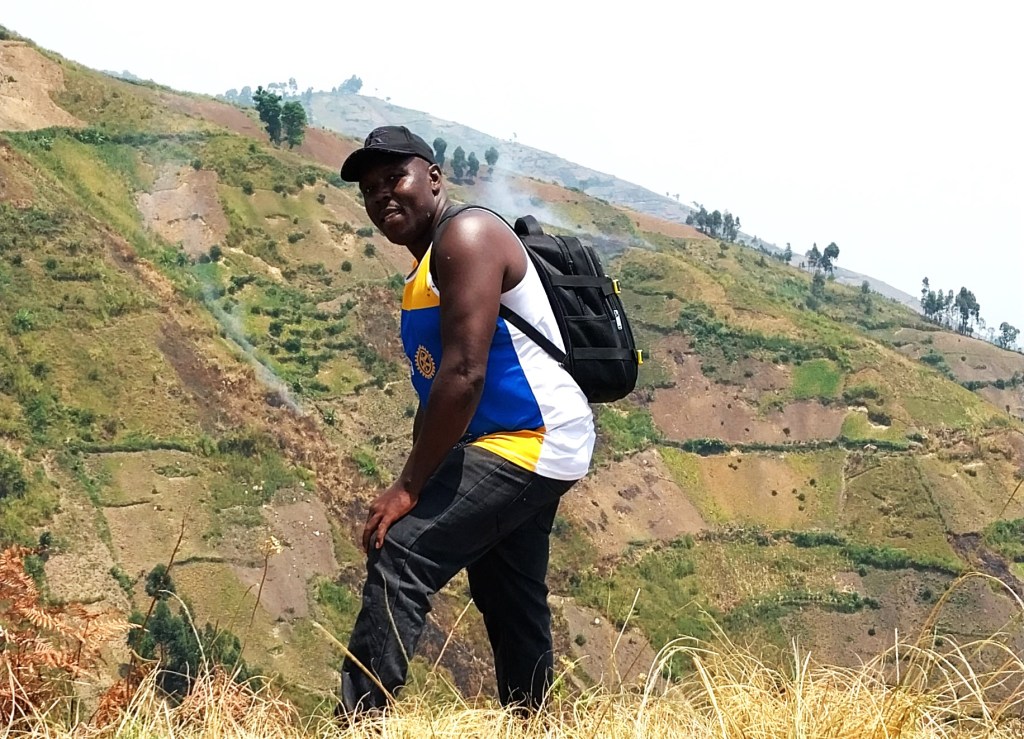
Imagine am stepping back in time, piecing together the echoes of my ancestors. To the land of Wanyambo people in Karagwe district of the Kagera Region in Northwestern Tanzania. Will my arrival coincide with the Wanyambo Festival in my traditional homeland?
My story begins not in the familiar landscapes of Isingiro where I was born from, nor from Tooro where I grew up, but in the rolling hills and fertile lands of Karagwe, a region steeped in the history of the Wanyambo people.
I picture my father, a small boy named Mbiire, holding the hands of his three sisters and his younger brother as they stood at the banks of the mighty River Kagera while relocating to Birere Isingiro Western Uganda. Perhaps the air was thick with the scent of the Tanzanian earth, a scent he would carry within him, even as he crossed the waters to begin a new life in Birere, Isingiro.
I think of Kabooko, my grandfather, a man of Karagwe. What were his days like? Did he till the land, raise cattle, or perhaps hold a place of respect within the Basiita clan? The Basiita, a branch of the Wanyambo, would have had their own customs, traditions, and stories passed down through generations. These are the threads that weave the fabric of my heritage.
And then there’s Nyinondi, my father’s uncle. In the close-knit communities of Karagwe, uncles often played significant roles in the lives of their nephews and nieces, perhaps as mentors, storytellers, or keepers of family history. The mention of his name is a tangible link, a breadcrumb on my ancestral trail.
As my father and his siblings settled in Isingiro, they carried within them the memories of Karagwe. Perhaps in the quiet evenings, under the vast Ugandan sky, they would share snippets of their former life – the sounds of the Nyambo language, the taste of familiar foods, the faces of loved ones left behind. These stories, though perhaps seemingly insignificant at the time, were the seeds of my identity, waiting for the right moment to sprout in my heart.
Growing up in Tooro Western Uganda, I got immersed in a different culture, a different landscape. Yet, the whispers of my Karagwe heritage lingered in the background, carried in the names and perhaps in subtle gestures or turns of phrase passed down unknowingly. Now, with my father and his siblings gone, the responsibility and the privilege of unearthing these roots fall to me.
My journey now is one of discovery. It may involve seeking out elders in Isingiro who remember my family’s arrival, perhaps even those who knew my father’s stories of Karagwe. It could lead me to explore the history and traditions of the Wanyambo people and the Basiita clan. I just think. Perhaps one day, it will even take me across the Kagera River to Karagwe itself, to walk the land my ancestors once called home, to seek out any living relatives or the echoes of their presence. Its long ago, more than 60 year back.
This isn’t just about names and dates, some times i tell myself. It’s about understanding the tapestry of my life, the threads that connect me to a past rich with culture and belonging. It’s about knowing where I come from, to better understand who I am.
My story is now unfolding to include the story of my Karagwe origins, a story waiting to be told and embraced. Do I know anyone in Karangwe? Anyone among the Wanyambo Basiiti? No, just people i see on Facebook, not even their phone contacts, probably some of them are my clans men and women, my kins across River Kangera, in the land where my story begins.
I now Imagine my present day, here in Uganda, where I stand at the intersection of my upbringing in Tooro, my birth in Isingiro, and the ancestral pull of Karagwe. This makes my yearning to connect with my roots a powerful current, drawing me back through the corridors of time.
I think about the moments that sparked this desire in me. Was it a chance encounter, a fleeting memory, or perhaps a quiet realization that a part of me remained unanchored? This feeling is the first step on a profound journey of self-discovery i have chosen to take.
My quest begins with the fragments you already possess: the name Mbiire, son of Kabooko, the Basiita clan among the Wanyambo of Karagwe, and the mention of Uncle Nyinondi. These are precious clues, like faded ink on an old map, guiding my initial steps.
I can picture myself taking this research. Perhaps I begin by speaking with older relatives, but where are they? May be, long-time family friends in Isingiro. I can share the few details I know, watching their faces for a flicker of recognition, a shared memory, or a lead to another person who might hold a piece of the puzzle. Each conversation could be a breadcrumb, leading me closer to understanding my father’s early life and the reasons for his family’s departure from Karagwe.
What if I cross Kagera River, and step in Karagwe, among the Wanyambo of the Basiiti clan, and ask for anyone called Nyinondi.
I can consider the historical context. What were the times like in Karagwe when my father’s family left? Were there social, economic, or political factors that might have influenced their decision to cross the Kagera? I have idea. But, Understanding the broader history of the region could provide valuable insights into my family’s story.
As I delve deeper, I might explore the traditions and customs of the Wanyambo people. What were their social structures? What were their beliefs and values? I want to gocus on learning about the Wanyambo way of life which may paint a richer picture of the world my ancestors inhabited. The Basiita clan, as a part of this larger group, would have had its own unique identity and perhaps specific roles or histories within the community.
The name Nyinondi could be a significant key in my search. In many African cultures, names carry meaning and can link individuals to specific lineages or stories. What does this name mean? Are there many families naming their children Nyinondi? Or it could be a clan name of my ancestors? The significance of the name Nyinondi within the Basiita clan or the Wanyambo community might reveal important connections to me.
I strongly feel my journey might lead to archives or historical societies that hold records related to Karagwe and its people. I might discover oral histories that have been passed down through generations, offering glimpses into the past. Could internet, with its vast resources also become a valuable tool in in my search, connecting me with individuals or communities with knowledge of the Wanyambo and their clans.
I can imagine the moment I uncover a significant piece of information – perhaps a story about Kabooko and his brother Nyinondi, or a mention of the Basiita clan in historical accounts. These discoveries would be like stars appearing in a night sky, illuminating the path forward.
This journey is not just about finding facts; it’s about connecting with a part of myself that has been dormant. It’s about understanding the resilience and the spirit of my ancestors who navigated change and built a new life while carrying the memories of their homeland.
My story is a testament to the enduring power of heritage and the human need to belong. It’s a story that is still being written, with each step I take towards uncovering my Karagwe roots adding a new and meaningful chapter to my life. The echoes of the past are waiting to resonate within me, enriching my present and shaping my future.
Wanyambo in Karagwe, help me trace my origin. I believe I came from among you. I want to come back to you, my kins, my clan’s men and women.
Sabiiti Mbiire
+256772888149
+256752888149.

 COMMUNITY BASED TOURISM DEVELOPMENT AT KITARA FOUNDATION FOR SUSTAINABLE TOURISM: Transforming Communities through Travel Partnerships. Email: kitararcc@gmail.com;