
Beyond its lush forests and diverse wildlife, Uganda holds a deeply rooted cultural heritage centered around its cattle-keeping communities. For centuries, pastoralists have lived in harmonious relationship with their herds, developing unique traditions, wisdom, and an intimate understanding of the land. Now, through community tourism, travelers have an unprecedented opportunity to step into this ancient way of life and experience Uganda’s “Cattle Tours.”

Where the Herds Roam: Key Regions for Cattle Tours
Uganda’s cattle tours primarily focus on two distinct regions, each offering a unique perspective on pastoral life:
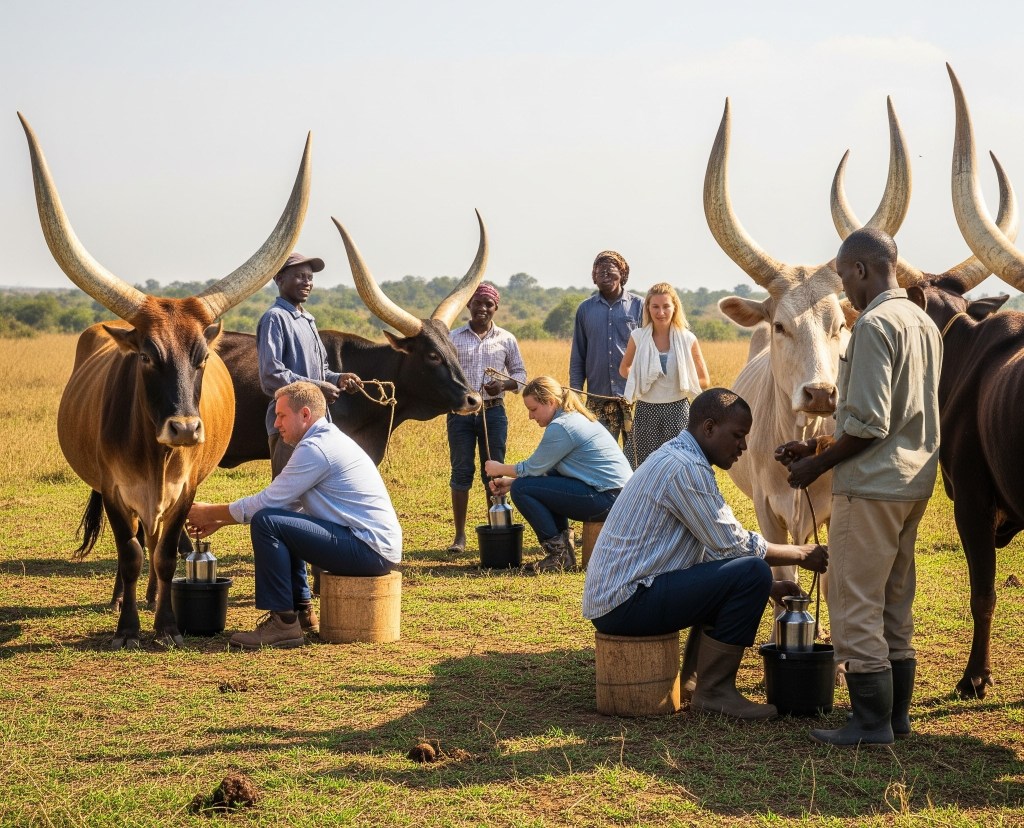
- Western Uganda – The Ankole Region (around Mbarara, Lake Mburo National Park): This is the heartland of the majestic Ankole Long-Horned Cattle, an iconic symbol of Ugandan heritage. These magnificent beasts, with their impressive horns that can span several feet, are more than just livestock; they are central to the identity, wealth, and cultural practices of the Bahima people. Farms around Mbarara and near Lake Mburo National Park offer immersive experiences.
- North-Eastern Uganda – The Karamoja Region: This semi-arid region is home to the Karamojong people, a fiercely independent and culturally rich pastoralist community. Their nomadic or semi-nomadic lifestyle revolves entirely around their livestock, primarily cattle, goats, and sheep. Tours in Karamoja offer a raw, authentic glimpse into a way of life that has largely remained unchanged for centuries.
The Whole Experience: A Day in the Life of a Ugandan Pastoralist
Cattle tours in Uganda are not passive observations; they are deeply interactive and engaging. Travelers can expect to:
- Witness Daily Routines: Participate in early morning milking sessions, often involving traditional methods and songs. Observe how calves are cared for and how the herds are led to pasture.
- Learn Traditional Practices: Understand the intricate methods of cattle herding, watering, and protection against predators. Learn about traditional animal husbandry, including the use of local herbs for treating ailments.
- Cultural Immersion: Engage with community members, sharing stories, and learning about their customs, beliefs, and the profound cultural significance of cattle in their lives. This often includes traditional dances, songs praising cattle, and insights into social structures.
- Experience Local Cuisine: Taste fresh milk, fermented milk (amacunda), and learn about the process of making ghee (clarified butter), which is a staple in many pastoral diets.
- Hands-on Activities: Depending on the tour, visitors might get to try their hand at milking, assisting with herding, or even participating in the construction of temporary kraals (enclosures) in Karamoja.
- Visit Homesteads and Kraals: Gain intimate access to traditional homes and cattle enclosures, understanding the daily rhythm of pastoral life.
Kitara Foundation for Regional Tourism Championing Quality and Authenticity
The Kitara Foundation for Regional Tourism, a leader in community tourism in Uganda, is uniquely positioned to spearhead and enhance the quality and experiences of cattle tours. Their role includes:
- Community Empowerment and Capacity Building: Providing training to pastoral communities on sustainable tourism practices, hospitality, guiding skills, and effective storytelling, ensuring that the tours are mutually beneficial and respectful.
- Promoting Cultural Preservation: Working with communities to ensure that traditional practices and knowledge are accurately represented and valued, empowering them to preserve their heritage.
- Market Linkages and Promotion: Connecting pastoral communities with responsible tour operators and international travelers, creating a direct economic benefit and a wider audience for these unique experiences.
- Developing Authentic Itineraries: Assisting in the creation of well-structured tour packages that offer genuine immersion without compromising community values or animal welfare.
- Advocating for Infrastructure Development: Collaborating with local governments to improve access roads, basic sanitation, and communication, making these remote areas more accessible and comfortable for both tourists and residents.
- Ensuring Ethical Tourism: Establishing guidelines that ensure fair compensation for communities, respect for cultural norms, and the well-being of the animals.
Benefits for Tourists: A Profound Cultural Journey
For world travelers, cattle tours in Uganda offer unparalleled benefits:
- Deep Cultural Connection: Move beyond superficial sightseeing to truly understand the lives, values, and traditions of Uganda’s pastoral communities.
- Unique Educational Experience: Gain firsthand knowledge of indigenous cattle breeds, traditional livestock management, and the ecological interdependence between people and their herds.
- Authentic Encounters: Engage in genuine interactions with locals, fostering cross-cultural understanding and creating memorable personal connections.
- Off-the-Beaten-Path Adventure: Explore less-visited parts of Uganda, discovering stunning landscapes and untouched wilderness.
- Support for Sustainable Livelihoods: Directly contribute to the economic well-being of communities, empowering them to preserve their traditions and improve their quality of life.
- Photography Opportunities: Capture breathtaking images of the magnificent Ankole Long-Horned Cattle, the vast Karamoja plains, and the vibrant life of pastoral communities.
Benefits for Communities: Sustainable Growth and Cultural Pride
Communities that embrace cattle tourism experience significant advantages:
- Diversified Income Streams: Supplement traditional livelihoods with revenue from tourism, providing resilience against environmental challenges and market fluctuations.
- Cultural Preservation and Revival: The value placed on their traditions by visitors encourages communities to actively preserve and celebrate their unique cultural heritage.
- Job Creation and Skills Development: Opportunities for local guides, cultural performers, artisans, and hospitality providers, building local capacity.
- Improved Infrastructure: Tourism revenue can be reinvested in community projects such as water sources, schools, and health clinics.
- Increased Awareness and Appreciation: Exposure to international visitors can lead to greater recognition and appreciation of their unique culture and the importance of their pastoral lifestyle.
- Empowerment and Self-Determination: Communities take ownership of their tourism products, ensuring that development aligns with their priorities and values.
Integrating the Herd into Rich Itineraries
Kitara Foundation plays a crucial role in integrating cattle tour experiences with other captivating Ugandan adventures to create truly satisfying itineraries:
- Western Circuit Harmony: Combining an Ankole cattle tour near Mbarara or Lake Mburo National Park with wildlife safaris in Lake Mburo or Queen Elizabeth National Parks, and perhaps chimpanzee trekking in Kibale Forest. This creates a balanced itinerary of nature, wildlife, and deep cultural immersion.
- Karamoja Cultural Expedition: Integrating a Karamojong cattle tour with visits to Kidepo Valley National Park for unparalleled wildlife viewing, and possibly cultural experiences with other ethnic groups in the region, offering a comprehensive look at Uganda’s diverse north-east.
- Agri-Cultural Tapestry: Weave cattle tours with coffee tours, vanilla experiences, or banana plantation visits. This allows travelers to appreciate the full spectrum of Uganda’s agricultural bounty and the diverse ways communities interact with their environment. Imagine a morning milking Ankole cattle, followed by an afternoon exploring a vanilla farm, culminating in a traditional Ankole meal.
- “Pearl of Africa Deep Dive”: For extended trips, combine cattle tours with gorilla trekking in Bwindi or Mgahinga, primate tracking in Kibale, Nile River adventures, and city explorations in Kampala and Entebbe. This offers a holistic view of Uganda’s natural wonders and cultural richness.
An Invitation to the Heart of Uganda
Uganda’s pastoral communities offer a window into a timeless way of life, where the rhythm of the land is intertwined with the pulse of the herd. This is an invitation to go beyond the typical tourist path, to engage with remarkable people, and to experience a form of sustainable travel that leaves a lasting positive impact.
World travelers, let the majestic long-horned Ankole cattle and the resilient Karamojong pastoralists capture your imagination. Come to Uganda and discover the profound beauty of its cattle culture, a journey that promises not just sights, but deep connections and unforgettable memories. The Pearl of Africa awaits your footsteps on its ancient grazing grounds.

 COMMUNITY BASED TOURISM DEVELOPMENT AT KITARA FOUNDATION FOR SUSTAINABLE TOURISM: Transforming Communities through Travel Partnerships. Email: kitararcc@gmail.com;