
A New Community Tourism Product by Kitara Foundation for Sustainable Tourism
Kitara Foundation for Sustainable Tourism is proud to launch a unique community tourism product that takes you beyond the traditional safari and into the heart of Uganda’s rich cultural heritage. We invite you to experience “The Borassus Palm Experience,” a journey rooted in history, nature, and the resilience of a people.
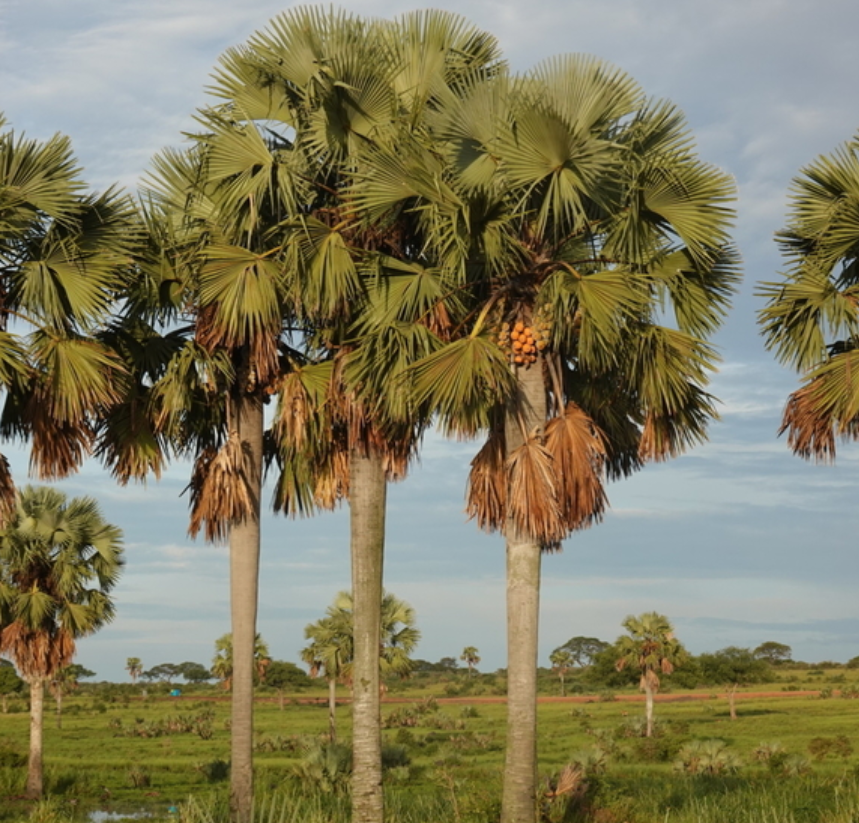
A Borassus palm tree is a genus of large, fan-shaped palms native to tropical regions of Africa, Asia, and Papua New Guinea. The most well-known species is the African fan palm (Borassus aethiopum), which is prominent in its native African habitats.
Origin and History: The Tree of Life
The Borassus palm (Borassus aethiopum), locally known as the “Borassus palm,” is more than just a tree in Uganda; it is a monument of life, a symbol of survival, and a cornerstone of culture. In the landscapes of Northern Uganda and throughout the Albertine Rift Valley, these majestic, swollen-trunked trees have naturally grown for centuries, providing sustenance, shelter, and livelihoods for the local communities.
Historically, the Borassus palm has been central to the way of life for the Acholi and Alur people. The tree’s fan-shaped leaves were used for thatching homes and weaving essential items like mats and baskets. Its sturdy wood was a primary material for construction, and its fruit, sap, and shoots were integral to their diet. It’s a “Tree of Life” that has sustained communities through times of peace and adversity, embodying a deep connection between the people and their environment.
In recent years, as the region has found peace and a renewed sense of purpose, the Borassus palm has taken on a new role. While still a vital resource, it is now a celebrated icon, its beauty adding a touch of elegance to hotel compounds and home gardens, serving as a reminder of the region’s natural and cultural wealth.
Key Characteristics:
- Size and Trunk: Borassus palms are robust, unbranched trees that can grow up to 30 meters (98 feet) tall. The trunk is gray and often has a swelling or “ventricose” shape just below the crown. It is also marked with distinct rings from where old leaves have fallen.
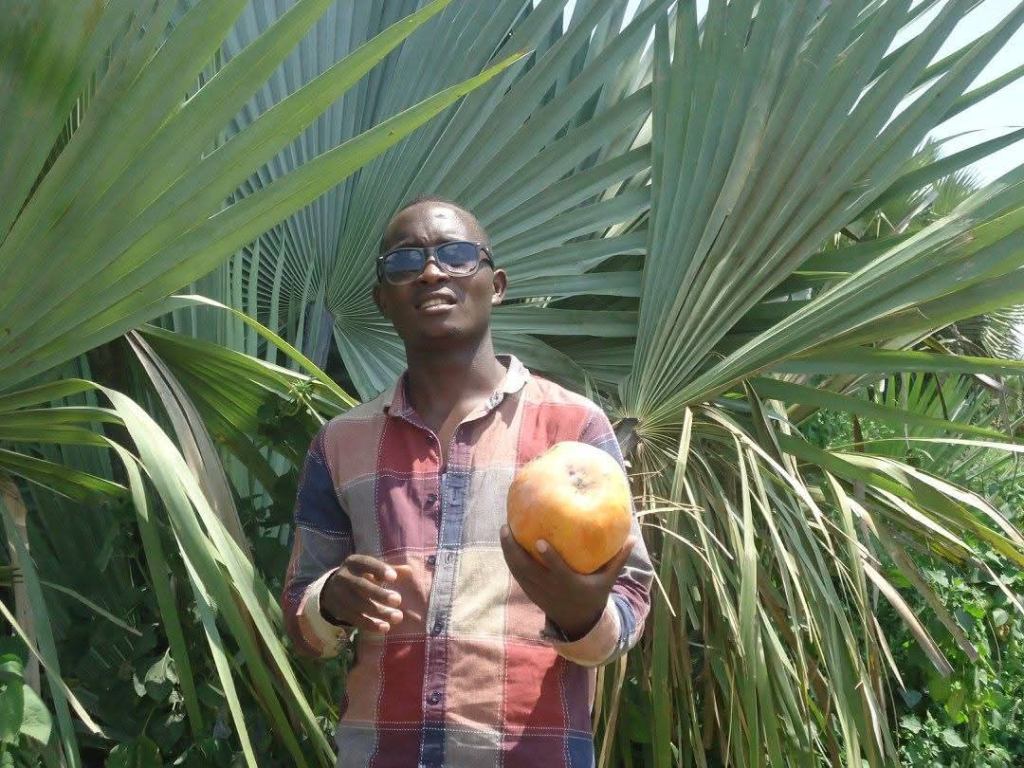
- Leaves: The leaves are large, fan-shaped, and can be up to 3 meters (9.8 feet) long. The stalks of the leaves have robust, black teeth or spines along their margins.
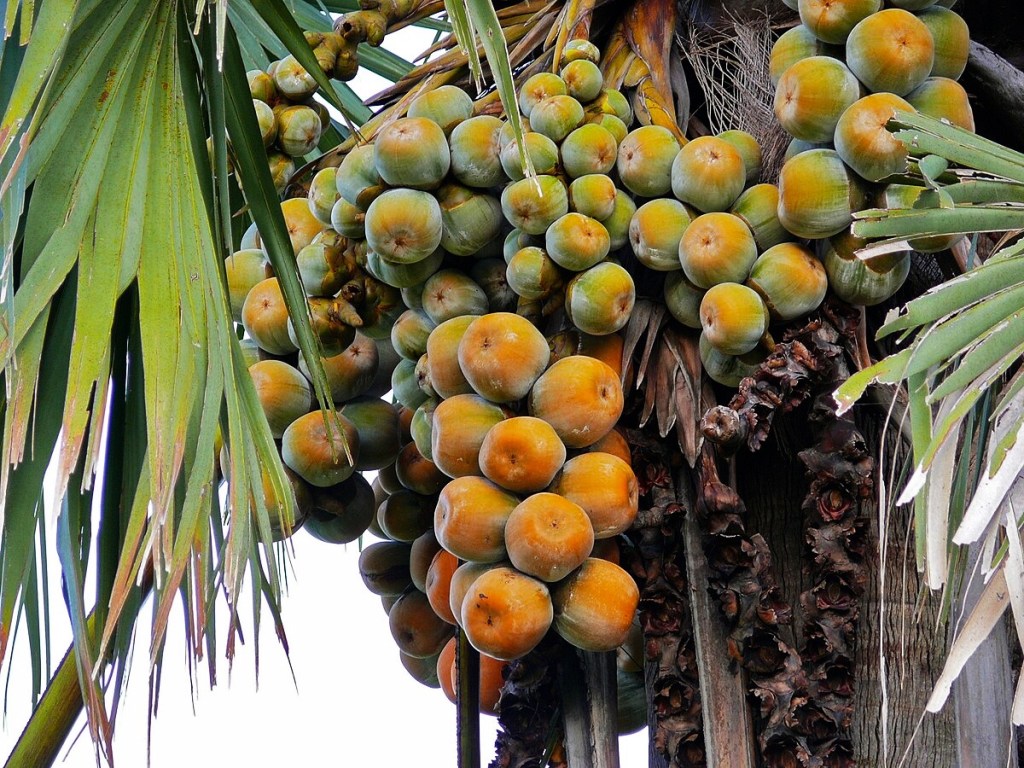
- Fruit and Flowers: Borassus palms are dioecious, meaning male and female flowers are on separate plants. The fruit is large, roughly spherical, and black to brown when ripe. It contains a sweet, fibrous pulp and several seeds.

Uses and Significance:
Borassus palms are incredibly versatile and have been an important resource for people in their native regions for centuries. They are often referred to as “celestial trees” or “trees from which anything you wish can be taken” due to their numerous applications.
- Food and Drink:
- Fruit: The fruit pulp and young, jelly-like seeds are edible and can be eaten raw, cooked, or roasted. The pulp is also used to make various dishes.
- Sap: The tree’s sugary sap, known as “toddy,” can be collected from the young inflorescences. This sap can be consumed as a refreshing beverage, fermented to make palm wine or vinegar, or concentrated to produce a crude sugar called jaggery or palm sugar.
- Other edible parts: The young plants can be cooked as a vegetable, and the apical bud (palm heart) is also consumed, although harvesting it kills the tree.
- Materials:
- Leaves: The fan-shaped leaves are used for thatching roofs, weaving mats, baskets, hats, and fans. They were historically used as a writing material for ancient manuscripts, especially in South and Southeast Asia, where they are known as “lontar” leaves.
- Wood: The black, hard, and durable timber is highly valued for construction, especially in structures that are exposed to water, like wharves and boats. It is also used for furniture and fencing.
- Medicinal Uses: Various parts of the tree, including the fruit, roots, and sap, have been used in traditional medicine to treat a range of ailments from stomach problems and coughs to inflammatory conditions and fever.
Habitat, Distribution, and Ornamental Use in Uganda:
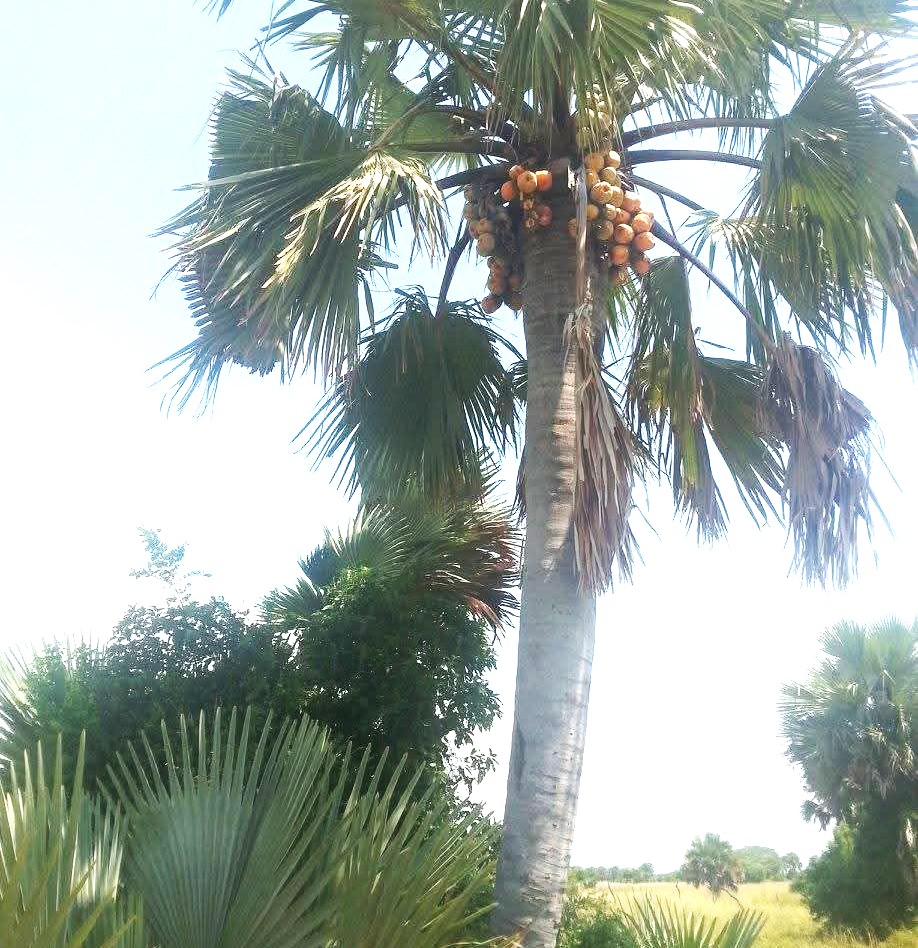
In Uganda, the Borassus palm (Borassus aethiopum) is a naturally growing species found in the wild. It is a characteristic feature of the savanna landscape, particularly in parts of Northern Uganda and in areas around Lake Albert. You can see magnificent examples of these palms dotting the countryside and dominating stretches of savanna in places like Murchison Falls National Park and Toro-Semliki Wildlife Reserve, which lie in the vicinity of Lake Albert.
The Experience: A Journey into Authentic Community Life
“The Borassus Palm Experience” is a hands-on, immersive tour designed to give you a profound understanding of this unique culture. You won’t just observe; you will participate.
Your journey will include:
- A Village Walk and Cultural Immersion: Guided by local community members, you will walk through villages nestled among the towering Borassus palms. Learn about the tree’s historical significance and witness its continued use in daily life.
- The Art of Weaving: Join local women in a hands-on workshop to learn the intricate art of weaving Borassus leaves into baskets, hats, or fans. This is a chance to acquire a skill, create a unique souvenir, and hear the stories and songs of the community.
- Traditional Food and Drink: Taste local delicacies and learn how various parts of the Borassus palm are prepared and consumed. You might even have the chance to sample the famed “toddy,” the sweet sap from the palm.
- Storytelling and Music: In the evenings, gather around a fire under a canopy of stars and Borassus palms. Listen to elders recount the history and legends of their people, accompanied by traditional music and dance.
- Direct Community Impact: The revenue generated from this experience goes directly back to the community, supporting local projects, education, and the preservation of cultural heritage.
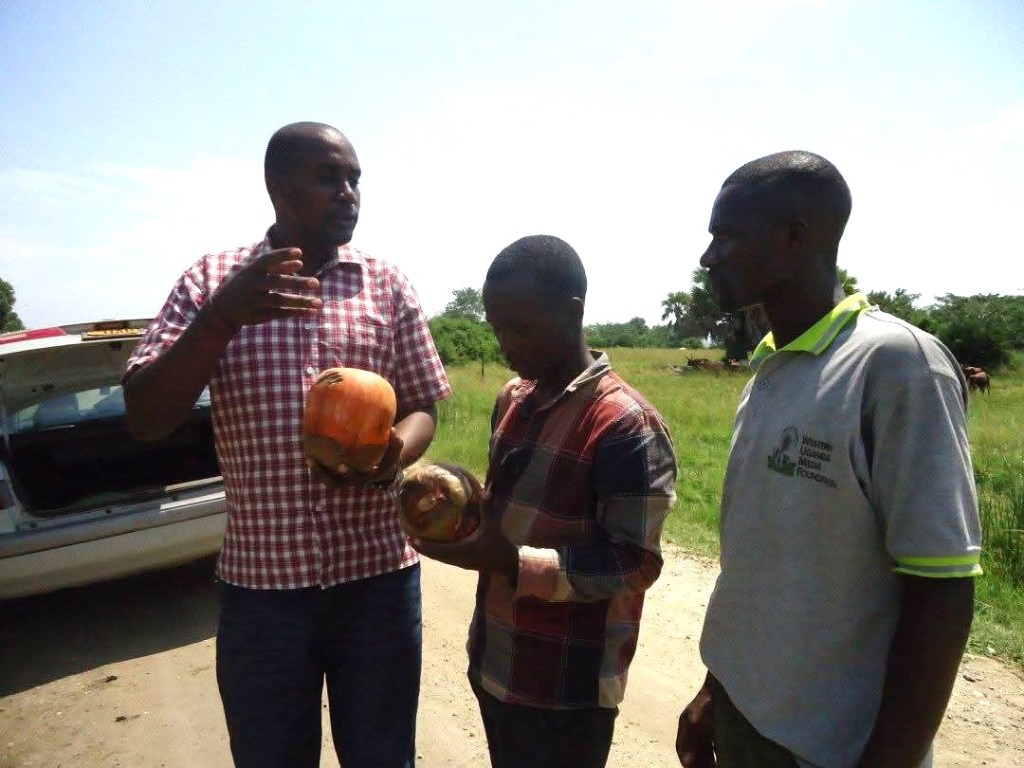
An Unforgettable Journey: The 8-Day Borassus Palm & Western Uganda Safari
This unique community tourism product is the perfect complement to a comprehensive wildlife safari. We have crafted a special 8-day itinerary that combines the profound cultural experience of the Borassus palm with the breathtaking wildlife and primate encounters of Uganda’s western circuit.
Day 1: Journey to the North Your adventure begins in Kampala. After a briefing, you’ll embark on a journey to Northern Uganda, a drive that takes you through diverse landscapes. You will arrive in the late afternoon or early evening at your lodge near the Borassus palm communities.
Day 2: The Borassus Palm Experience Today is dedicated to a deep dive into the local culture. Guided by community members, you will walk through villages, learn about the historical and modern-day significance of the Borassus palm, and participate in a hands-on workshop to learn traditional weaving with its leaves. You will also get to taste local foods and drinks derived from the tree and spend the evening listening to stories and music from the elders.
Day 3: Wildlife of Murchison Falls After an early breakfast, you will head to Murchison Falls National Park. The day will be packed with a thrilling game drive across the savanna, searching for lions, elephants, giraffes, and buffaloes. In the afternoon, a boat cruise on the Nile River will take you to the base of the mighty Murchison Falls, where you’ll witness the incredible power of the Nile as it squeezes through a narrow gorge.
Day 4: Travel to the Primate Capital A scenic drive takes you from Murchison Falls towards Fort Portal. This full-day journey offers a glimpse of Uganda’s changing landscapes, from the savanna to the lush, green hills of the west. You’ll arrive in Fort Portal, a town known for its stunning setting at the foot of the Rwenzori Mountains and its proximity to several national parks.
Day 5: Chimpanzee Trekking in Kibale An unforgettable morning awaits in Kibale National Park, the “Primate Capital of the World.” After a briefing, you will embark on a guided chimpanzee trekking experience. Trek through the forest, listening for the hooting and hollering of the chimps, and spend a precious hour observing them in their natural habitat. In the afternoon, you can opt for a visit to the nearby Bigodi Wetland Sanctuary for more primate and bird watching.
Day 6: Semuliki’s Hot Springs and Borassus Palms Today, you will visit Semuliki National Park, a unique lowland tropical forest. Your main activity will be a visit to the famous Sempaya Hot Springs. Walk through the forest to witness the bubbling hot springs, where you can even boil an egg as a fun experiment. The area around Semuliki is also home to its own Borassus palm communities, and you’ll have the opportunity to engage with them, learning about how this versatile tree is used in a different region of Uganda.
Day 7: The Wonders of Queen Elizabeth National Park The journey continues to Queen Elizabeth National Park, Uganda’s most famous wildlife destination. The day’s highlights include a game drive in the Kasenyi plains, where you can spot a vast range of animals, from warthogs to the iconic Ugandan kob. In the afternoon, enjoy a boat cruise along the Kazinga Channel, home to one of Africa’s highest concentrations of hippos and a fantastic spot for bird watching.
Day 8: Farewell to the Pearl of Africa After a final breakfast, you will begin your journey back to Kampala, filled with memories of an incredible safari that combined the best of Uganda’s wildlife and cultural experiences.
Come and discover a side of Uganda you never knew existed. Come for the wildlife, but stay for the people. Come and experience this unique journey with Kitara Foundation for Sustainable Tourism.
Contact Us


 COMMUNITY BASED TOURISM DEVELOPMENT AT KITARA FOUNDATION FOR SUSTAINABLE TOURISM: Transforming Communities through Travel Partnerships. Email: kitararcc@gmail.com;