
World Tourism Day 2025, A celebration in the Wild by Kitara Foundation and Fort Portal City Walkers;
Hark, ye adventurers, ye seekers of horizons, and ye who crave tales spun with the thread of mountain mists and the hearty laughter of a thousand sun-kissed peaks! For on this World Tourism Day, when the very spirit of travel sought new paths, a clarion call rang out from the heart of Kitara, echoing across the fertile plains and up the ancient slopes: “Hiking for Peace this World Tourism Day!”

Ah, ’twas a summons not of war, but of kinship, a mighty drumbeat against the drum of division. For what is hiking, my friends, but a pilgrimage of purpose? Each step taken upon the rugged earth, each breath drawn from the crisp mountain air, is a testament to perseverance. To walk together, shoulder to shoulder, up the challenging slopes, to offer a hand when a foot falters – this, my dears, is the very essence of peace. It is the silent language of shared struggle and mutual support, a living parable of how humanity, united, can conquer any peak, not with sword and shield, but with sweat and smiles. And on World Tourism Day, this gentle conquest was a vibrant banner, proclaiming that even the mightiest mountains can be pathways, not walls.
The invitation from Kitara Foundation for Sustainable Tourism was not merely an invite to walk, but a dare, a poetic challenge that tickled the very soul: “We are Conquering the Mountains of the Moon this World Tourism Day, by crossing the Rwenzori Mountains National Park from Fort Portal to Bundibugyo through the popular ‘Bwamba Pass’!”

And oh, what a pass it is! The Bwamba Pass, a timeless artery, carved by generations of the proud Bakonzo, the indigenous custodians of these lower Rwenzori slopes. These are the mountain folk, my brethren, whose lives are woven into the fabric of the hills, their homes perched like eagles’ nests, their spirits as resilient as the ancient rocks. They are the keepers of the mountains’ secrets, their language a melodic whisper carried on the wind, their hospitality as warm as a hearth fire in the chill of dawn. To them, these peaks are not merely geological marvels, but living ancestors, sacred spaces where spirits dwell and stories unfold. For centuries, the Bwamba Pass has been their umbilical cord, connecting kinsfolk, bridging valleys, a testament to their enduring communal heart. To tread their ancient path was to walk through living history.
But wait, the plot thickens, the adventure swells! For this noble endeavor was joined by a spirited legion, the Fort Portal City Walkers, a band of merry vagabonds whose love for the outdoors burned brighter than a hundred suns. These are the urban explorers, the pavement pounders who, with a twinkle in their eye and an endless store of banter, transform a simple stroll into an epic journey. Their presence, like a splash of vibrant paint on a canvas, turned the hiking experience from a mere trek into a full-blown carnival of camaraderie, promising more laughs than a mischievous monkey at a banana stand!

And so, the awaited day finally dawned, 27th September 2025, a date circled in red, highlighted in anticipation, for it was the day the world paused to commemorate World Tourism Day. The theme, a beacon for our times, was “Tourism and Sustainable Transformation.” Ah, a weighty title, indeed, but one that resonated deeply with the very soul of Kitara Foundation. Their vision of Community Tourism is not just about postcard-perfect views, but about knitting the traveler’s journey into the very fabric of local life. It’s about ensuring that the tourist’s footprint leaves not just memories, but prosperity. It’s the belief that tourism, to truly transform, must first embrace and uplift the communities and cultures it touches, like a gentle rain nourishing the soil. It’s giving back, sharing, and celebrating, ensuring that the magic of a place benefits those who call it home.
The Fort Portal City Walkers, these champions of Domestic Tourism, understood this creed perfectly. They rallied their troops, their spirits as high as the Rwenzori peaks themselves, recognizing that local exploration is the bedrock of sustainable tourism, a pillar upon which future adventures are built.

The morning, oh, the morning! It was a canvas of pure gold as the sun cast its first, gentle rays upon the sleeping giants of the Rwenzori Mountains. In the tourism city of Fort Portal, a vibrant hub of green and glory, the hikers gathered. Their faces, a mosaic of eagerness and anticipation, glowed with the promise of a successful “cross-mountain” adventure. Each one, a sartorial marvel of hiking gear, snacks bulging in backpacks like hidden treasures, an infectious spirit of “yes, we will make it” buzzing in the air. This was not just a hike; it was a pilgrimage, a challenge, a joyous declaration to the heavens!
A quick thirty-minute drive, punctuated by spirited chatter, led the troupe to Kicwamba College, nestled humbly at the very base of the majestic Rwenzoris. Here, their ranks were bolstered by the valiant presence of UPDF soldiers, guardians of the green, whose steady gaze and sure footing would guide them through the forested heart of the mountains. With a shared nod, a collective surge of energy, the hiking began! Each step was a testament to teamwork, a promise whispered from one to another: “No one left behind!”
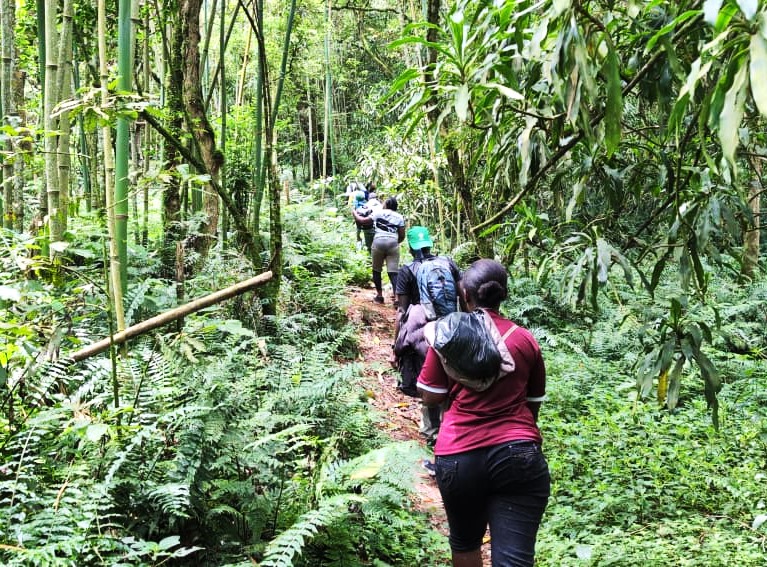
Soon, the gentle incline gave way to a steeper ascent. Bodies, once cool, now hummed with warmth. Breathing deepened, heartbeats quickened their rhythm, and the sweet, honest sweat of effort began to glisten. All eyes turned upwards, to the looming giants, to the ancient peaks that kissed the clouds.
And then, the mountains began to sing! It was Sabbath Day for the SDAs, and from humble village churches nestled in the valleys below, the soulful melodies of pianos floated upwards, weaving a celestial tapestry with the joyous chirps of birds. These feathered choristers, just awakened, hunted for early worms, adding their symphony to the spiritual hymns – a truly divine orchestra of nature and faith!
The cultural immersion, like a gentle stream, now deepened. The trail wound through scattered homesteads, where the scent of woodsmoke mingled with the earth. Residents, in their Sunday best, walked towards church, their greetings like warm embraces. “Wabuchire,” they offered, a sun-kissed “Good morning.” “Wasingyayo,” a hearty “Welcome!” “Osyale buhooro,” a peaceful “Stay well.” Each word was a spark, igniting the day with warmth and connection. We were not mere tourists; we were guests in the home of the Bakonzo, one of the most welcoming and genuinely entertaining cultures of the mountains. Their smiles were as wide as the valleys, their hospitality as generous as the mountain springs.
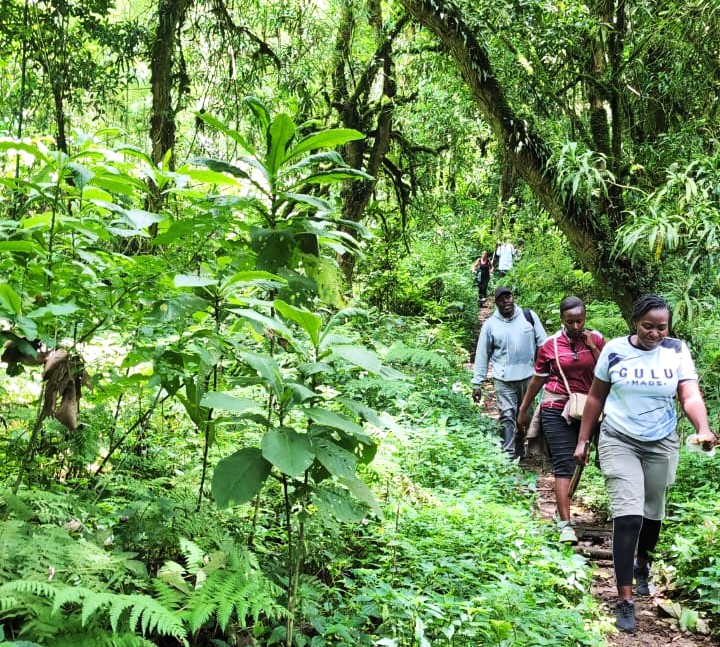
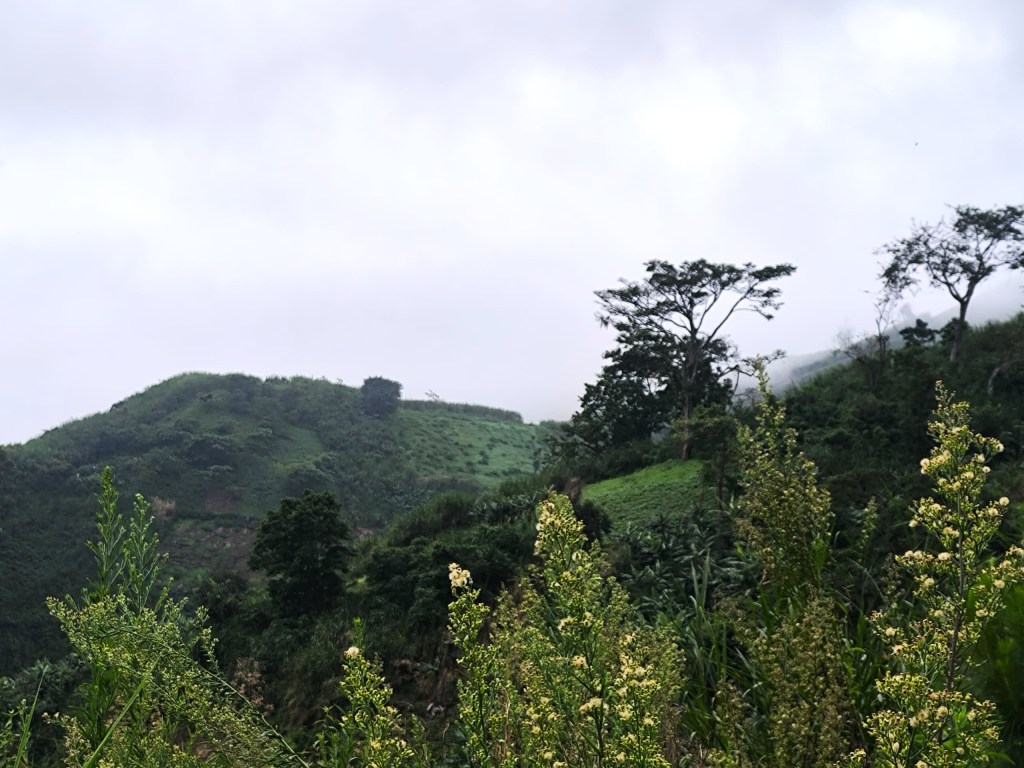
The sky, which had earlier been veiled in a mystical fog, now began to clear, slowly, majestically, like a great curtain drawing back. Views emerged, breathtaking vistas that stole the breath right from your lungs! Fort Portal, the “Tourism City,” and a vast swathe of the Tooro Region spread out below, a patchwork quilt of green and gold, framed by the distant hazy blue. It was a view to humble, a sight to inspire, a panorama that whispered tales of ancient kingdoms and endless skies.
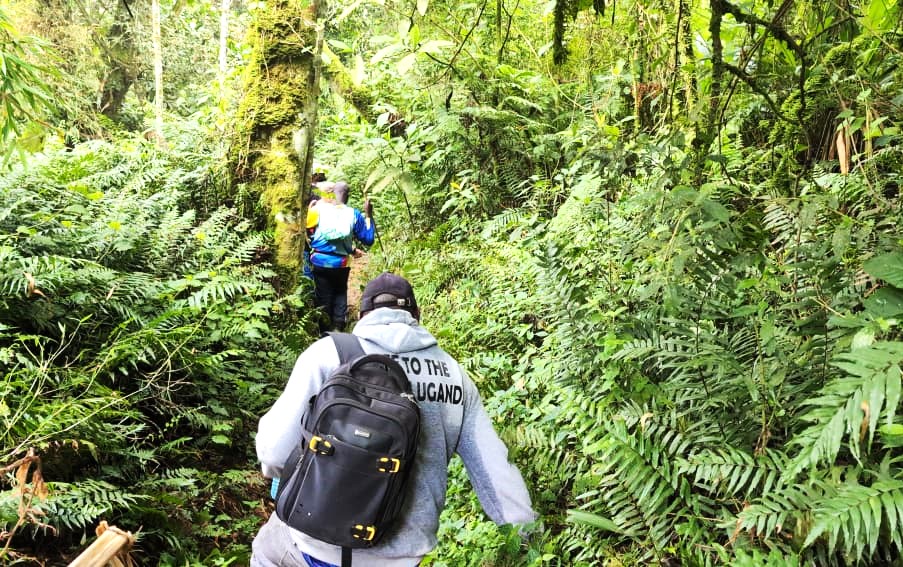
Hours later, deep within the embrace of the Rwenzori National Park, the landscape transformed. The tropical forest, a cathedral of towering canopies, enveloped us, then gradually gave way to the whispering bamboo zone. Here, the air thrummed with the unseen life of the wild. Birds sang their secret songs, their voices like tiny flutes. Monkeys, agile acrobats, leaped across the swaying canopies, their movements a fleeting glimpse of wild grace. These were the clear whispers of the wild, the very breath of nature. The walk was beautiful, punctuated by moments of joyous group photos, each click of the camera freezing a memory. And, as always, the trail was filled with wild, funny stories shared by the hikers, tales of past blunders and triumphs, igniting laughter that echoed through the ancient trees.
The Slipping & Sliding Saga: A Dance with Mud and Humility
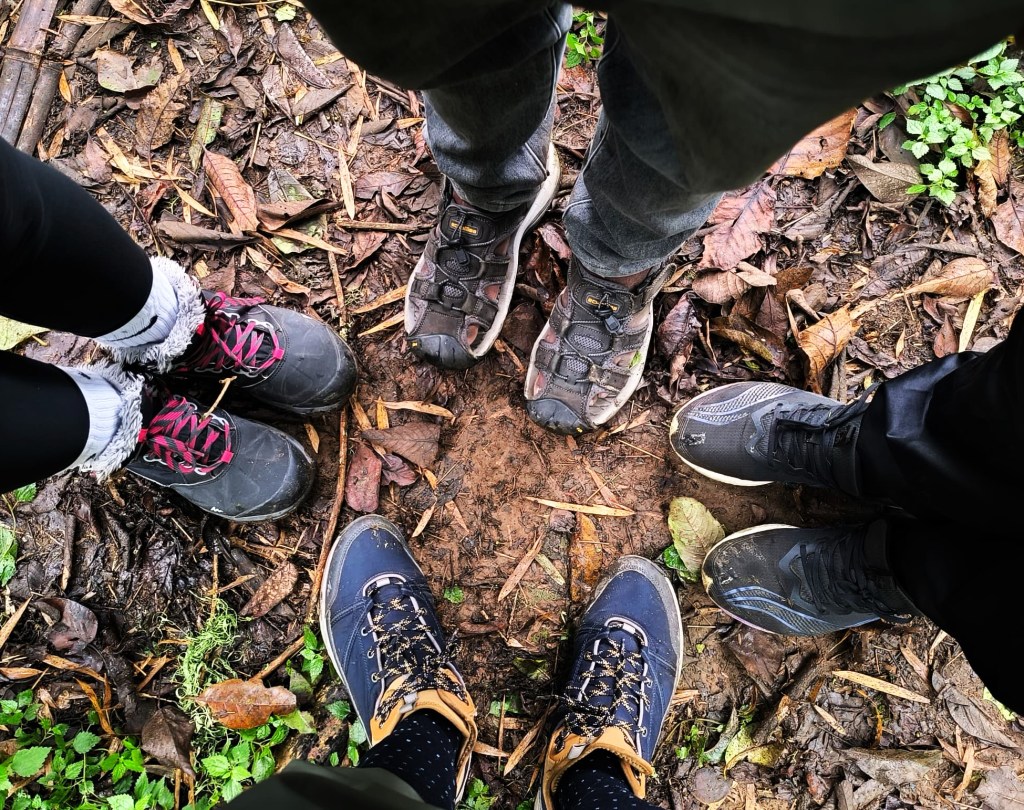
Then came the challenge, a twist in the tale, a descent into delicious, mud-caked chaos! It had rained the previous day, transforming the brown and black soils into a slick, treacherous canvas. Mud, thick and gooey, lay in wait, ready to embrace the unwary. The path became a dance of precarious balance, a ballet of sliding feet and grasping hands. In many places, walking became an optional extra. One embraced the earth, descending on buttocks, a most undignified yet effective form of propulsion. Falls were not misfortunes; they were inevitable, hilarious punctuation marks in the narrative. We rolled, we tumbled, we slid, emerging from each mud-bath with grins plastered across our faces, looking like happy, chocolate-covered children! Our speed, a magnificent spectacle of inefficiency, was affectionately dubbed “chameleon speed” by some, “snail speed” by others. Each slow, deliberate movement was a testament to our resolve, and our utter inability to maintain verticality!

The Great Safari Ant Stampede: A Mountains of the Moon Flash Mob
We were floating on a cloud of majesty, our whole group bathed in the emerald glow of the Rwenzori Mountains, with the serpentine Semuliki River a silver ribbon far below in the Western Rift Valley. This was peak hiking bliss—until the whispers started. Not of the wind, but of thousands of tiny, biting mandibles. Before we could register the shift, the serene trail transformed into an all-out, panic-fueled disco.
“Safari Ants!” The shriek was less a warning and more the sound of someone announcing that the floor was suddenly made of fire. What followed was a spectacle that would shame a slapstick comedy: a chorus of yelps instantly escalated into a manic, uncoordinated flash mob. Trekking poles became weapons against invisible enemies, boots flew off with Olympic speed, and grown adults performed high-stepping jigs so frenetic they were a danger to themselves and others.
Our visiting muzungu companion, initially frozen in confusion, quickly shed her composure and threw herself into the fray, her high-pitched squeals and magnificent, theatrical leaps blending perfectly with the collective frenzy. We were no longer hikers; we were performers in a bizarre, painful ant-avoidance ballet. By the time we finally staggered off the ‘hot zone,’ victorious yet utterly humiliated, we were a panting, disheveled, and hysterically laughing mess. The ants had stripped us of our serenity, but in its place, they’d cemented a new bond: the sweaty, shared trauma of surviving an attack by the Rwenzoris’ most aggressive, pint-sized locals. Our peals of laughter echoed long after the last sting, a glorious tribute to the wild, unpredictable side of the mountain.
Back into the Community in the Reward Side;
Moments later, covered in the glorious evidence of our struggle, we emerged from the National Park, a victorious, mud-splattered army. A collective cheer erupted, a triumphant roar that marked the conquering of Rwenzori Mountains National Park. “We did it!” we cried, our voices hoarse with effort and elation. Little did we know, the mountain had one last, mischievous trick up its sleeve. The steepest, most challenging descent of the day lay ahead, a final, slippery test of our mettle.
Back into the embrace of the community we plunged, and oh, what a welcome! The views that greeted us were nothing short of spectacular. The vast expanse of the Western Rift Valley spread out before us, a canvas of emerald and gold, stretching into the distant hazy blue. Semuliki National Park lay serenely across the valley, a lush carpet leading the eye to the meandering River Semuliki, a silver ribbon snaking its way towards the deep, ancient forests of the Democratic Republic of Congo.

Again, we passed through homesteads, the air now filled with the cheerful sounds of natives returning from church. Choir members, their voices sweet and harmonious, still practiced in the churches, their melodies weaving a beautiful soundtrack to our descent, washing away the lingering fatigue of the day’s challenge. “Wasingyayo!” – “Welcome back!” – became the common, heartfelt greeting from the mountain residents. Their smiles were genuine, their cheers like a warm embrace, celebrating us as heroes of World Tourism Day. It was a profound, unexpected welcome, this outpouring of encouragement from strangers, from people who had not expected our muddy, weary selves to appear in their midst. This spontaneous community reception, this incredible love and acceptance, infused our adventure with a warmth that transcended the physical challenge. It was a powerful reminder that the true magic of travel lies not just in the landscapes, but in the human connection, in the shared smiles and the unspoken understanding that binds us all. It transformed a mere hike into an unforgettable, heartwarming journey of cultural exchange and genuine human kindness.
The sunset, a fiery masterpiece, painted the western sky in hues of orange and purple. Our target: to reach the main road in Bundibugyo before darkness fully embraced the land. Alas, this proved to be an expectation as unrealistic as climbing Everest in flip-flops. The mountain, in its wisdom, decided we needed a few more hours of its company, and we finally emerged onto the main road at a respectable, if somewhat belated, 8 PM.
The Chocolate-Coated End of a Mountain Hike; A Rwenzori Discovery After what felt like a hundred years of vertical climbing—and several near-death slips on slopes that seemed coated in butter—the World Tourism Day hikers finally tumbled out of the Rwenzori Mountains National Park, through the community gardens and homesteads. The air was thick not with mist, but with the sweet, deep smell of chocolate! We didn’t find the mythical snow leopard or the lost city of gold, but rather, the day’s final, utterly charming discovery: the sprawling, lush cocoa gardens of Bundibugyo. It was an unexpected treasure trove of glossy green leaves and ruby-red pods, a genuine cash cow (or cash cocoa bean, as it were) for the Bakonzo people who call this rugged landscape home. Exhausted, exhilarated, and likely hallucinating from the altitude, we traded our trekking poles for a chance to stand amidst the raw material of a good s’more—a surprisingly perfect end to a monstrous hike!

The Taxi Ride Home: A Symphony of Soreness and Stories
And then, the grand finale! We piled into a waiting taxi, embarking on the journey back to Fort Portal. It was a moment of reflection, of shared exhaustion, and of the sweet, lingering taste of triumph. The cramped confines of the taxi became a confessional booth, a chamber of shared memories. We recounted every challenge, tallied the countless times each of us had stumbled and fallen, and relived the funny, wild stories that had been spun on the trail. Each person, a glorious mess of dirt and weariness, bore the badges of their adventure with pride. We entered Fort Portal City at 9 PM, our bodies heavy but our spirits soaring. Each of us carried a profound sense of fulfillment, the quiet hum of achievement, and a treasure trove of incredible memories that would forever ring bells in the hearts of the hikers, echoing the wild, wonderful call of the Mountains of the Moon.

Conclusion: A Tale Etched in Mud and Memory And so, the epic crossing of the Rwenzori Mountains, from Fort Portal to Bundibugyo, on World Tourism Day 2025, became more than just a hike. It was a tapestry woven with the vibrant threads of peace, cultural immersion, and exhilarating adventure. It was a journey of laughter amidst muddy tumbles, of profound connection with the Bakonzo people, and of the sheer, unadulterated joy of conquering not just a mountain, but our own perceived limits. It stood as a shining testament to the theme of “Tourism and Sustainable Transformation,” proving that when a journey embraces community, culture, and camaraderie, it transcends the ordinary, becoming a funny, heartwarming, and truly unforgettable experience – a resounding success, indeed, for World Tourism Day, and a story to be told around hearths for generations to come!

 COMMUNITY BASED TOURISM DEVELOPMENT AT KITARA FOUNDATION FOR SUSTAINABLE TOURISM: Transforming Communities through Travel Partnerships. Email: kitararcc@gmail.com;