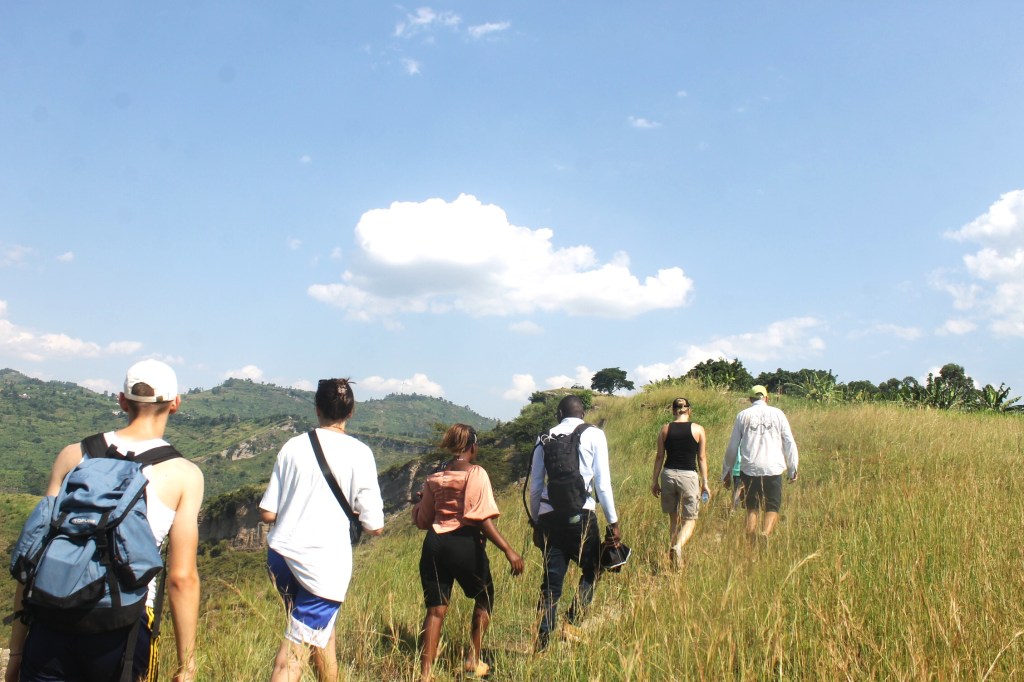
The Future of Tourism in Africa: A Continent of Professionals and Protectors
Africa is currently standing at a pivotal crossroads. For decades, the global narrative of African tourism was written by outsiders, focusing on “sights to see” rather than “people to meet.” But a new dawn is breaking. The future of tourism on this continent is no longer about being a passive backdrop for snapshots; it is about becoming a Continent of Professionals and Protectors.
At the Kitara Foundation for Sustainable Tourism, we believe that the true “Pearl of Africa” for example, is not just our gorillas or our waterfalls—it is our people. Through our dedicated training and capacity-building programs, we are rewriting the script, placing Community-Based Tourism (CBT) at the heart of Africa’s economic and environmental transformation.
Beyond Service: The Rise of the “Professional Protector”
In the past, tourism training focused narrowly on “service”—the art of making a bed or serving a meal. While hospitality is vital, the future demands more. The ideal African tourism professional must be a Protector: a guardian of culture, a steward of the environment, and a savvy business leader.
What does it mean to be a Professional Protector?
- A Storyteller with Purpose: It is the transition from a guide who memorizes dates to a cultural ambassador who interprets the soul of a community.
- An Eco-Steward: It is a lodge manager who understands that water conservation and waste management are as important as the guest’s comfort.
- A Community Advocate: It is a local leader who ensures that the benefits of tourism reach the most vulnerable, from the village artisan to the elderly forest guardian.
The Kitara Foundation Blueprint: Training for Transformation
The Kitara Foundation is not just teaching skills; we are building a movement. Our capacity-building programs are designed to bridge the gap between raw potential and global market readiness. We focus on four critical pillars:
1. The Art of Cultural Interpretation
We train native communities to package their heritage into world-class experiences. Whether it is the ancient coffee traditions of the Bagisu or the forest lore of the Batwa, we help communities turn “daily life” into “meaningful journeys” that travelers value.
2. Digital Literacy and Global Connection
The future of tourism is digital. Our training empowers rural youth to use technology to tell their own stories. By mastering social media, photography, and online booking systems, our trainees are taking their “Manyattas” and “Homestays” directly to the world, bypassing the “middleman” and keeping the revenue where it belongs—at the source.
3. Sustainable Enterprise Management
CBT groups often fail not for lack of passion, but for lack of business structure. We provide intensive training in Financial Literacy, Governance, and Product Development. We teach our partners how to manage cooperatives that are transparent, profitable, and resilient.
4. Conservation-Driven Hospitality
We believe that every tourism dollar should be a “conservation dollar.” Our programs emphasize the “Neighbor-to-Nature” philosophy, training locals to see wildlife and forests as their greatest assets. When a community profits from a standing forest, they become its most fierce defenders.
Why Community-Based Tourism is the Only Way Forward
The “Nation of Professionals and Protectors” cannot exist in a vacuum. It requires a model that honors local ownership. CBT is the only model where:
- Authenticity is Guaranteed: Travelers want the real Africa, and only a professional local guardian can provide it.
- Economic Sovereignty is Achieved: Wealth stays in the village, funding schools, healthcare, and infrastructure.
- The Youth are Inspired: By professionalizing CBT, we show the next generation that they don’t need to migrate to the city for a future; their future is in the land they inherit.
A Call to the World: Travel with the Protectors
The world traveler of 2025 and beyond is looking for more than a vacation; they are looking for impact. When you visit a project supported by the Kitara Foundation, you are supporting a nation of professionals who are dedicated to protecting the soul of Africa.
You aren’t just a visitor; you are an investor in a future where African communities are the masters of their own destiny.
Our Dream for Africa
Our dream for Africa is a Continent where every village bordering a forest, every community on a mountain, and every tribe along a major river or lake is a hub of professional tourism excellence. We are not just training guides; we are training the future leaders of a continent.
Are you a community group ready to start your journey, or a traveler looking for an authentic experience?
Kitara Foundation’s Annual Training and Capacity Building Roadmap
At the Kitara Foundation for Sustainable Tourism, we do not merely prepare for a new year; we focus on architecting a new era. The “Continent’s Dream” of ideal tourism is one where every village is a hub of excellence and every native is a world-class professional.
Each year, our training calendar is built on the belief that Community-Based Tourism (CBT) is the engine of Africa’s resilience. By placing the community at the center, we are transforming “service” into “stewardship.”
Below is the Annual Training and Capacity Building Strategic Plan, designed to equip our Ugandan partners—from the Rwenzori foothills to the Sipi cliffs—with the tools to lead.
Quarter 1: The Foundation – Mindset, Governance, and Preparation
Focus: Building the Pillars of a Professional Community Enterprise
The first three months of the year are dedicated to the “Inner Work.” Before a community can host the world, it must host itself with transparency and vision.
- Mindset Shift: The CBT Expert Series: Transitioning from “subsistence tourism” to professional entrepreneurship. We focus on the Equitable Benefit-Sharing Mechanism (EBSM) to ensure that every community member—from youth to elders—understands their stake in the tourism dollar.
- Resource Mapping & Product Design: Intensive workshops in rural regions to identify undiscovered cultural assets.
- POATE Prep: Early-stage preparation for the Pearl of Africa Tourism Expo (Always in the month of May). We train our partners to present their unique stories to global buyers.
Quarter 2: The Art of the Experience – Storytelling & Digital Presence
Focus: Connecting the Village to the Global “Wanderlust”
Each year as we lead up to the Pearl of Africa Tourism Expo (POATE) in May, the focus shifts to how we communicate our value to the world.
- The Storyteller’s Masterclass: Moving beyond naming species to Cultural Interpretation. Training guides to weave history, conservation, and native folklore into immersive narratives.
- Digital Literacy & AI in CBT: A groundbreaking module on using accessible AI tools and digital marketplaces (like Equera) for brand positioning. We are teaching our partners how to manage their online footprint without needing an external middleman.
- Wanderlust Branding: Helping community groups define their “Authentic USP” (Unique Selling Proposition) to stand out in a competitive global market.
Quarter 3: The Professional Standard – Hospitality & Safety
Focus: Ensuring Quality, Safety, and “Ubuntu” Service
In the third quarter, we focus on the “Professional” side of our mission—ensuring that the grassroots experience meets international standards of safety and care.
- The “Guardian” Safety Protocol: Intensive training in food and drink safety, wilderness first aid, and risk management.
- Child Protection in Tourism: A non-negotiable certification for all our partners to ensure that tourism remains a safe space for the youngest members of our communities.
- Radical Hospitality: Merging international service standards with the authentic, warm “Ubuntu” spirit of the Kitara region.
Quarter 4: The Protector’s Legacy – Sustainability & Future Scaling
Focus: Keeping Kitara “Green and Black”
The final quarter is about legacy. We ensure that our growth does not come at the cost of our resources or our culture.
- Eco-Stewardship & Regenerative Tourism: Training in waste management, solar integration, and indigenous reforestation. This is where we operationalize the “Keep Africa Green and Black” campaign.
- B2B Linkages & Negotiation: Training community leaders to negotiate fair contracts with international tour operators, ensuring that the community remains the “CEO” of their own destination.
- Impact Monitoring & Evaluation: Teaching communities how to measure their own success—not just in dollars, but in children sent to school and acres of forest protected.
A Call to Our Partners and Travelers
This roadmap is more than a schedule; it is a promise. Each year, the Kitara Foundation aims to have certified 200 new Community Pathfinders across Uganda’s five regions.
We are challenging every community group to move from the sidelines to the center stage. To the world traveler, we invite you to experience the results of this training: a journey that is safe, professional, and profoundly human.
Are you ready to join the Continent of Professionals and Protectors?
The “Pathfinder” Readiness Checklist
This Skills Checklist is designed for community-based groups, cooperatives, and local associations who wish to enroll in the Kitara Foundation’s Training Series. It serves as a self-assessment tool to help you identify your current strengths and the areas where our capacity-building programs will provide the most value.
By completing this checklist, you are taking the first step toward becoming a certified Professional and Protector of Africa’s heritage.
Targeting Excellence in Community-Based Tourism
1. Governance and Foundation (Q1 Readiness)
The strength of a tourism project lies in the unity of the community.
- Legal Identity: Does your group have a registered CBO (Community Based Organization), cooperative, or association status?
- Leadership Structure: Do you have a functional committee (Chair, Secretary, Treasurer) with regular meeting minutes?
- Shared Vision: Can your group members clearly articulate why you want to start or improve your tourism project?
- Asset Identification: Have you identified at least three unique “hidden gems” (stories, sites, or crafts) in your village?
2. Cultural Interpretation and Storytelling (Q2 Readiness)
Turning local knowledge into a world-class guest experience.
- Knowledge Keepers: Do you have elders or youth who are fluent in the history, myths, and nature of your specific region?
- Communication: Are there members who can confidently speak to visitors (in English or via a translator)?
- Itinerary Basics: Have you mapped out a “walking path” or “activity flow” that lasts at least 2 to 4 hours?
- Digital Interest: Do you have at least one youth member comfortable using a smartphone for photos or social media?
3. Hospitality and Operational Standards (Q3 Readiness)
Ensuring your guests feel safe, respected, and comfortable.
- Hygiene Awareness: Does the group understand the basic requirements for clean water, handwashing, and sanitation for guests?
- Culinary Skills: Can your group prepare a traditional meal using local ingredients while maintaining high food safety standards?
- Safety Protocols: Does the group have a plan for what to do if a guest gets lost, injured, or feels unwell?
- The Ubuntu Spirit: Is the community prepared to welcome strangers with warmth while maintaining professional boundaries?
4. Business and Sustainability (Q4 Readiness)
Keeping the project profitable and “Green and Black.”
- Bookkeeping: Do you have a basic system for recording every shilling that comes in and how it is spent?
- Environmental Stewardship: Is there a group commitment to waste management (e.g., no littering, plastic reduction) in your area?
- Benefit Sharing: Have you agreed on how profits will be shared (e.g., % to conservation, % to a school fund, % to the guides)?
- Market Awareness: Do you know who your “ideal guest” is (e.g., bird watchers, cultural enthusiasts, or students)?
How to Use This Checklist
- Meet with your group: Go through these points together in a community meeting.
- Tick the boxes: Mark what you have already achieved.
- Identify the Gaps: The boxes you cannot tick yet are the modules where you should focus your 2026 training enrollment.
- Submit to Kitara Foundation: When you apply for the training, share your completed checklist with us so we can tailor the curriculum to your specific needs.

 COMMUNITY BASED TOURISM DEVELOPMENT AT KITARA FOUNDATION FOR SUSTAINABLE TOURISM: Transforming Communities through Travel Partnerships. Email: kitararcc@gmail.com;