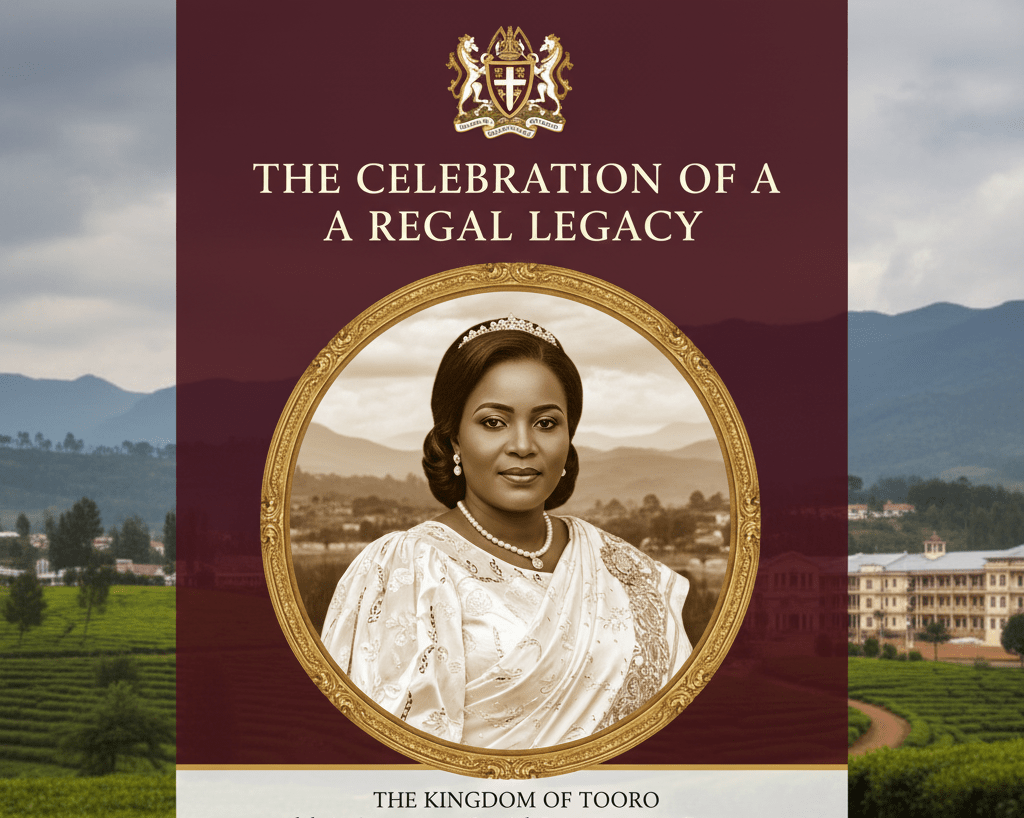
Omugo Tibaitwa Damali Adyeeri was the principal wife of Omukama Daudi Kasagama Kyebambe III, the 10th King of Tooro Kingdom, a traditional kingdom located in modern-day Uganda.
Key details about Omugo Damali Tibaitwa:
- Title: Her title, “Omugo,” denotes a royal wife or queen in the Tooro Kingdom.
- Husband: She was the eleventh wife married by Omukama Kasagama, but the only one he remarried according to Anglican rites in 1896 after converting to Christianity.
- Family: She was the daughter of Nikodemo Kakurora, who was the Chief of Kitagwenda.
- Children: She was the mother of several royal children, including:
- Rukirabasaija Sir George David Matthew Kamurasi Rukidi III, who succeeded his father as the 11th Omukama of Tooro.
- Omubiitokati Lusi.
- Princess Ruth Komuntale Keesi Bahindi
Omugo Damali Tibaitwa is a notable figure in the history of the Tooro Kingdom, particularly in the context of the monarchy’s conversion to Christianity and the line of succession that followed.
The history of the Tooro Kingdom is often told through the lens of its mighty kings, yet standing beside the architect of modern Tooro, Omukama Daudi Kasagama Kyebambe III, was a woman of profound influence and quiet strength. Omugo Tibaitwa Damali Adyeeri was not merely a consort; she was the heartbeat of the royal court during an era where the ancient traditions of the Empaako met the winds of colonial and Christian change.
Early Life and Noble Roots
Born into the noble fabric of Tooro, Damali Adyeeri’s childhood was steeped in the values of the Babiito culture. Growing up in the late 19th century, her upbringing emphasized the virtues of Obuntu (humanity), respect, and the sophisticated etiquette of the Tooro aristocracy.
Her family was central to the kingdom’s social structure, ensuring she was well-versed in the oral histories and traditions of the land. This foundation would later allow her to navigate the complexities of a kingdom that was about to undergo a radical transformation.
A Royal Union: Marriage to Kasagama
Her marriage to Omukama Daudi Kasagama Kyebambe III was more than a union of hearts; it was a partnership that defined the “New Tooro.” Kasagama, having been restored to his throne with British assistance after the wars with Kabalega of Bunyoro, sought to modernize his realm.
Damali Adyeeri, as the Omugo (Queen), lived in the majestic Karuzika Palace in Fort Portal, overlooking the rolling hills and tea plantations. Together, they raised a family that would continue the royal lineage, most notably their son, George Matthew Kamurasi Rukidi III, who would eventually succeed his father as Omukama.
While Daudi Kasagama had several children, those born to Damali Adyeeri were central to the royal succession and the formal administration of the kingdom.
1. Sir George David Matthew Kamurasi Rukidi III (11th Omukama)
As the eldest son of Damali, he ascended to the throne in 1928 and reigned for 37 years. He is often remembered as a visionary leader who bridged the gap between traditional rule and modern governance.
- Establishment of Parliament: He founded the Orukurato Orukuru (the Tooro Kingdom Parliament), which met at the Mucwa building in Fort Portal. This modernized the kingdom’s administration, allowing for cabinet ministers and representatives from various clans.
- International Diplomacy: He represented Tooro on the global stage, notably attending the Coronation of Queen Elizabeth II in 1953.
- Military and Civic Service: Before becoming King, he served as an inspector in the Uganda Police Force. During his reign, he was an Honorary Lieutenant in the King’s African Rifles.
- Church Patronage: Like his mother, he was a devout Anglican. He famously purchased and donated a rare pipe organ from the UK to St. John’s Cathedral in 1955, which remains a historical landmark today.
2. Princess Ruth Komuntale Keesi Bahindi (Rubuga/Batebe)
In Tooro culture, the Rubuga (Queen Sister) is the most powerful female figure after the Queen Mother. Princess Ruth Komuntale was a formidable partner to her brother, Rukidi III.
- The Power Behind the Throne: She was officially installed as the Batebe in 1929. In this role, she was the King’s primary advisor and co-signed official documents. She was essentially the “co-ruler” of the kingdom in matters of traditional law and female leadership.
- Cultural Symbolism: Her name, Komuntale, remains a prestigious title in the royal family, inherited by subsequent Princess Royals (including the current Princess Ruth Nsemere Komuntale).
- Social Reformer: She worked alongside her mother, Damali, to promote the education of girls in Tooro, using her royal status to encourage families to send their daughters to school.
3. Princess Lusi (Lucia)
Princess Lusi, though less politically prominent than her sister Ruth, was a key member of the royal inner circle.
- Guardian of Tradition: She played a vital role in the domestic management of the Karuziika Palace. In Tooro tradition, royal daughters are responsible for maintaining the rituals associated with the royal hearth and the care of the King’s ceremonial regalia.
- Diplomatic Marriages: Princesses of this era often formed links between the Tooro monarchy and other influential chiefdoms through marriage, though Lusi’s primary historical record remains tied to her support of the royal household during her brother’s long reign.
A Bridge Between Two Worlds
The reign of Kasagama (1891–1928) was a pivotal “hinge” in history. The Kingdom was transitioning from a traditional African monarchy to a protectorate under British colonial rule, while simultaneously embracing Christianity.
Omugo Damali Adyeeri played a vital role in this transition:
- The Christian Pioneer: She was among the first royal women to embrace the Anglican faith, working closely with the Church Missionary Society (CMS). Her conversion helped legitimize Christianity among the people of Tooro without stripping away their cultural identity.
- The Diplomat Queen: While the Omukama handled the political friction with the British, the Omugo managed the social and cultural diplomacy within the palace, ensuring that the transition did not alienate the traditionalists.
The Queen Mother: A Pillar of Tooro
After the passing of her husband, Damali Adyeeri’s influence grew as she took on the role of Queen Mother (Nyina Omukama). She is remembered not for wielding power with an iron fist, but for her role as a custodian of peace.
She was the “mother of the nation,” a title she earned through her:
- Advocacy for Education: She encouraged the establishment of schools and was a patron for women’s literacy in the kingdom.
- Spiritual Guidance: She remained a devout pillar of the church, bridging the gap between the altar and the throne.
- Preservation of Tooro Etiquette: Even as she embraced the new, she was a strict guardian of the Tooro “grace”—the slow, respectful way of speaking and the high standards of hospitality that Tooro is famous for today.
Cultural Values and Lessons for Today
For the modern woman in Tooro and the visitor who walks the streets of Fort Portal, the life of Damali Adyeeri offers timeless lessons:
- Adaptability without Loss of Self: She showed that one can embrace modern education and global ideas (like Christianity and new governance) while remaining a proud Mugo with a deep love for her culture.
- Dignity (Kuhaisa): In Tooro culture, a woman’s dignity is her greatest asset. Adyeeri lived with a poise that commanded respect from both British governors and local subjects alike.
- The Power of Soft Influence: She proved that leadership isn’t always about making the loudest speech; it’s about the consistent, quiet work of building a community and supporting a vision.
Conclusion: Omugo Tibaitwa Damali Adyeeri remains a symbol of the “Golden Age” of Tooro. She was the steady hand that helped steer the kingdom through the storms of the late 19th century into the modern era. Today, as visitors gaze up at the Karuzika Palace or hear the soft Empaako greetings in the valleys of Tooro, they are experiencing the cultural legacy of a Queen who knew that the future of a kingdom depends on the strength of its traditions and the openness of its heart.

 COMMUNITY BASED TOURISM DEVELOPMENT AT KITARA FOUNDATION FOR SUSTAINABLE TOURISM: Transforming Communities through Travel Partnerships. Email: kitararcc@gmail.com;