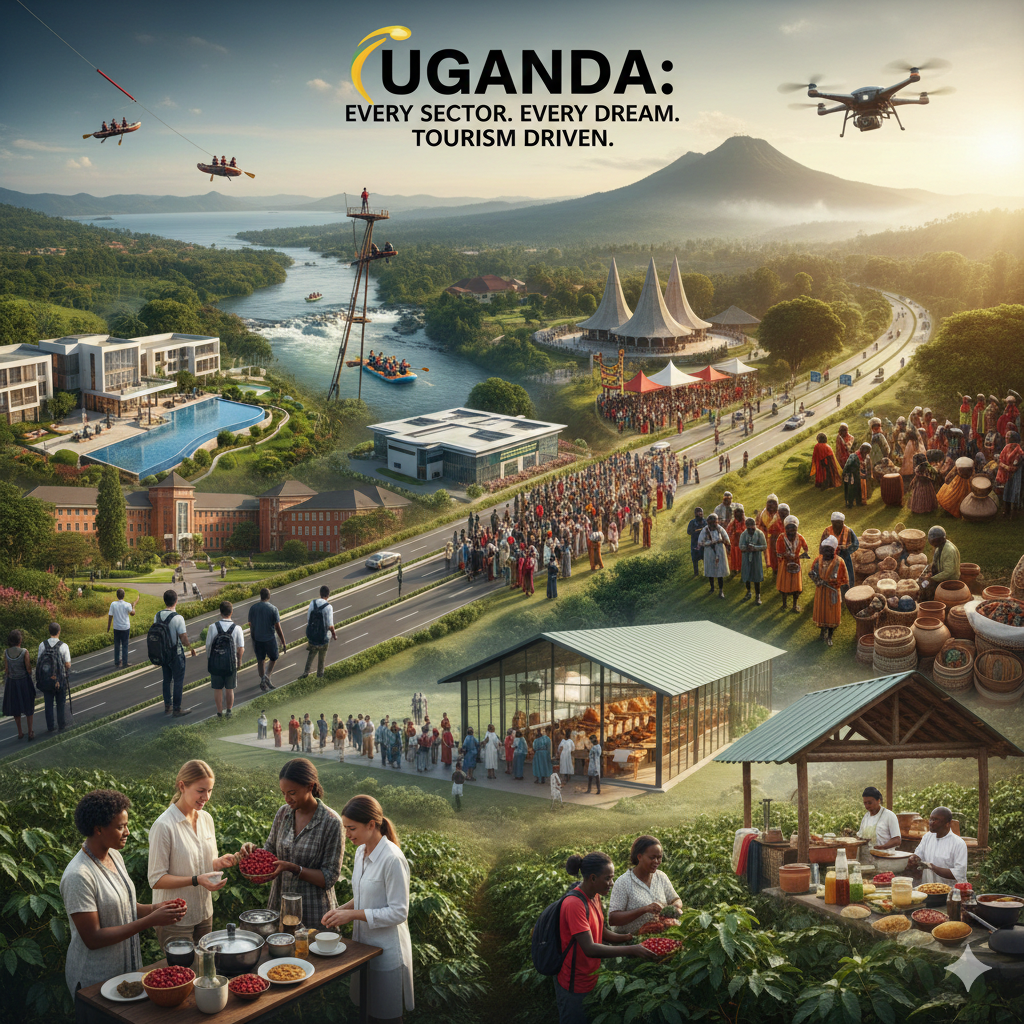
Unlocking Uganda’s Potential: Integrating Tourism Across Every Sector for a Thriving Economy
Uganda, the “Pearl of Africa,” is blessed with unparalleled natural beauty, rich cultural heritage, and a vibrant, resilient spirit. For too long, however, the immense potential of its tourism sector has been largely confined to traditional wildlife safaris and a few cultural experiences. At the Kitara Foundation, we believe it’s time to revolutionize this approach. We envision a Uganda where tourism isn’t just a sector; it’s an integrated philosophy that permeates every facet of national life – social, religious, business, and service.
Imagine a Uganda where every sector is a potential tourism asset, every individual a potential tourism entrepreneur, every investor a potential tourism investor, and every community a potential tourism destination. This is not a distant dream, but an achievable reality that can transform Uganda into a truly tourism-driven economy.
The Untapped Riches: Exploring Tourism Across Ugandan Sectors
Let’s delve into how various sectors, often overlooked in the traditional tourism narrative, can become powerful drivers of economic growth through integrated tourism:
1. Agriculture: From Farm to Fork Tourism & Agribusiness Experiences
Uganda’s fertile soils yield an incredible array of produce, from coffee and tea to matooke and exotic fruits. Instead of simply exporting raw materials, we can transform agriculture into a captivating tourism experience.
- Farm Stays and Agro-Tourism: Tourists can experience life on a Ugandan farm, participate in harvesting, learn about local farming practices, and enjoy authentic farm-to-table meals. Imagine coffee plantation tours where visitors learn about the bean’s journey from crop to cup, or tea picking experiences in the lush Western Highlands.
- Culinary Tourism: Promote unique Ugandan cuisine. Food festivals celebrating local dishes, cooking classes for tourists, and partnerships between farmers and restaurants showcasing indigenous ingredients can elevate Uganda’s gastronomic appeal.
- Value Addition & Processing Tours: Visitors can tour factories processing coffee, chocolate, or fruit, understanding the value chain and tasting the final products. This not only attracts tourists but also creates a market for local produce.
2. Manufacturing & Industry: Showcasing Ugandan Ingenuity
While not immediately apparent, even the manufacturing sector can play a role in tourism, particularly for niche markets.
- Industrial Tours: For business tourists, students, and those interested in development, tours of ethical manufacturing plants (e.g., textile, craft, or even beverage production) can offer unique insights into Uganda’s industrial progress and job creation.
- Artisan Workshops & Craft Production: Small-scale manufacturing of traditional crafts (baskets, pottery, jewelry, fabrics) can be transformed into interactive workshops where tourists learn to create their own souvenirs, directly supporting local artisans.
3. Health & Wellness: Medical Tourism & Retreats
Uganda has a growing healthcare sector and a serene environment perfect for wellness tourism.
- Medical Tourism: For certain procedures or specialized treatments, Uganda can attract patients from neighboring countries and beyond, offering quality care at competitive prices, combined with a restorative environment.
- Wellness Retreats: Leveraging its natural beauty, Uganda can develop retreats focusing on yoga, meditation, traditional healing practices, and nature therapy. The tranquil shores of Lake Victoria or the misty Rwenzori foothills offer ideal settings.
4. Education: Academic Tourism & Cultural Exchange
Uganda’s educational institutions and diverse culture present opportunities for academic and cultural exchange tourism.
- Study Abroad Programs: Promote Uganda as a destination for students seeking unique academic experiences, particularly in fields like conservation, African studies, or public health.
- School Exchange Programs: Facilitate partnerships between Ugandan and international schools, fostering cultural understanding and generating tourism revenue through visiting students and accompanying families.
- Research Tourism: Attract researchers and academics interested in Uganda’s biodiversity, history, sociology, and development challenges, offering support services and unique field experiences.
5. Religion & Spirituality: Pilgrimage & Faith-Based Tourism
Uganda is a land of deep faith, home to significant religious sites for Christians, Muslims, and adherents of traditional beliefs.
- Martyrs’ Shrines: Namugongo and other martyrs’ sites are already popular, but their potential can be expanded with better infrastructure, interpretive centers, and guided tours that delve deeper into the history and significance.
- Religious Festivals & Events: Promote major religious gatherings as tourist attractions, providing opportunities for cultural immersion and spiritual reflection.
- Interfaith Dialogue Centers: Develop centers that promote understanding and dialogue between different faiths, attracting visitors interested in religious harmony and history.
- Traditional Healing & Spiritual Retreats: For those interested in indigenous spiritual practices, guided experiences can be developed, respecting local customs and traditions.
6. Creative Arts & Entertainment: Showcasing Ugandan Talent
Uganda’s vibrant music, dance, drama, and visual arts scene is a major draw.
- Cultural Performances & Festivals: Regularly scheduled cultural shows, music festivals, and theatre productions in urban centers and rural communities can provide authentic entertainment for tourists.
- Art Galleries & Craft Markets: Develop thriving art markets and galleries that showcase Ugandan artists and provide opportunities for tourists to purchase unique, locally made artworks.
- Film Tourism: Promote Uganda as a filming location, attracting international productions and subsequently offering tours of famous filming sites.
7. Sports & Adventure: Adrenaline & Active Tourism
From white-water rafting to mountain climbing, Uganda offers thrilling adventure experiences.
- Extreme Sports: Develop and promote activities like white-water rafting on the Nile, bungee jumping, quad biking, and paragliding.
- Hiking & Trekking: Capitalize on the stunning landscapes of the Rwenzoris, Mount Elgon, and other national parks for diverse hiking and trekking experiences.
- Sports Tourism: Host international sports events, drawing athletes and spectators, and develop sports academies that attract aspiring talent from across the continent and beyond.
8. Infrastructure & Transport: Enhancing the Journey
While not a direct tourism end, improved infrastructure and transport are vital enablers.
- Scenic Routes: Develop and promote scenic driving routes, offering well-maintained roads, clear signage, and designated viewpoints.
- Public Transport as an Experience: Enhance inter-city bus services with tourism-friendly features, or introduce unique transport options like cultural boat tours on lakes and rivers.
- Airport & Border Post Enhancements: Create welcoming, efficient, and aesthetically pleasing entry points that provide a positive first impression.
9. Technology & Innovation: Smart Tourism Solutions
Embrace technology to enhance the tourist experience and promote Uganda globally.
- Digital Marketing & Virtual Tours: Utilize virtual reality, augmented reality, and high-quality videography to showcase Uganda’s attractions to a global audience.
- Mobile Apps: Develop user-friendly apps for booking, navigation, information on attractions, and local recommendations.
- Smart Tourism Destinations: Implement smart city concepts in key tourist areas, using technology for efficient management, safety, and visitor experience.
10. Business & Finance: Investment & MICE Tourism
Uganda’s growing economy presents opportunities for business and MICE (Meetings, Incentives, Conferences, Exhibitions) tourism.
- Conference & Exhibition Centers: Develop world-class facilities to host international conferences, trade shows, and corporate events, attracting business travelers who often extend their stays for leisure.
- Investment Tours: Organize tours for potential investors to showcase opportunities across various sectors, combining business meetings with leisure activities.
- Diaspora Engagement: Encourage Ugandans in the diaspora to return for business ventures, family visits, and cultural experiences, contributing significantly to the tourism economy.
Guiding Uganda to a Tourism-Driven Economy: How to Achieve It
Achieving this ambitious vision requires a concerted, multi-stakeholder effort and a strategic roadmap.
1. Policy & Regulatory Frameworks:
- National Tourism Masterplan (Integrated): Develop a comprehensive masterplan that explicitly incorporates tourism objectives into the policies of all government ministries and agencies. This means the Ministry of Agriculture considers agro-tourism, the Ministry of Education considers academic tourism, etc.
- Tourism-Friendly Investment Policies: Offer incentives (tax breaks, land allocation) for investments in tourism infrastructure, unique tourism products, and community-based tourism initiatives across all sectors.
- Ease of Doing Business: Streamline licensing, permits, and regulatory processes for tourism-related businesses, especially for small and medium enterprises (SMEs).
2. Infrastructure Development:
- Connectivity: Invest in well-maintained road networks connecting key tourist sites across all sectors, reliable internet access, and expanded air links.
- Utilities: Ensure consistent access to clean water and reliable electricity in tourist areas, including rural community tourism initiatives.
- Safety & Security: Maintain and enhance a safe and secure environment for both locals and tourists through visible and well-trained security forces.
3. Human Capital Development:
- Skills Training: Implement robust training programs across all sectors to equip Ugandans with hospitality, customer service, language, and entrepreneurial skills relevant to tourism. This includes guides for industrial tours, chefs for culinary tourism, and facilitators for wellness retreats.
- Tourism Entrepreneurship: Foster a culture of tourism entrepreneurship through mentorship programs, access to seed funding, and business development services, enabling individuals to convert their passions into tourism ventures.
- Community Empowerment: Empower local communities to identify, develop, and manage their own tourism products, ensuring that benefits are shared equitably. Provide training in sustainable tourism practices.
4. Marketing & Branding:
- “Uganda: The Integrated Experience” Campaign: Develop a unified national marketing campaign that showcases the diverse tourism offerings across all sectors, moving beyond traditional wildlife narratives. Highlight unique experiences in agriculture, arts, religion, etc.
- Digital Presence: Invest heavily in digital marketing, social media campaigns, and partnerships with international travel influencers and bloggers to reach a global audience.
- Niche Market Targeting: Develop targeted marketing strategies for specific segments like medical tourists, academic visitors, adventure seekers, and faith-based groups.
- Strong Brand Storytelling: Tell authentic Ugandan stories that resonate with visitors, highlighting the warmth of its people, the richness of its culture, and the beauty of its landscapes.
5. Sustainable & Responsible Tourism:
- Environmental Conservation: Integrate eco-tourism principles across all sectors, promoting responsible practices that protect Uganda’s natural heritage.
- Cultural Preservation: Ensure that tourism development respects and preserves local cultures, traditions, and sacred sites.
- Community Benefit: Prioritize tourism models that directly benefit local communities, creating jobs, improving livelihoods, and fostering a sense of ownership.
6. Collaborative Partnerships:
- Public-Private Partnerships (PPPs): Foster strong collaborations between government agencies, private sector businesses, and local communities to drive tourism development.
- Inter-Ministerial Cooperation: Establish a strong coordinating body that ensures all relevant ministries (Tourism, Agriculture, Education, Health, Trade, Works) are working in concert towards integrated tourism goals.
- International Collaborations: Partner with international tourism organizations, travel agencies, and educational institutions to promote Uganda and attract visitors.
Conclusion: The Pearl’s True Luster Awaits
Uganda’s journey to becoming a full tourism-driven economy is not merely about attracting more visitors; it’s about fundamentally rethinking how we value and leverage every asset we possess. It’s about recognizing that a coffee farm is not just a source of beans, but a cultural experience. A hospital is not just a place of healing, but a destination for specialized care. A church is not just a place of worship, but a historical and spiritual landmark. By integrating tourism into every development, social, and religious sector, Uganda can unlock its true luster. It will create an endless array of unique experiences for visitors, generate sustainable income for its citizens, spur innovation across industries, and ultimately, build a more prosperous and vibrant nation. The time for this transformative vision is now. Let us work together to polish the Pearl of Africa until its brilliance shines for the entire world to see.


 COMMUNITY BASED TOURISM DEVELOPMENT AT KITARA FOUNDATION FOR SUSTAINABLE TOURISM: Transforming Communities through Travel Partnerships. Email: kitararcc@gmail.com;