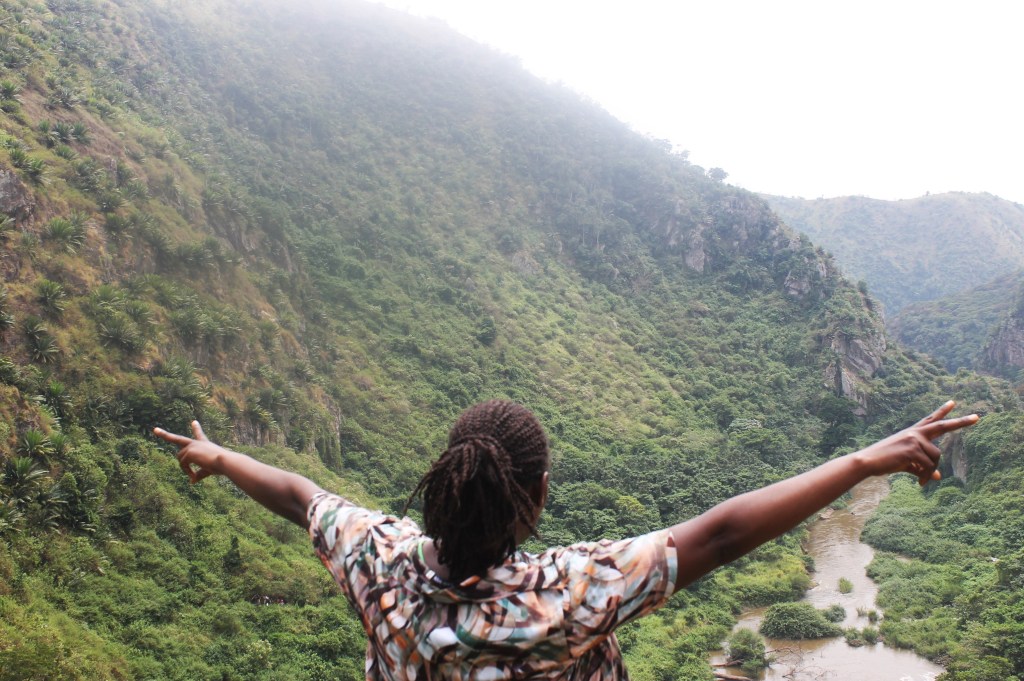
On the final dawn of January, as the year 2026 began to shed its nascent skin, a legion of more than fifty intrepid souls—the Fort Portal City Walkers—assembled for a journey into the prehistory of the Pearl of Africa. This was no mere excursion; it was a jurisdictional takeover of the senses. By 7:30 AM, the heart of Fort Portal pulsated with an electric camaraderie, a kaleidoscopic gathering of weekend warriors and seasoned explorers. A specialized contingent had even migrated from the bustling metropolis of Kampala, driven by the siren song of the Mpanga Gorge—the exclusive sanctuary of the East African Cycad, a botanical relic that once served as the staple diet for the titans of the Jurassic era. The atmosphere was thick with the scent of fresh coffee and the frantic exchange of hiking tips, as five dozen souls prepared to bridge the gap between modern urbanity and an era where time itself seemed to stand still.
The Forest’s Green Embargo
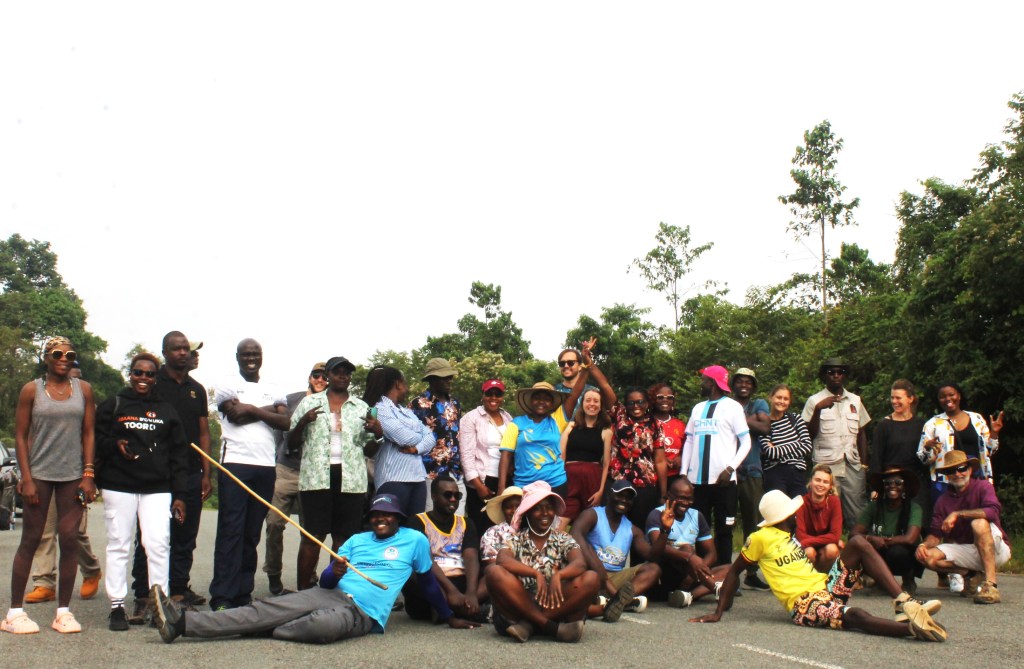
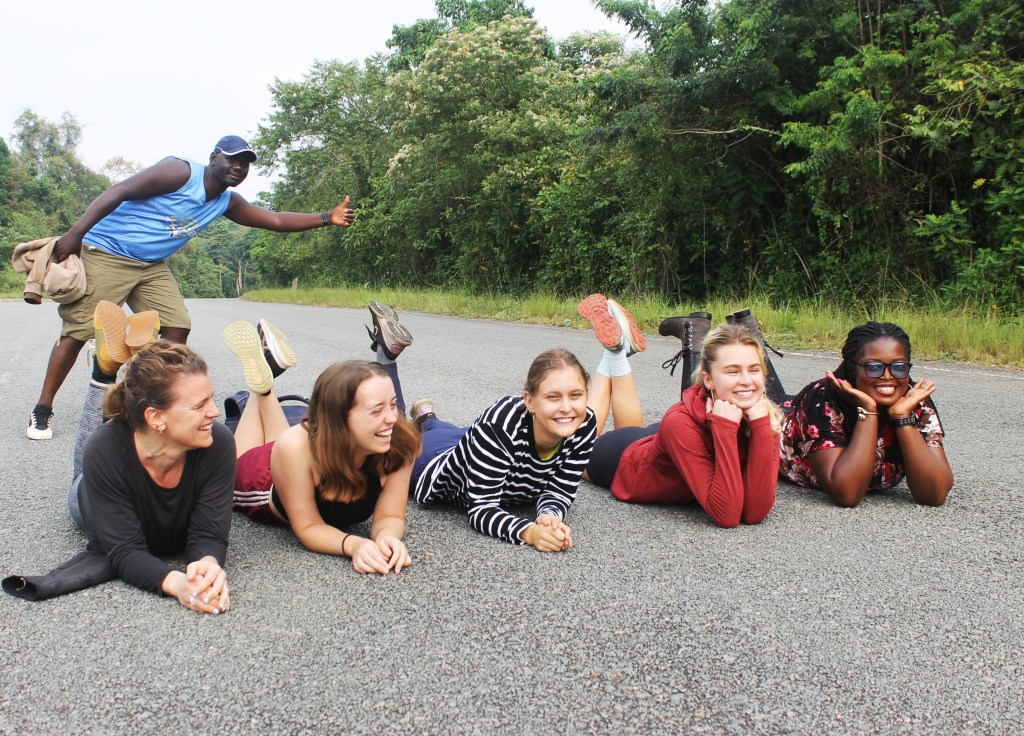
By 8:30 AM, our caravan surged forward, breaching the emerald fortifications of Kibale National Park. We paused within the cathedral of the green canopy for a mandatory “aesthetic intervention,” a moment where the modern human’s obsession with pixels met the ancient world’s indifference. As shutters clicked and poses were struck against the backdrop of thousand-year-old mahogany trees, we found ourselves under the judgmental surveillance of the local primate aristocracy. The monkeys, swinging with a nonchalance that bordered on the theatrical, engaged in a cacophony of arboreal gossip, likely debating whether our flamboyant trekking gear was the latest in “Great Ape” couture or merely a tragic evolutionary detour. We were merely transients in their leafy kingdom, yet for a moment, the boundary between human and wild dissolved in the humidity of the rainforest, leaving us humbled by the sheer density of life pulsating in every leaf and shadow.
Economic Disruptors and Jungle Navigation
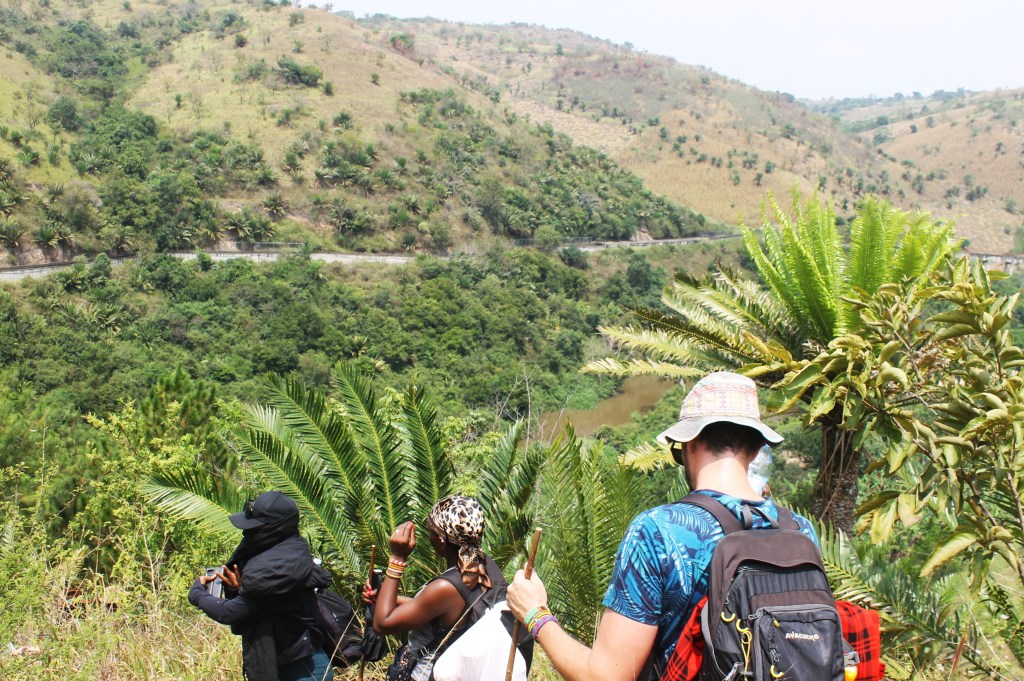
As we descended upon Kamwenge town, we moved like a benevolent locust swarm, procuring provisions with such fervor that we likely triggered a localized inflationary spike. This was a tactical re-supply of monumental proportions—crates of water, bunches of yellow bananas, and enough glucose to power a small nation. With bags weighted by “survival” snacks and spirits high, we veered off the tarmac’s civilizing influence. The transition from murram road to the untamed jungle trails was the ultimate “litmus test” for our vehicles—and our glutes. The suspension systems groaned in protest as we navigated craters that could swallow a small hatchback. Here, where the internal combustion engine meets its terrestrial limit, the true pilgrimage began. The air grew heavy with the aromatic, intoxicating perfume of ripening Cycad fruits—a scent that has wafted through these valleys for millions of years, unchanged, unapologetic, and fiercely evocative of a world before the invention of the wheel.
The Descent into the Abyss of Antiquity
From our high-altitude vantage point, the panorama was nothing short of a geographical masterpiece, a visual feast that defied the limits of a standard wide-angle lens. Lake George shimmered in the distance like a fallen piece of the sky, while the plains of Queen Elizabeth National Park reclined lazily against the jagged, snow-dusted spine of the Rwenzori Mountains. We were greeted by the natives of Karubuguma, a vibrant tapestry of indigenous Batagwenda and migrant Bakiga, whose oral histories added a layer of cultural seasoning to our physical toil. Their stories spoke of the gorge not just as a landmark, but as a living ancestor.
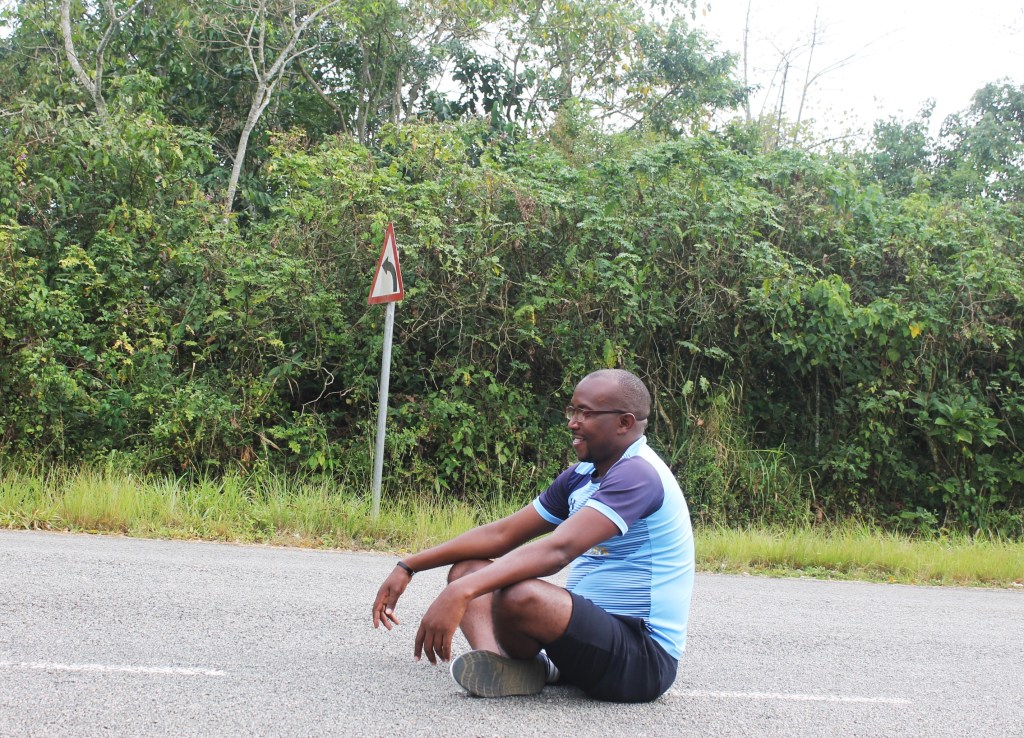
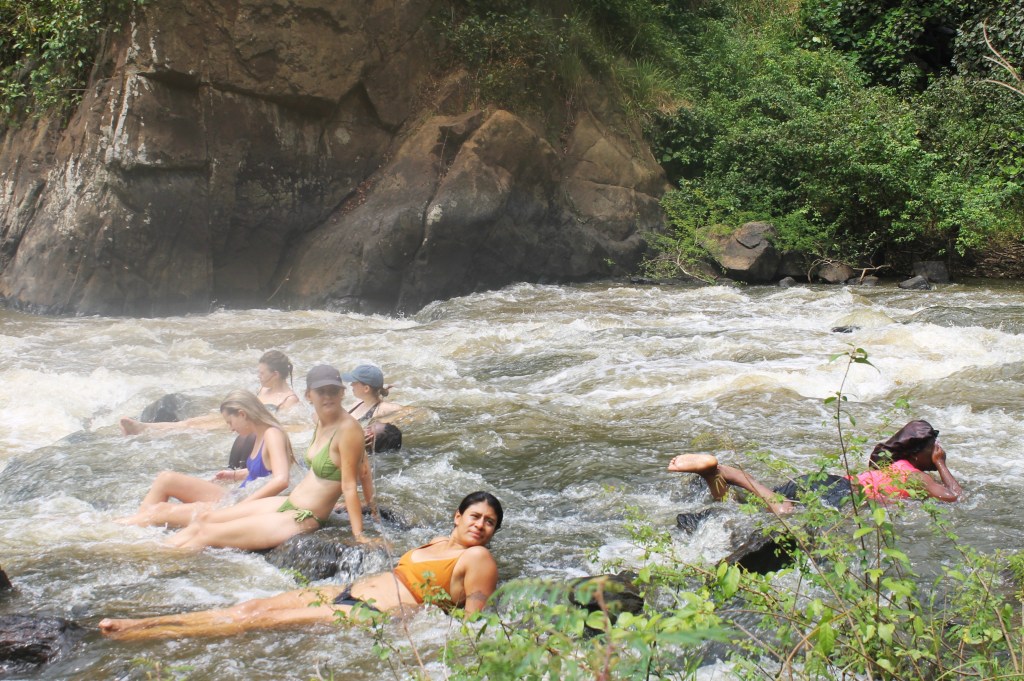
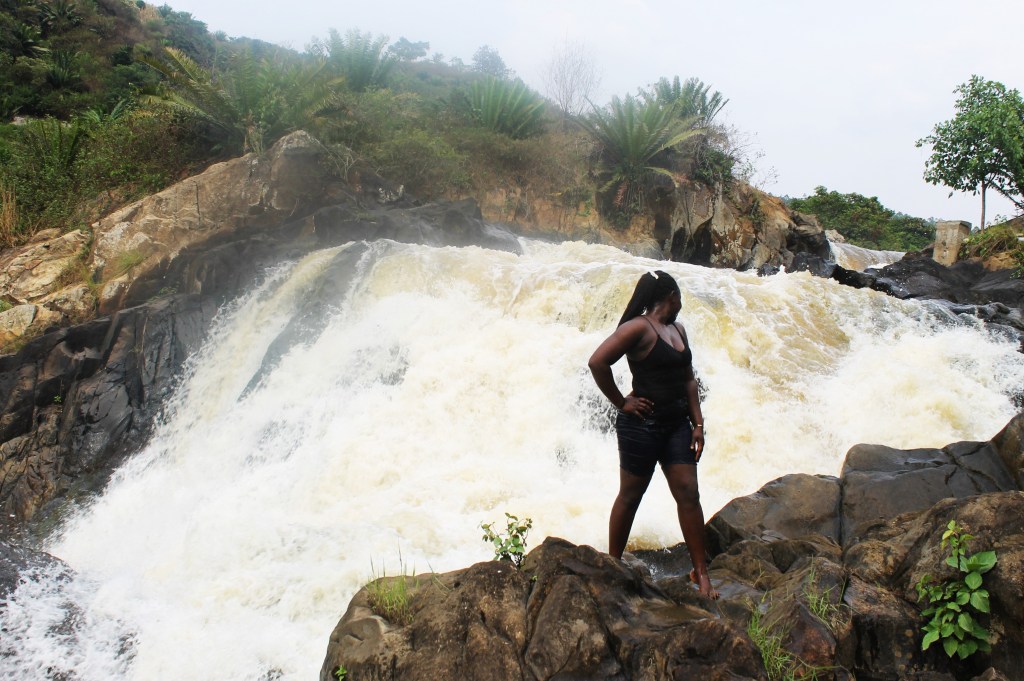
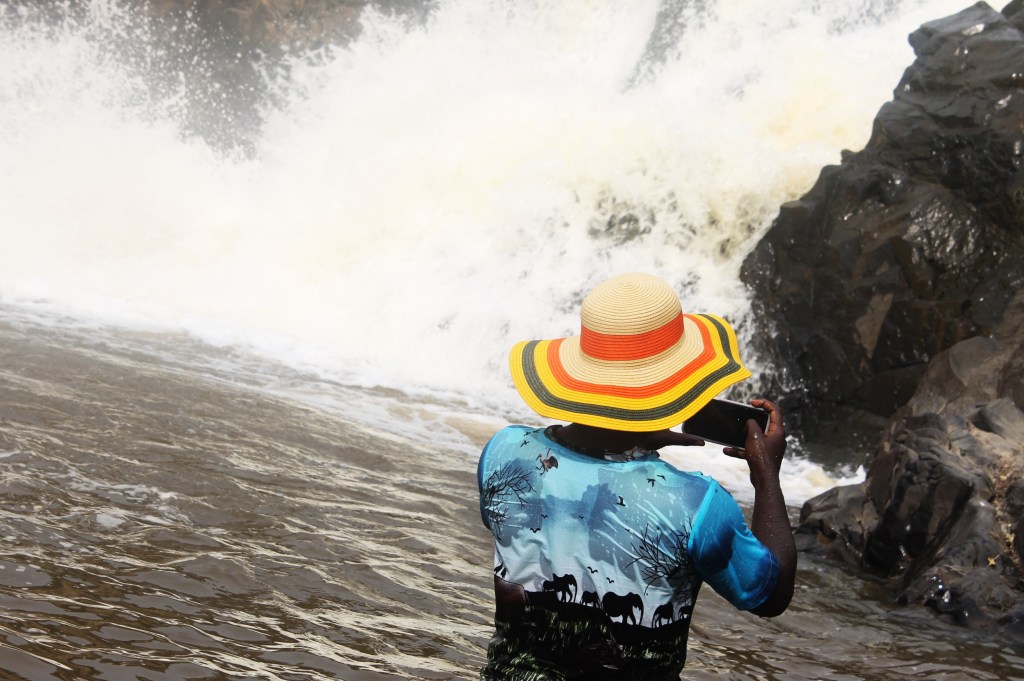
Then came the descent—a treacherous, adrenaline-fueled dance with gravity. The slope was a “slip-and-slide” of mud and ambition, a vertical challenge that humbled the arrogant and tested the limber. Many a participant found themselves intimately reacquainted with the earth, performing involuntary acrobatics that would have made an Olympic gymnast weep. Boots lost their grip, dignity was momentarily sacrificed to the mud, but the prize was imminent: the Mpanga River, a cold, crystalline ribbon of life fueled by a 50-meter-high plunge of liquid thunder that echoed against the canyon walls like the heartbeat of the Earth.
The Cliffside Romance and the Hidden Beach
Ambition pushed us further, scaling the cliffs to stand atop the escarpment where the first waterfall commits its vertical leap into the void. The view across the gorge was a “visual dopamine hit,” so profound that the loverbirds in our group began whispering clandestine vows—presumably promising to love each other as long as the Cycads have survived, which is a statistically significant commitment.
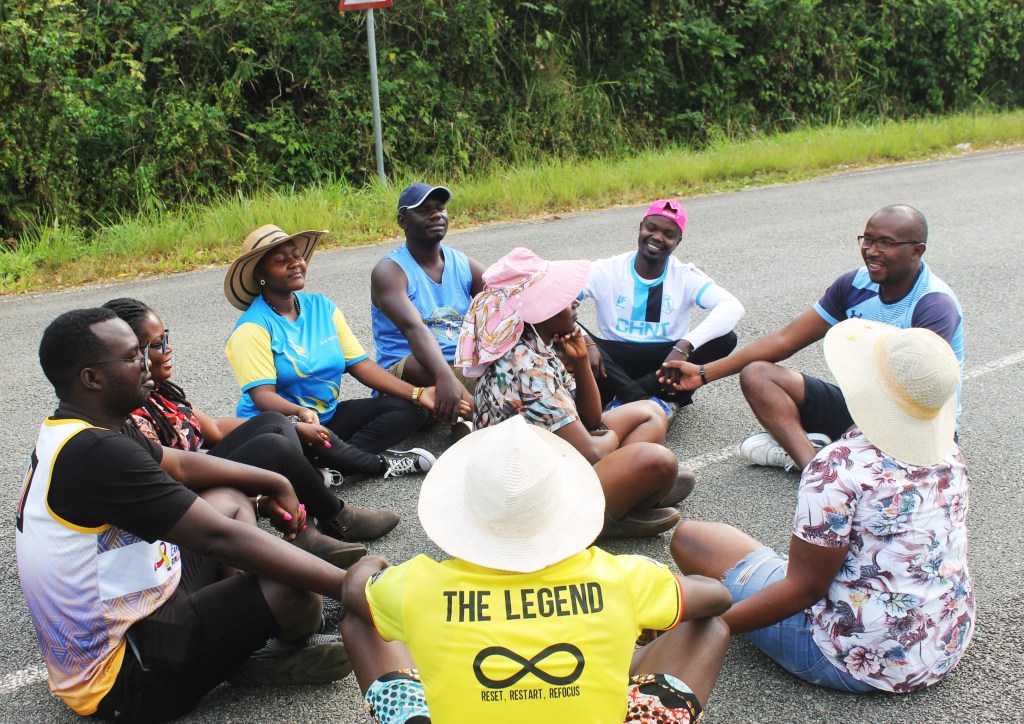
The trek continued through verdant coffee plantations and the dense, prehistoric Cycad forest—a botanical time machine where birds sang melodies that felt older than human language. This path led us to the Second Waterfall, a geological marvel that has sculpted its own private beach over the eons. A vast expanse of white sand, meticulously deposited by the river’s rhythmic exhales, framed a natural swimming pool of such tranquility that it felt curated by the gods themselves. It was a sanctuary of soft silica and turquoise water, hidden from the eyes of the world by a fortress of ancient green.
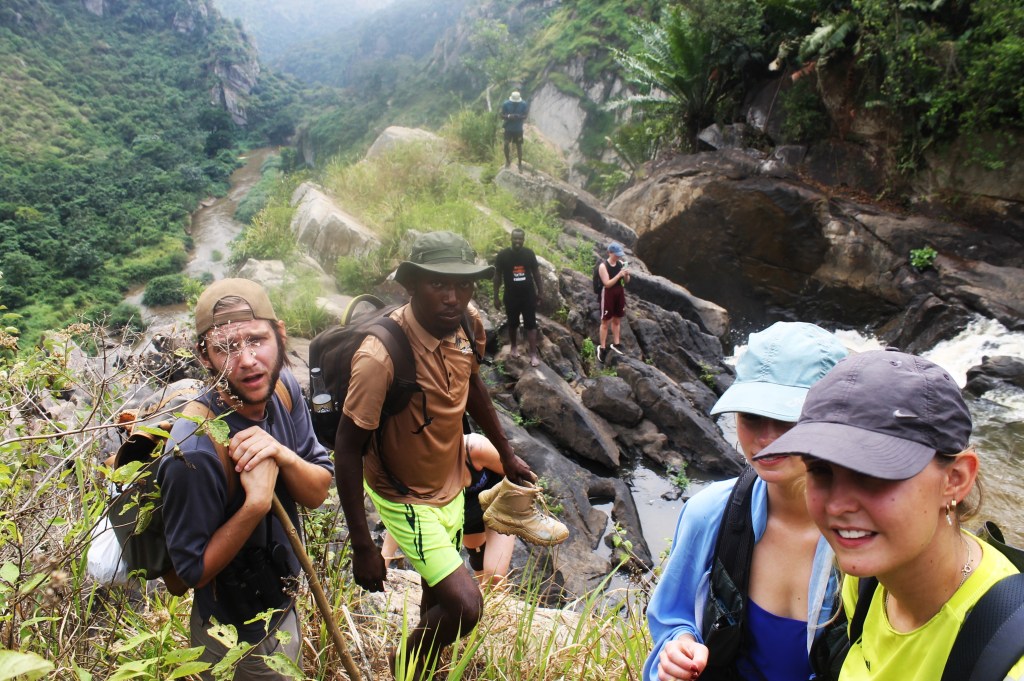
The Aquatic Jubilee and Sand-Sown Mirth
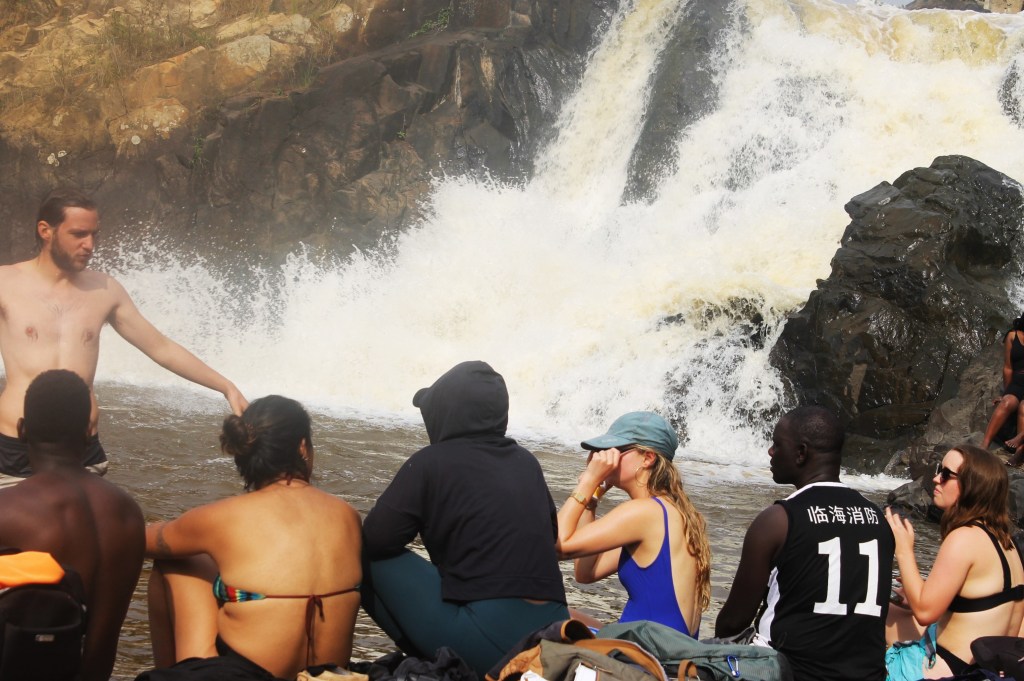
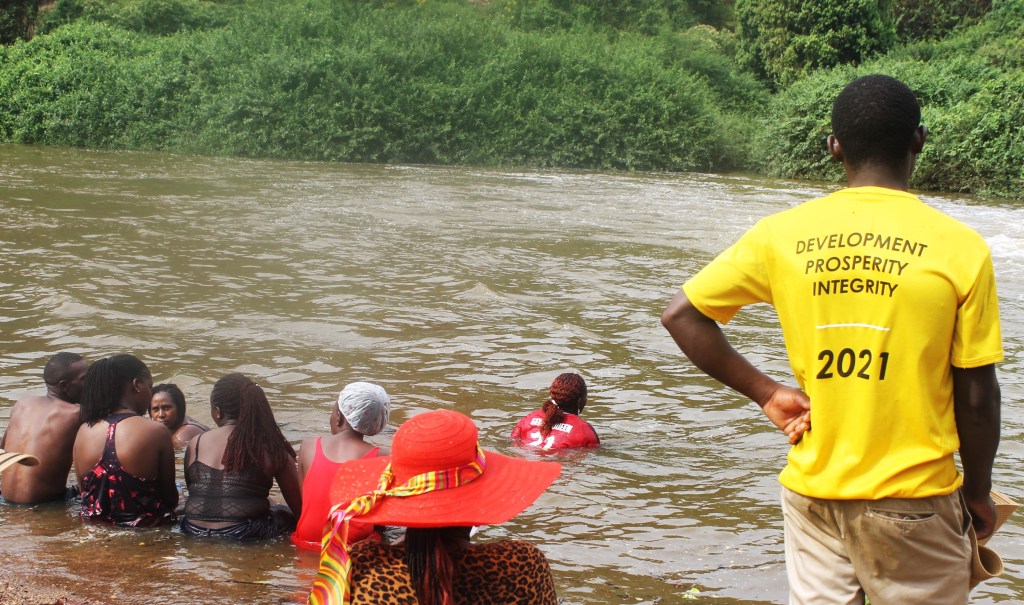
As we reached this self-made beach, the collective restraint of fifty people evaporated like mist under the African sun. No longer were we “hikers”; we were transformed into a jubilant school of aquatic enthusiasts. The sand became a stage for a comedic ballet—half of us performing high-velocity dives into the bracing, flat water that formed a perfect natural pool, while the other half engaged in the high art of sun-drenched lethargy.
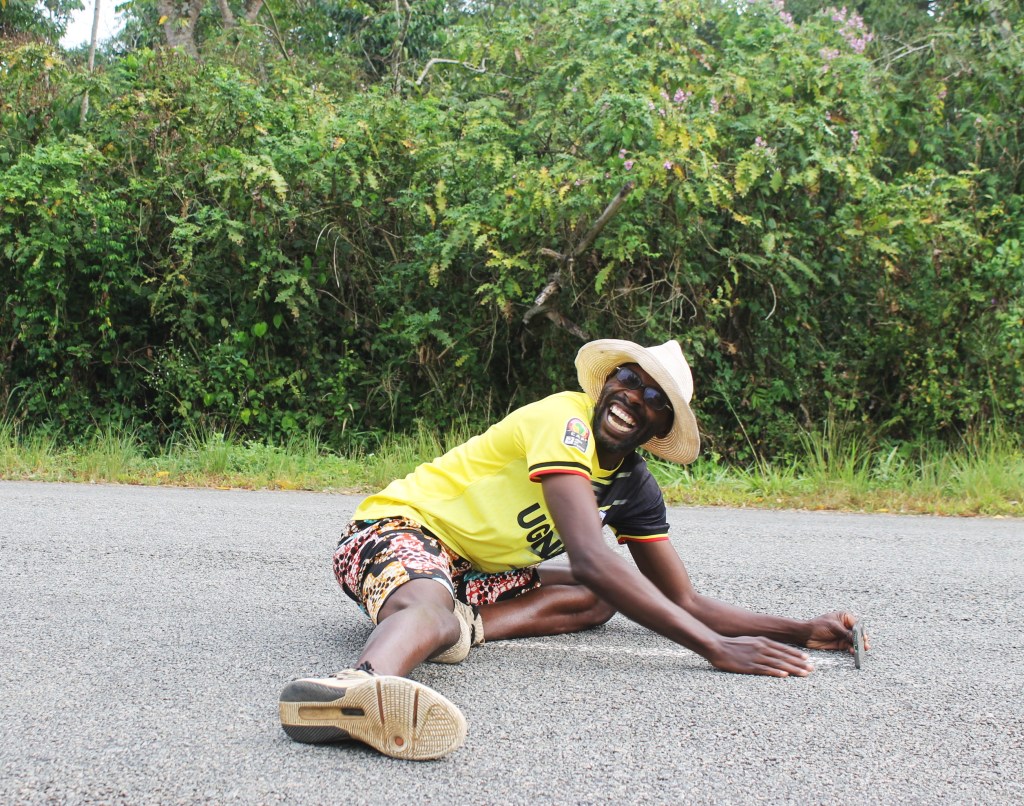
Laughter erupted as “expert” swimmers found themselves outmaneuvered by the gentle current, and jokes were traded with the frequency of the river’s ripples. We sprawled across the sand like sun-drunk seals, sharing stories of the descent’s many tumbles, forging connections that only a shared dip in a prehistoric river can cement. The contrast between the hot, aching bodies and the icy embrace of the Mpanga waters was a sensory epiphany, a baptism of pure joy that washed away the grit of the trail and the stress of the modern world.
The Gastronomic Resurrection
As the shadows lengthened, the inevitable “ascend of regret” began. Muscles screamed in protest as we clawed our way back to the top of the gorge, a grueling vertical trek where every step was a negotiation with fatigue. However, the promise of a village feast acted as a potent lure, pulling us upward through sheer olfactory magnetism. We were met with the Holy Grail of Ugandan adventure cuisine: Roasted goat meat and roasted bananas (Emyoosyo), prepared with the smoky, rustic finesse that only the hearths of Karubuguma can offer. This wasn’t just lunch; it was a spiritual restoration. We ate with the primal intensity of the dinosaurs that once roamed these hills, our hunger finally meeting its match in the succulent, charred flavors of the local land. Each bite was a celebration of survival, a savory reward for every calorie expended in the depths of the gorge.
A Global Brotherhood of the Trail
By 4:00 PM, as we hit the road back to Fort Portal, the transformation was complete. The strangers of the morning, who had exchanged polite nods at 7:30 AM, were now a cohesive tribe, bound by the shared trauma of the “slippery slope” and the shared ecstasy of the falls. Numbers were exchanged and “see you next time” became a sacred oath. Among us were international travelers who marveled at the authenticity of the experience; they noted that while a traditional safari offers a view of the wild through a glass pane, the Fort Portal City Walkers offer a seat at the table of humanity—a raw, unfiltered immersion into the cultural heart of Uganda.
We returned to the city not just with photographs, but with a renewed sense of belonging to this ancient land.
To those who missed it, the gorge still breathes, and the Cycads still wait. We are on a mission to discover the Pearl, one neighborhood, one waterfall, and one prehistoric leaf at a time. The Cycads remain in their gorge, stoic sentinels of time, but we—we are changed.
Give us your feedback by completing the form bellow;


 COMMUNITY BASED TOURISM DEVELOPMENT AT KITARA FOUNDATION FOR SUSTAINABLE TOURISM: Transforming Communities through Travel Partnerships. Email: kitararcc@gmail.com;