Kibale National Park is often celebrated as the “Primate Capital of the World,” home to the highest density of chimpanzees in Africa. However, the true story of Kibale is found at its edges. For decades, the park was a fortress, but today it represents a vital link between conservation and human livelihood.
Through the 70/20 Pearl Accord, Isunga Community Tours ensures that tourism is not just an extraction of photos, but a reinvestment in people: 70% of proceeds go directly to the local guides and service providers, while 20% is funneled into a community fund for health and education.
This itinerary is designed to immerse you in the living heritage of the Rwenzori foothills before culminating in a wild encounter with our closest cousins.
Integrating community-based tourism (CBT) with wildlife trekking creates a “circular economy” for conservation. This model transforms the relationship between local residents and protected areas from one of conflict to one of mutual survival.
Here are the core benefits of this integrated approach:
1. Economic Buffer Zones: When a tour includes farm visits or cultural site tours, the “tourism dollar” stays in the village rather than leaking out to international hotel chains.
- Direct Income: In the 70/20 Pearl Accord model, the majority of the fee goes to the person providing the service (the farmer, the guide, the cook).
- Community Resilience: By supporting vanilla or tea farmers, tourism provides a secondary income stream. This reduces the community’s reliance on the forest for resources like firewood or bushmeat, creating a natural “buffer” of protection around the park.
2. Human-Wildlife Conflict Mitigation: One of the greatest threats to chimpanzees in Kibale is human-wildlife conflict (e.g., chimps raiding crops).
- Value Realization: When a community sees that tourists are coming specifically to see the chimpanzees—and staying in the village to do so—the animals are viewed as “living assets” rather than pests.
- The Incentive to Protect: Residents become the first line of defense against poaching because the health of the forest is directly linked to the health of their local economy.
3. Preservation of “Intangible” Heritage: While wildlife trekking focuses on the natural world, the community component preserves human history.
- Cultural Continuity: Activities like visiting the Amabere ga Nyinamwiru caves or the Bacwezi sites ensure that oral traditions are passed down to younger generations.
- Dignity in Representation: It allows local people to tell their own stories—such as the formation of the Sempaya Hot Springs—rather than having their history interpreted solely by outside researchers.
4. Enhanced Traveler Perspective: For the visitor, seeing the forest in isolation is only half the story.
- The “Human Context”: You understand that the chimpanzee you track on Day 6 lives in a landscape shared with the tea pluckers you met on Day 1.
- Authentic Connection: It replaces the “spectator” relationship with a “participant” relationship. You aren’t just watching nature; you are contributing to the social fabric that keeps that nature intact.
Day 1: Arrival and the Golden Leaf Welcome
Arrive at Isunga, perched on the edge of the ancient Kibale Forest. Begin your journey with a Farm Tour to the Tea Plantations. Walk through the undulating green “carpets” and learn the cultural stories of how tea shaped the economy of the Tooro sub-region.
- Activity: Tea plucking with local farmers and an evening “Sunset over the Forest” briefing.
Day 2: The Empire of the Clouds
Embark on a Crater Lakes Excursion heading toward the “Top of the World” viewpoint. From here, the vistas of the Rwenzori Mountains and the Albertine Rift are unmatched.
- The Story: Listen to the oral traditions of the Bacwezi Empire, the demi-gods of African history. Your guide will narrate the mystical formation of these deep volcanic craters, believed to be footprints of the ancient rulers.
Day 3: The Fragrance of the Forest (Vanilla Experience)
Vanilla is the “black gold” of the region. Spend the day with Vanilla Farmers to understand the meticulous process of hand-pollination—a true labor of love.
- Experience: Participate in the farming and processing cycle. Learn how vanilla has become a cornerstone of household income for families living adjacent to the national park.
Day 4: Descent into the Rift Valley
Travel to the Sempaya Hot Springs in Semuliki. This journey offers dramatic views of the Western Rift Valley escarpment.
- The Story: Witness the “Female” and “Male” springs. Your local guide will share the powerful cultural story of the springs’ formation, tied to the spiritual traditions of the indigenous Bamaga people.
- Highlight: Boil eggs in the natural bubbling waters—a classic Rift Valley ritual.
Day 5: Royal Heritage and the Breasts of Nyinamwiru
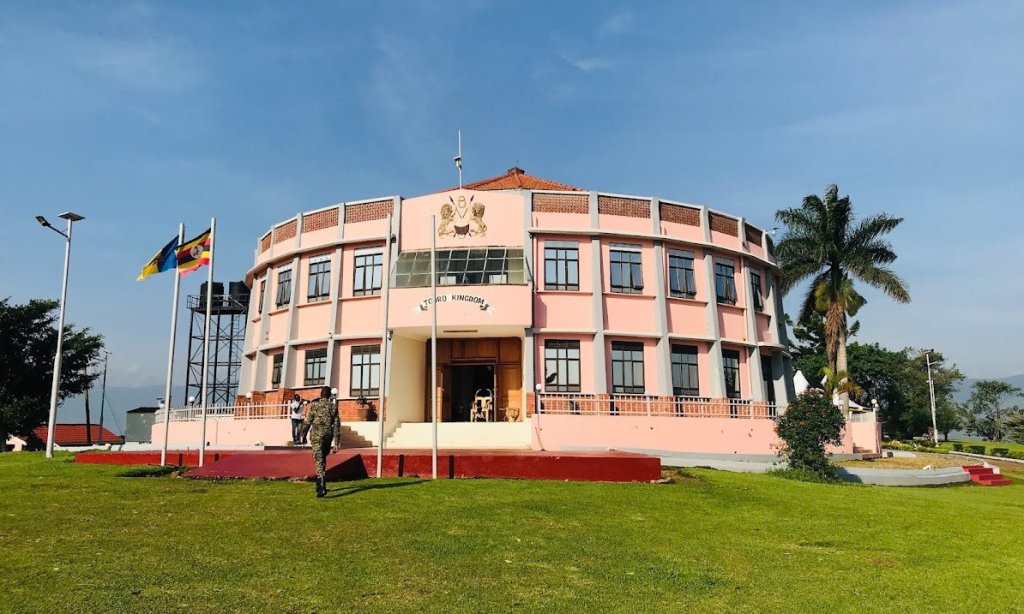
Head to Fort Portal, the only “Tourism City” in Uganda, for a deep dive into the Tooro Kingdom.
- Morning: Visit the Tooro Royal Palace, overlooking the city, and the Kogere Museum to see artifacts of ancient craftsmanship.
- Afternoon: Explore the Amabere ga Nyinamwiru Caves. Here, stalactites resemble breasts, linked to the legend of King Bukuku and his daughter Nyinamwiru.
- Evening: Enjoy traditional Embaire music and dances by a local community troupe.
Day 6: The Weekend Escape – Into the Canopy
Transition from community heritage to the wild heart of Kibale National Park.
- The Main Event: Chimpanzee Trekking. Accompanied by expert rangers, track the noisy and charismatic chimpanzee families. Watching them swing through the mahogany trees is a humbling reminder of why protecting this corridor is essential.
- The Link: Understand how your trekking permit fees contribute to the park-neighbor revenue-sharing scheme, further supported by the 70/20 Pearl Accord.
Day 7: Reflections and Departure
After a final community breakfast overlooking the forest canopy, take a moment for a “Pearl Accord” reflection—learning how your visit has directly impacted the schools and clinics of Isunga.
- Departure: Transfer back to Fort Portal or your next destination, carrying the stories of the Bacwezi and the breath of the chimpanzees with you.
Book your trip Using Equera App at https://portal.equera.ai/customers/35/products

 COMMUNITY BASED TOURISM DEVELOPMENT AT KITARA FOUNDATION FOR SUSTAINABLE TOURISM: Transforming Communities through Travel Partnerships. Email: kitararcc@gmail.com;