
Sabiiti Fenekansi Mbiire: A Life Woven from Diverse Threads, United by Africa
Meet Sabiiti Fenekansi Mbiire, a man whose very identity is a vibrant tapestry woven from the rich cultural threads of East Africa. Born in Ankole and raised in Tooro, his heritage speaks of journeys and connections that transcend modern borders. His paternal roots lie with the Basiita clan of Karagwe, Tanzania, a lineage that brought his ancestors to the fertile lands of Ankole, Uganda. On his maternal side, his ancestry traces back to the Beitira clan of Rwanda, whose migration also led them to settle in the western regions of Ankole.
This intermingling of histories meant Sabiiti’s early life was immersed in a fascinating blend of traditions. He experienced firsthand the nuances of the Wanyambo culture from Tanzania, distinct from the Tutsi culture of Rwanda, both differing from the Kinyankole customs of his birthplace and the unique heritage of the Batooro people among whom he grew up.
This rich, sometimes perplexing, cultural landscape led to moments of introspection. Was he defined by his Tanzanian or Rwandan origins, his Ankole birthplace, or his Tooro upbringing? Ultimately, Sabiiti found his unwavering anchor in his Ugandan nationality. “Being a Ugandan is central to my life,” he affirms, a statement that underscores a deeply felt sense of belonging.
It was this very background, this intimate exposure to diverse cultures and landscapes, that ignited Sabiiti’s profound love for tourism. He sees himself as “the planned tourist” in Uganda, someone whose passion for exploration is deeply ingrained. “Tourism is my birth right,” he believes, viewing himself as inherently a traveler and adventurer, drawn to the wonders of nature and the stories of its people. Cultural exploration isn’t just an interest; it’s a fundamental part of his being.

For Sabiiti, the Ugandan flag is more than a national symbol; it’s a personal emblem, a constant affirmation of his primary identity. It serves as a powerful reminder that above the intricacies of his ancestral origins and personal history, he is first and foremost an African.
This deep connection to his heritage and his passion for discovery led Sabiiti to establish the Kitara Foundation for Regional Tourism. He envisioned this organization as a vehicle to explore the broader historical context of his roots through the lens of tourism. In this context, “Kitara” extends beyond the boundaries of Western Uganda, encompassing a wider historical sphere in Africa. This greater Kitara region holds a central place in his ambitious tourism goals.
The Kitara Foundation is driven by a commitment to Sustainable, Responsible, Green, Eco, Regenerative, and Community-Based Tourism within the region. For Sabiiti, success is defined by the ability to foster unity among Africans for human development, strengthening the bonds of peace and co-existence across the continent – a vision deeply inspired by his own journey of interconnected heritage.
A Journey of Faith: Navigating Religious Landscapes
Sabiiti’s life has also been marked by a fascinating journey through diverse religious landscapes. Born into a Muslim family within a predominantly Muslim community in Ankole, his early religious environment was distinctly Islamic. However, at the age of four, his family’s relocation to a largely Christian community in Tooro, dominated by Catholics and Anglicans, brought a significant shift. In a time when national politics were heavily influenced by religious affiliation, the Muslim family faced considerable social challenges, ultimately leading them to convert to Christianity. They initially joined the Catholic Church but soon transitioned to the Anglican Church, where Sabiiti and his siblings were formally introduced to Christian practices and baptized.
This conversion, however, did not mark the end of their spiritual exploration. A visit to their ancestral home in Karagwe, Tanzania, saw Sabiiti’s parents return embracing traditional beliefs, serving for a time as traditional prophets (“Abarangi” in Runyankole). This practice was eventually abandoned following the influence of the vibrant Anglican “Barokole” (revivalist) movement in Ankole, which led the family to actively embrace a more evangelical form of Christianity, even burning their traditional regalia.
At the age of nine, another significant migration took the family to Kitagwenda in Tooro, a diverse community of Batagwenda, Bakiga, and Banyarwanda. Here, Sabiiti’s parents continued their active involvement in the Anglican Church, preaching and deeply engaging with scripture. Sabiiti himself was confirmed and became an enthusiastic member of the church choir. His commitment extended into his secondary school years, where he became a student leader within the Scripture Union.
As he matured and began working in community development and humanitarian programs, Sabiiti took on increasing leadership roles within the Anglican Church. He served as the Head of Laity for the English congregation at St. Stevens Church (now the East Ruwenzori Diocese Cathedral), later becoming the Diocesan Education Coordinator and subsequently the Diocesan Planning and Development Coordinator. These roles provided him with deep immersion into church traditions and principles. It was during this time that he married and started his family.
His interactions with Pentecostal church leaders, particularly through a collaborative project called Compassion that served Christian children from both Anglican and Pentecostal backgrounds, sparked a period of personal reflection on his own religious choices. He began to question the notion of religious identity as a mere inheritance, recognizing it as a deeply personal decision. The idea that one’s faith should solely be determined by their parents’ affiliation felt increasingly incongruent to him.
After several years of dedicated service to the Anglican Church, Sabiiti embarked on a new chapter, moving to Mbarara to pursue business ventures. It was in Mbarara that he was introduced to the Pentecostal Church, finding a spiritual home in a non-denominational congregation characterized by its prophetic and spiritual emphasis. This community, while upholding biblical principles, also embraced certain traditional and cultural concepts of religion, creating a space for Sabiiti to explore the intricate relationship between Christianity and African traditions.
This period of exploration led to profound questions: “How can Christians glorify God without compromising their cultural traditions? How can Christians serve God within their cultural settings?” Driven by these inquiries, Sabiiti embarked on extensive research into religion and African culture, eventually leading him to author books on the subject and conceive the idea for the Foundation for African Indigenous Religious Missions (Fair Missions).
His non-denominational prophetic congregation in Mbarara remained his spiritual anchor. Even after relocating to Fort Portal for work, he maintained close ties with this community, intensifying his research and preparations for Fair Missions. It was here that the vision of “The House of Prayer for all Nations” began to take shape – a sanctuary that welcomes all people, irrespective of their race, tribe, religious affiliation, or cultural background.
Fort Portal, situated within the Tooro Kingdom, presented a unique environment where traditional cultural practices were highly valued even among a predominantly Christian population. This setting provided fertile ground for further research and learning, further solidifying Sabiiti’s dreams for Fair Missions and the House of Prayer for all Nations.
A Rooted Identity: Belonging to the Bantu World
Culturally, Sabiiti Fenekansi Mbiire belongs to the vast and diverse family of Bantu-speaking cultures in Africa. The term “Bantu peoples” serves as a unifying label for the hundreds of distinct ethnic groups across East, Central, and Southern Africa who share a linguistic heritage rooted in Bantu languages. This immense group constitutes a significant portion of the population in numerous African nations, with individual groups often numbering in the millions. In Uganda alone, Bantu-speaking tribes comprise more than half of the nation’s population.
The very word “Bantu,” in its various forms across these languages, signifies “people” or “humans,” highlighting a shared sense of identity and common ancestry tracing back to Proto-Bantu.
Historical evidence suggests that Bantu-speaking peoples settled in present-day Uganda between A.D. 1000 and A.D. 1300, driven by factors such as population growth, the search for fertile agricultural land, internal conflicts, external pressures, the pursuit of adventure facilitated by the development of iron tools, and responses to diseases and natural disasters.
The Bantu groups who established themselves in Uganda include prominent tribes such as the Baganda, Banyoro, Batooro, Banyankole, Bakiga, Bafumbira, Basoga, Bagwere, Banyole, Bagishu, and Basamia-Bagwe. While sharing linguistic roots and certain cultural similarities, each of these groups possesses its own unique customs and social structures, contributing to Uganda’s rich tapestry of cultural contrasts.
For example, the Bahima of Mbarara District, a distinct group within the broader Ankole community, showcase a unique egalitarian culture centered around their cattle, with nomadic traditions and distinctive attire. This exemplifies the diverse cultural expressions found within the larger Bantu family across the African continent.
Sabiiti’s own Basiita clan, with its presence across Uganda, Tanzania, Rwanda, and the DRC, further illustrates the extensive historical migrations and interconnectedness of Bantu-speaking communities in the region. The shared ancestry with the Banyambo of Karagwe, who trace their lineage back to the ancient Kitara empire, and the linguistic and cultural ties with the Banyankole-Banyoro-Batooro groups in Uganda, underscore the deep historical connections within this linguistic and cultural family.
Even the intriguing historical interpretations linking the “Abiiru” of Ankole to ancient Hebrew origins, while debated, add another layer of complexity to the understanding of historical migrations and cultural interactions within the region.
Ultimately, Sabiiti Fenekansi Mbiire’s life story is a testament to the intricate web of cultural and historical connections that shape individual and collective identities in Africa. His journey, marked by diverse cultural influences, a profound exploration of faith, and a deep understanding of his Bantu heritage, fuels his vision for a united and thriving Africa, connected through the power of tourism and mutual understanding.
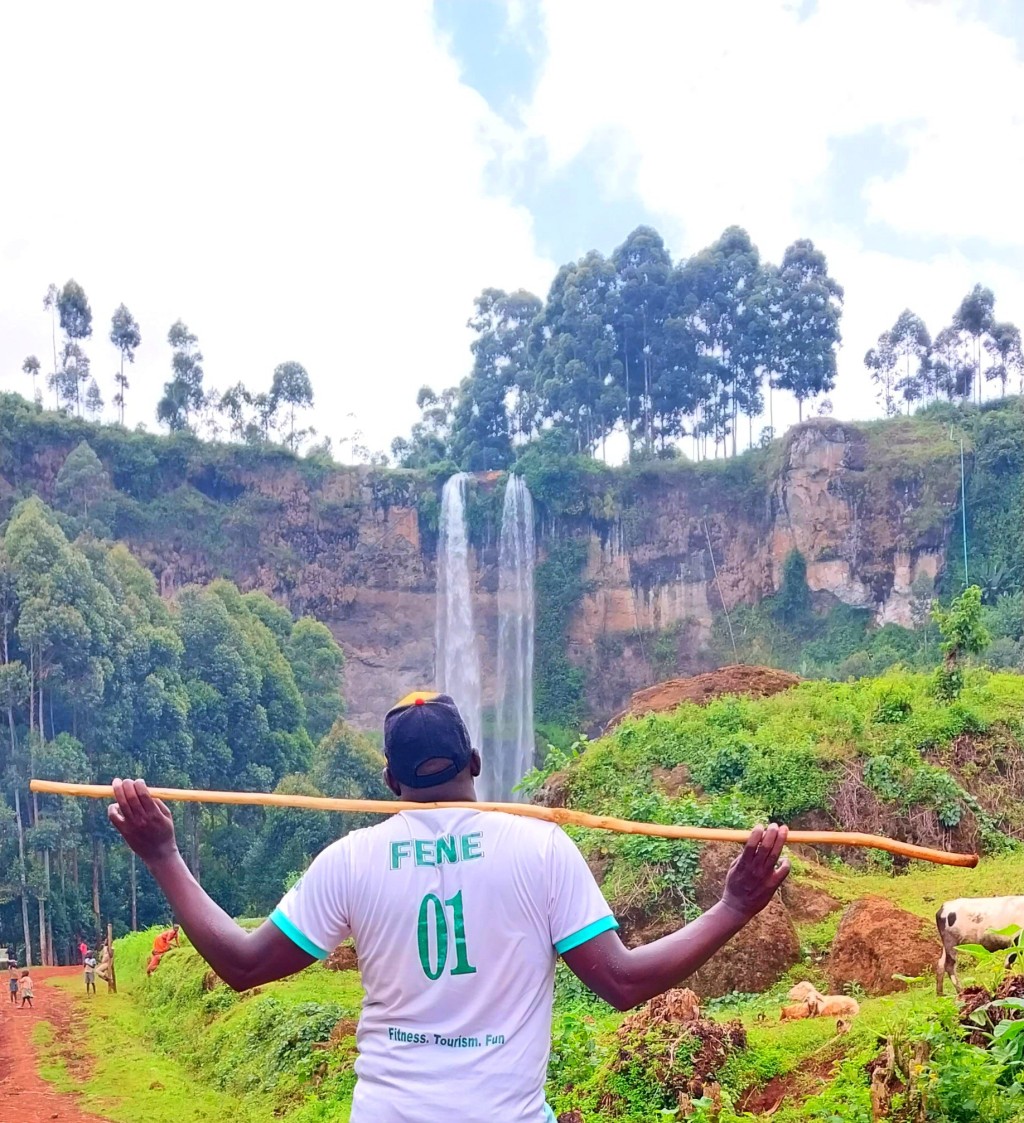
 COMMUNITY BASED TOURISM DEVELOPMENT AT KITARA FOUNDATION FOR SUSTAINABLE TOURISM: Transforming Communities through Travel Partnerships. Email: kitararcc@gmail.com;