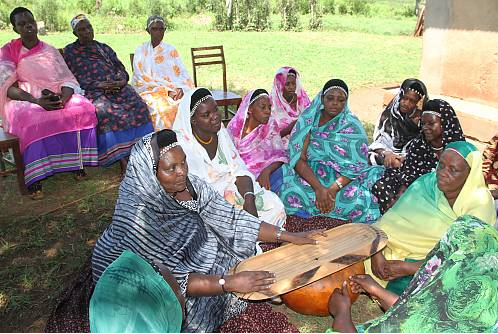
The Enduring Echoes of the Plains: Unveiling the Resilience and Rich Heritage of the Basongora
Journey with us to the heart of the Great Rift Valley’s western arm and the foothills embracing the majestic Rwenzori Mountains, a land where the traditionally pastoral Basongora, also known by the evocative names of Hima/Huma/Hema, have etched their story across generations. Their ancestral lands stretch across Western Uganda and into the eastern reaches of the Democratic Republic of Congo, a testament to their historical presence in this vibrant region of East Africa.
The Basongora possess a distinct cultural tapestry woven with unique customs and the melodic threads of ‘Rusongora,’ an African language with ancient roots in the Proto-Kordofanian family, bearing linguistic kinship with Runyankole and Rutoro. Though a 2011 report estimated their population in Uganda at around 11,000, this figure is widely acknowledged as a significant underestimation, hinting at a larger, more dispersed community.
The tides of history, marked by colonial and post-colonial policies in Central Africa, have presented significant challenges to the Basongora’s traditional way of life. Programs aimed at sedentarizing pastoralist communities, coupled with the appropriation of their ancestral territories for national parks and the settlement of other groups, notably the Batoro and Bakonzo, have profoundly impacted their land ownership and traditional practices. Furthermore, the historical partitioning of Songora lands into various districts across Uganda and Congo has geographically dispersed their community.
Yet, the Basongora’s traditional lifestyle stands as a remarkable testament to human adaptation, honed over centuries to thrive in the dry savannas, scrublands, and mountainous terrains of their homeland. Their deep connection to the land and their unique cultural heritage offer a compelling opportunity for cultural tourism, providing an alternative avenue for income generation while allowing the Basongora to share their rich traditions, customs, and way of life with the wider world.
A Glimpse into Songora Identity
The Basongora are a fascinating blend of Nilotic and Bantu influences, a cultural fusion that has shaped their unique identity in East and Central Africa. Their traditional economy thrived on the pillars of cattle-rearing, a practice deeply intertwined with their social fabric, alongside the skilled manufacture and trade of salt and iron, vital commodities in the pre-colonial era.
The political organization of the Basongora was notably sophisticated, a confederacy of several independent states bound together by a parliament known as the Muhabuzi. This confederacy was led by a constitutional monarchy, a unique trimvirate comprising an influential empress dowager (Omu’Gabe’kati), a female ruler (Omu’Go), and a male ruler (Omu’Kama), showcasing a balanced distribution of power within their leadership structure. This confederacy emerged from a unified Songora state that historians trace back to the 12th century AD, encompassing several significant provinces including Kisaka-Makara, Kitagwenda, Bugaya, Bunyaruguru, and Kiyanja, each contributing to the strength and diversity of the kingdom.
Echoes of Antiquity: The History of the Basongora
According to their rich oral traditions, the Basongora trace their origins to the ancient and influential empire of the Chwezi/Shenzi, specifically within the Chwezi province of Kitara, centered around the prominent Rutshuru/Rwenzori mountain ranges, a region steeped in myth and historical significance.
Following the enigmatic collapse of the Shenzi empire around 1100 AD, the region experienced a period of instability and conflict lasting approximately 150 years. Gradually, order was restored as several powerful clans rose to prominence, establishing smaller yet relatively stable states from the fragmented territories of the former Shenzi empire.
Among these influential clans, the Shambo and Hinda clans were among the earliest to emerge, followed closely by the Bito clan. The ancient founding clans or houses of the Shenzi state – the Iru, Hima, Chwa, and Kama – were integrated into these new powerful clans as sub-clans or as specialized professional classes, demonstrating a continuity of societal structures. However, the Shambo clan itself would eventually face a similar fate by the mid-18th century.
Intriguingly, only one state where the Shambo clan remained dominant, namely Rwanda, navigated the colonial era to emerge as a reduced yet autonomous and independent nation. The other Shambo states, including Karagwe, Mpororo, and Bushongora, were absorbed or integrated into the territories of Uganda, Tanzania, and Congo as administrative districts or provinces, reshaping the political map of the region.
The annals of Songora history remember notable monarchs such as Kyomya Bwachali, the last ruler of a unified Busongora. His reign ended around 1870 during a period of internal strife and warfare among the Songora, who were simultaneously facing repeated invasions from the neighboring states of Nyoro and Nkore, as well as the encroaching colonial powers of the Belgians, Germans, and British.
The period of instability following Bwachali’s death lasted approximately two decades, culminating in the emergence of Prince Kaihura as the dominant ruler and unifier in the early 1890s. With the support of troops sent by his sister, who was then queen in Nkore, Kaihura successfully defeated his primary rival for the throne, King Kuriofire. Kaihura also subdued other dissenting nobles and effectively ruled over most of the traditional Songora lands for about seven years before his death in 1901. He was succeeded by his son, Kasigano.
King Kasigano’s reign was cut short in 1906 when he was deposed by the British, ostensibly due to his attempts to forge an alliance with the Belgians in the Congo. Busongora was subsequently partitioned and divided between the Congo and Uganda. The portions that fell within Uganda were further subdivided into several districts, all of which were annexed to the kingdoms of Toro and Nkore, as well as the later-formed Kingdom of Bukonzo, significantly altering the political landscape and the Basongora’s autonomy.
Following the deposition of Kasigano, a resilient royal princess named Ikamiro Kogyere (Kogere) emerged as a central figure of Songora unity and resistance. Queen Kogere, whose wisdom and leadership are celebrated in oral traditions, died around 1922 at the age of seventy, her capital located at Rukoki. Her legacy continues to inspire the Basongora people.
The 20th century brought further challenges. In 1931, a devastating rinderpest outbreak decimated the cattle population of the Nyakatonzi Basongora, forcing their dispersal to other areas of Uganda and the eastern DRC. The Basongora believe this outbreak was linked to a colonial government vaccination program. The largest group that fled to the DRC did not return to their ancestral lands until 1964, due to the instability caused by the Mulele rebellion in the DRC.
In the 1940s, the colonial government introduced cotton growing in the Songora region. Coincidentally, the fertile plains of Nyakatonzi and other areas within present-day Busongora County in Kasese proved ideal for cotton cultivation, further altering land use patterns.
A significant blow to the traditional pastoralist lifestyle came in 1954 when communally owned Songora grazing lands were gazetted as Queen Elizabeth National Park by the colonial administration. This left only limited land for the Basongora and their herds. While some remained within the park boundaries, often facing legal repercussions, thousands others migrated across the border into the Virunga National Park in the DRC in search of grazing land.
Beginning in the late 1950s, regional insecurity led to the displacement of other ethnic groups, particularly the Bakonzo, from the highlands to the lowlands, increasing pressure on land resources. By 1962, the Rwenzururu Freedom Movement had displaced a significant portion of the mountain population, forcing them to settle in parts of the rift valley. The Rwenzururu war concluded in 1982 following peace negotiations, but the resulting population shifts continued to impact land ownership and inter-ethnic relations, leading to clashes initially between the Basongora and Batoro, and later between the Basongora and Bakonzo. When Basongora began returning to their original areas in 1962, they found that the Toro Development Company (TDC), which later dissolved in 1970, had leased some of their land for projects such as the Mubuku Irrigation Scheme.
The decline of the cotton industry in the 1970s temporarily provided an opportunity for Basongora pastoralists to graze their cattle on the vast plains once again. However, this freedom was short-lived, as cotton production resumed between 1987 and 1989.
A significant moment in the Basongora’s recent history occurred on July 1, 2012, with the installation of Bwebale Ivan Rutakirwa Agutamba Rwigi IV as the king of their “Songora Kingdom.” The kingdom laid claim to twenty sub-counties within Uganda, including Muhokya, Bugoye, Nyakatonzi, Katwe, Karusandara, Mubuku, Ibuga, Hamukungu, Kasenyi, Busunga, and Katunguru, among others, signifying a resurgence of their cultural identity and aspirations for recognition.
Historical records also highlight the influence of notable female figures in ancient Songora society, including at least two powerful empresses, Nyakahuma and Kitami rwa Nyawera. Queen Kiboga of Nkore was also of Songora origin, the mother of Nkore’s King Ntare V and sister to King Kaihura of the Songora. Princess Kantunguru of Nkore, for whom a town in western Uganda is named, was also a Songora. Furthermore, many rulers of the neighboring states of Rwanda, Mpororo, Bunyoro, Toro, and Nkore often chose their wives from among the esteemed Basongora women, indicating their social standing and influence in the region.
Other notable Songora kings in the pre-colonial era include Nkomyo, Rwigi I, Rutakirwa I, Bulemu I Bushoita, Rwigi II Kyeramaino Rweshakaramyambi, Nyabongo Kikundi Nyakwirigita, Ihungo, Goro, Nyabongo I, Kashese (for whom the municipality/city of Kasese is named), Rutairuka, Makora, Bwachari, and Kaihura, their reigns shaping the history and identity of the Basongora people.
Notable Figures in Recent Times
During the post-colonial era, beginning in the early 1960s, the Basongora did not have formally recognized rulers by the central governments in Uganda and Congo/Zaire. However, several notable Basongora personalities in various fields have played a crucial role in maintaining the community’s presence and contributing to wider society. Among them are Amon Bazira, who held significant positions in the Ugandan government in the 1980s, and General James Kazini, a former commander of the Uganda People’s Defence Force. Other prominent Basongora include Prince Ivan Bwebale Rutakirwa (the current king of the Songora), the Rwabukurukuru family in Sheema, Wilson Isingoma, Patrick Tabaro (a judge in Uganda), Professor Mbabi-Katana, Enoch Rukidi, Kosia Mpazi, the Rwamashonje family, the Rwakashamba family, Yefesi Saiba, and Ananais Mulumba, each contributing to the social, political, and intellectual landscape of Uganda.
The Vibrant Tapestry of Songora Culture
Songora society is deeply rooted in pastoralism, with cattle motifs permeating their language, imagination, poetry, and art, reflecting the central role of livestock in their lives. The disciplines inherent in cattle management profoundly influence their diet, health, and even their physical appearance, a testament to their close relationship with their herds. Age commands seniority in social interactions, and a strong emphasis is placed on the equality of men and women within their social structure. Traditionally, the Basongora practiced monogamy, reflecting their social norms. Historically, their religious beliefs were monotheistic, centered around the worship of one supreme god.
An intriguing aspect of Basongora history is their response to a severe tetanus epidemic in the 1880s. As a means to facilitate the force-feeding of medication to those afflicted by the disease, the community collectively adopted the practice of removing the four front lower teeth. Even after the epidemic subsided and with the advent of modern medical treatments like syringes, many Basongora continued this practice, highlighting the enduring impact of this historical event on their cultural practices.
The traditional Songora territory has also yielded significant archaeological discoveries, including the renowned Ishango Bone, an ancient artifact of immense value to understanding early human history and mathematics. While the Eastern Arm of the Great Rift Valley is famous for its wealth of ancient human fossils, the northern portion of the Western Arm, the historical home of the Basongora, remains largely unexplored due to past conflicts, hinting at the potential for further significant discoveries.
The Wisdom of Koogere: An Enduring Oral Tradition
The oral tradition surrounding Koogere, a wise female chief of Busongora who lived approximately 1,500 years ago, holds a place of immense cultural significance for the Basongora, Banyabindi, and Batooro communities in Kasese. Inscribed in 2015 on the UNESCO List of Intangible Cultural Heritage in Need of Urgent Safeguarding, the Koogere narratives embody exceptional wisdom and depict the prosperity of her chiefdom, forming a vital part of the collective memory and social philosophy of these communities.
This rich oral tradition encompasses sayings and narrations that evoke images of plenty and abundance as blessings earned through hard work, emphasizing the importance of wisdom, female agency, and heroism. Traditionally, elders, sages, storytellers, poets, musicians, artists, and indigenous families living near sites associated with her story are the custodians and practitioners of these narratives. The stories are retold and sung informally around the fireplace and during communal activities such as handicrafts, cattle herding, and long-distance travel, with skilled older storytellers transmitting this invaluable heritage to younger generations.
The Koogere storytelling thus serves as a powerful medium for facilitating shared actions, recreation, the transmission of wisdom and learning, and intergenerational transfer of essential information, values, and skills. However, the increasing dominance of formal education and modern entertainment poses a threat to this informal and spontaneous transmission of knowledge. Furthermore, the use of Runyakitara (Runyoro-Rutooro), the language of the Koogere stories, is declining, leading to a rapid decrease in knowledge of this vital oral tradition, with only a handful of surviving master storytellers able to recount more than one episode.
Despite these challenges, the Koogere story also records a number of facts of historical importance, offering valuable insights into the past. Efforts are underway to safeguard this precious intangible cultural heritage.
Spirituality and Beliefs
Historically, the Basongora were monotheistic, believing in one supreme god, Ruhanga, the creator of the universe. Alongside this central belief, they also recognized the existence of spirits, ancestors, and divinities who were believed to have the ability to influence human affairs and the natural world. The Basongora practiced a variety of rituals and ceremonies to mark significant life events and transitions, including birth, initiation, marriage, death, and royal coronations, reflecting their deep spiritual connection to the cycles of life.
Communication with the supernatural realm was facilitated through various shrines, sacred spots, and items. However, access to resources linked to many traditional Basongora activities has become increasingly difficult due to restrictions on using national parks and the disruptions caused by land conflicts. Invasive plant species have also displaced traditional flora used in cultural practices. The Basongora are increasingly compelled to use modern, industrial materials in place of traditional organic pigments and materials, highlighting the challenges of preserving their customs in the face of environmental and societal changes.
Despite these pressures, there remains hope for the preservation of Basongora customs. Many contemporary marriage rites still require the presentation of traditional gifts, such as elaborately decorated emigamba (carrying yokes), showcasing the enduring value placed on their cultural heritage.
Several key elements of Basongora culture have been identified as being in urgent need of safeguarding and potential inclusion on the UNESCO list:
- Kuhandiika Kw’enzarrwana (hieroglyphs): An ancient Songora writing system that holds significant historical and cultural value.
- Omukago (Kunywana): The sacred rite of establishing blood brotherhood, forging deep and lasting bonds between individuals.
- Kuhembera: The traditional and symbolic uses of fire-mounds within kraals, encompassing both sacred and practical aspects.
- Kusiigirra Ente: The intricate practices involved in the management of calves and milch cattle, reflecting their pastoral heritage.
- Kuchunda: The traditional methods of treating and processing yogurt and sour milk, essential components of their diet.
- Kujumika: Traditional cooking methods and dietary habits, preserving their culinary heritage.
- Kuruka Amabara: The rites and procedures involved in the naming of children, including the significant ritual of “honor names” known as “engundu” and “enyana” (akin to “empaako” among neighboring communities), which bear intriguing connections to ancient Kushite, Egyptian, and Canaanite deities and constellations.
- Rusaka and other Basongora games: Traditional string games like Rusaka and board games like Olwango (a variant of chess/mancala), which may have originated from ancient rites and serve as a means of transmitting social values.
- Kwetonda: The practice of recounting elaborate genealogical records during public performances and formal greetings, highlighting the importance of lineage and oral history.
Ongoing research and documentation efforts aim to further explore and preserve these vital aspects of Basongora culture. The history of Busongora, along with its ornamental and ideographic systems, continues to pique the interest of linguists, scholars, and cultural organizations, with UNESCO and cultural institutions showing increasing interest in the Busongora Kingdom’s rich heritage.
Conclusion: A Legacy of Resilience
The Basongora are a remarkable people with a long and proud history, a vibrant and diverse culture, and an unwavering spirit of tenacity. Their contributions have helped shape the Great Lakes region, and they have steadfastly maintained their identity and beliefs in the face of considerable adversity and change. Demonstrating a capacity for adaptation and progress, the Basongora also hold a strong desire to improve their current status and future prospects. Their rich heritage deserves recognition and respect, and their unique cultural perspective offers valuable insights to the world.
 COMMUNITY BASED TOURISM DEVELOPMENT AT KITARA FOUNDATION FOR SUSTAINABLE TOURISM: Transforming Communities through Travel Partnerships. Email: kitararcc@gmail.com;